
By Sharon Akuboh, Abuja
In an era dominated by instant information, viral content, and the relentless race for online engagement, the future of journalism may well depend on one enduring principle — credibility.
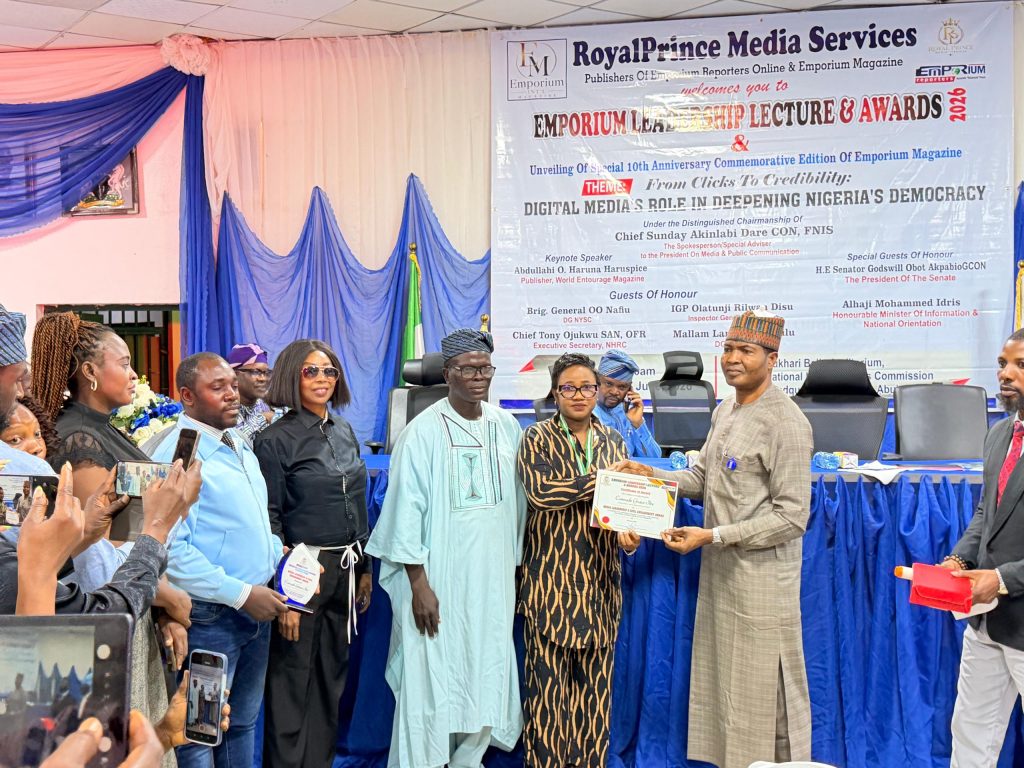
This was the central message delivered by the Chairman of the Nigeria Union of Journalists (NUJ), FCT Council, Comrade Grace Ike, during the 2026 Emporium Leadership Lecture and Award Ceremony held to commemorate the 10th anniversary of Emporium Reporters and Emporium Magazine in Abuja.
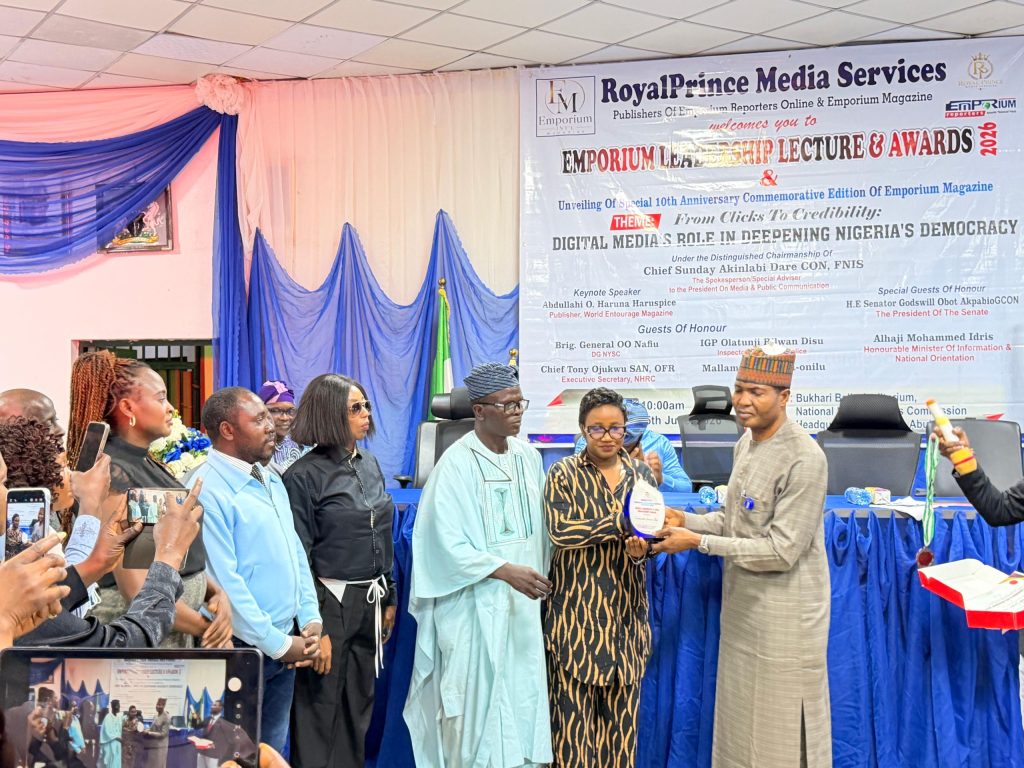
Addressing a distinguished audience of media practitioners, public officials, academics, civil society leaders, and award recipients, Comrade Ike applauded the publisher and management of Emporium for sustaining a credible media platform for a decade despite the challenges confronting journalism in Nigeria.
According to her, establishing and successfully maintaining a media organisation in Nigeria for ten years goes beyond business considerations and reflects an unwavering commitment to truth, public service, and democratic ideals.
“Starting a media outlet in Nigeria and sustaining it for ten years is not an act of business alone; it is an act of faith — faith in journalism, faith in the Nigerian people, and faith that the truth is always worth telling,” she stated.
She described Emporium’s decade-long journey as a testament to resilience, vision, and dedication to professional journalism at a time when many media organisations struggle under economic pressures, editorial compromises, and changing technological realities.
The anniversary celebration, which featured a commemorative magazine edition, leadership lecture, and awards presentation, provided an opportunity to reflect on the evolving role of digital media in Nigeria’s democratic development.
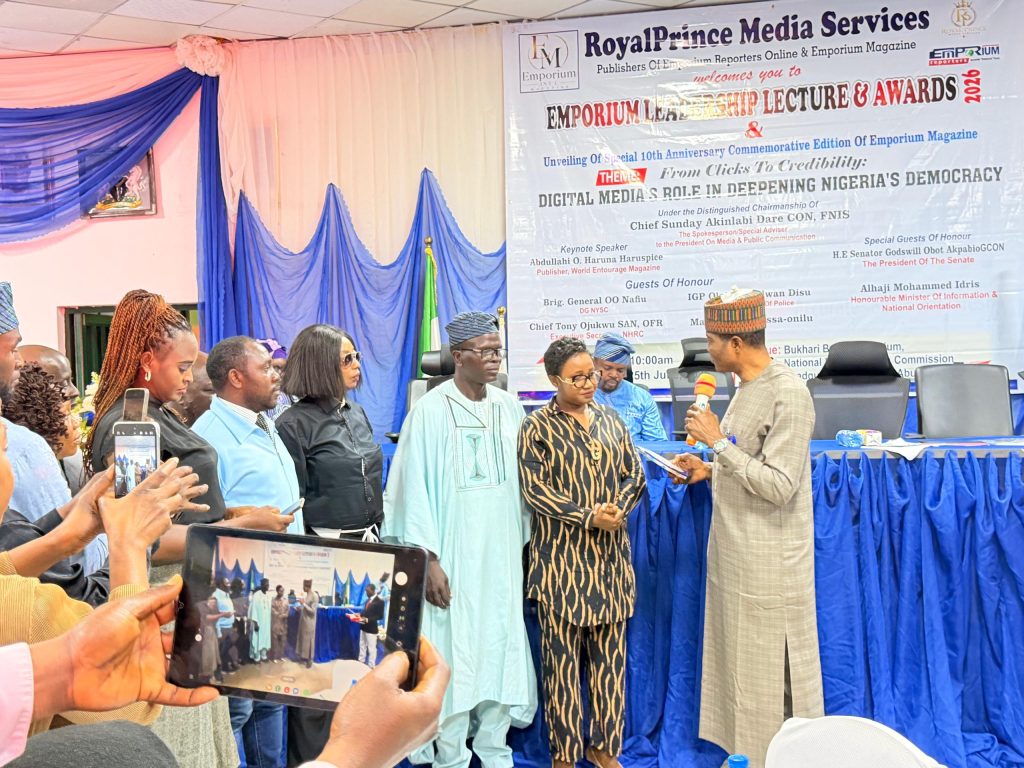
Speaking on the lecture theme, “From Clicks to Credibility: Digital Media’s Role in Deepening Nigeria’s Democracy,” the NUJ FCT Chairman noted that the digital revolution has transformed news production and consumption, creating both opportunities and significant challenges for journalists.
She observed that social media and digital platforms have democratized access to information, enabling ordinary citizens to participate in public discourse. However, she warned that the same platforms have also become fertile grounds for misinformation, disinformation, and sensationalism.
“We live in an age where anyone with a smartphone can call themselves a journalist. A rumour can circle the globe before facts have had time to put on their shoes. The pressure to be first has, in many cases, overridden the discipline to be right,” she remarked.
Comrade Ike emphasized that credibility remains the most valuable asset of any media organisation, arguing that public trust in journalism is essential for the survival of democracy.
“In an era where the speed of information often outpaces accuracy, credibility is not a feature; it is the foundation upon which public trust is built and democracy is sustained,” she said.
According to her, societies depend on a trustworthy press to provide citizens with accurate information needed for informed decision-making, accountability, and civic participation. Without a credible media system, she warned, democratic institutions become vulnerable to manipulation and misinformation.
The NUJ FCT Chairman also highlighted the union’s role in promoting ethical journalism and professional standards within the industry.
She explained that beyond functioning as a trade union, the NUJ serves as a guardian of journalistic ethics, ensuring that practitioners adhere to principles of accuracy, fairness, accountability, and public responsibility.
“We are guardians of standards. We establish ethical frameworks and hold our members accountable because the credibility of every journalist affects the credibility of all journalists,” she stated.
She reaffirmed the Council’s commitment to defending press freedom, protecting journalists from harassment and intimidation, advocating fair remuneration, and creating an environment where media professionals can operate without fear or undue influence.
Beyond the media community, Comrade Ike called on governments, corporate organisations, development partners, and civil society groups to invest in credible journalism and support independent media institutions.
She stressed that quality journalism requires sustainable funding and collaborative partnerships, especially for investigative reporting that exposes wrongdoing and promotes transparency.
“A healthy media ecosystem is not a luxury; it is a democratic necessity. Government, businesses, and civil society must support credible media organisations by advertising, partnering, and investing in investigative journalism,” she urged.
The event also celebrated individuals and institutions recognised for excellence in leadership, service, and professional achievement. Congratulating the award recipients, Comrade Ike described the honours as both recognition and responsibility.
She encouraged the awardees to continue making meaningful contributions to society while upholding the values that earned them recognition.
Turning her attention to students, aspiring journalists, and young media professionals present at the event, she delivered a passionate appeal for integrity and professionalism.
She advised them to resist the temptation of shortcuts, sensationalism, and unethical practices, stressing that credibility is earned gradually through consistency, accuracy, and dedication to truth.
“This profession is one of the most important callings in a democracy. Build your credibility brick by brick, story by story, because your reputation, once lost, is the hardest thing to recover,” she cautioned.
As Emporium Reporters and Emporium Magazine embark on a second decade of operation, the ceremony served not only as a celebration of past achievements but also as a reflection on the future of journalism in Nigeria.
The recurring message throughout the event was clear: while digital technology may continue to reshape the media landscape, credibility remains journalism’s most powerful currency.
For Nigeria’s democracy to thrive in the digital age, stakeholders agreed, media organisations must continue to prioritise truth, ethics, accountability, and public trust above the pursuit of clicks, traffic, and fleeting online popularity.
As the curtains fell on the anniversary celebration, participants left with a renewed appreciation of the media’s responsibility in safeguarding democratic values and ensuring that journalism remains a force for truth, transparency, and national development.