
By Joy Omagha Idam | Weekenders Magazine
The Economic Community of West African States Commission has reaffirmed its commitment to achieving universal access to reliable and affordable electricity across West Africa, setting an ambitious target of increasing renewable energy’s share in the region’s electricity mix to 48 per cent by 2030.
The commitment was highlighted during the opening of the delocalized meeting of the Joint Committee of the ECOWAS Parliament on Energy and Mines, Infrastructure, Agriculture, Environment and Natural Resources held in Dakar.
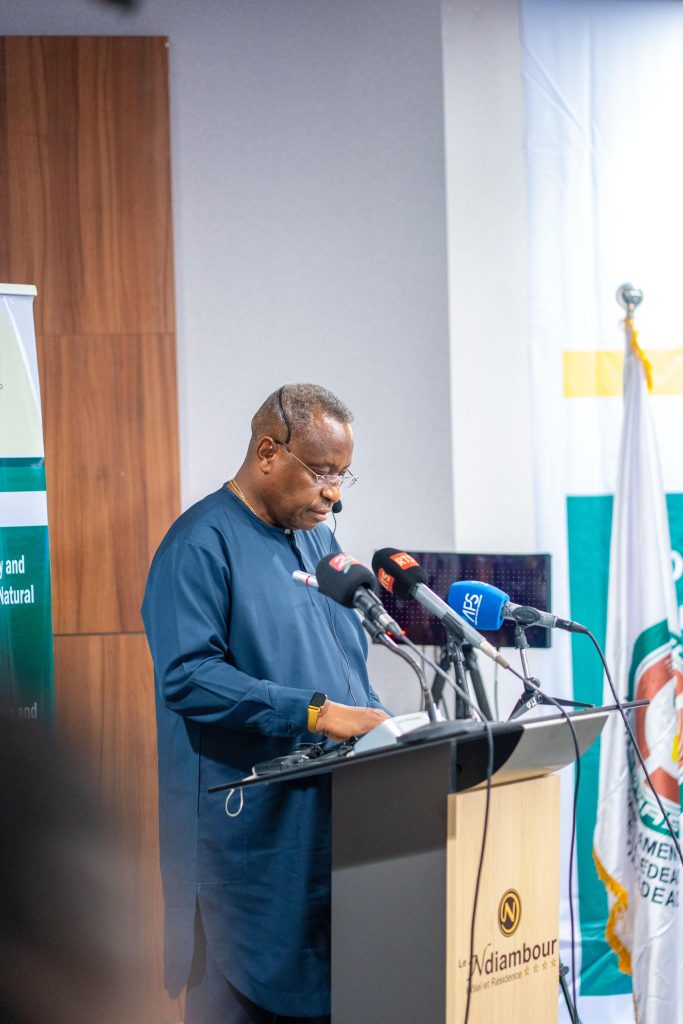
Speaking on behalf of the Director of Cabinet in the Office of the President of the ECOWAS Commission, Hon. Abdou Kolley, Acting Director of Energy and Mines, Williams Baidoe, said the regional bloc remains focused on ensuring that all communities across West Africa have access to reliable, affordable and sustainable electricity.
The meeting, themed “Harnessing Renewable Energy for Rural Electrification and Empowerment of Rural Economies in the ECOWAS Region: The Role of the ECOWAS Parliament,” brought together lawmakers and stakeholders to explore strategies for expanding energy access and promoting sustainable development across the sub-region.
Kolley commended the ECOWAS Parliament for convening the session, describing it as an important platform for legislators to engage directly with stakeholders, deepen their understanding of critical development challenges and identify practical policy solutions.
He noted that ECOWAS has developed a comprehensive and gender-responsive policy framework to guide the region’s energy transition. The framework is anchored on the updated ECOWAS Energy Policy, the ECOWAS Renewable Energy Policy and the ECOWAS Energy Efficiency Policy.
According to him, the renewable energy policy seeks to increase the contribution of renewable energy sources, including large hydropower projects, to 48 per cent of the region’s electricity generation by 2030. At the same time, the energy efficiency policy aims to address electricity losses estimated at between 35 and 40 per cent, largely attributed to aging and inefficient infrastructure.
Kolley further highlighted the importance of the recently adopted ECOWAS Climate Strategy, which is expected to strengthen coordination among member states in addressing climate change through adaptation and mitigation measures.
He said several key regional institutions are driving efforts to improve energy access and integration across West Africa. These include the ECOWAS Centre for Renewable Energy and Energy Efficiency, the ECOWAS Regional Electricity Regulatory Authority, the West African Power Pool and the West African Gas Pipeline Authority.
The institutions, he explained, are working to strengthen regional energy integration, expand infrastructure and ensure the delivery of affordable and sustainable energy services to citizens across the sub-region.
Emphasizing the transformative role of electricity, Kolley said access to power should not be viewed solely as a means of lighting homes, but as a catalyst for economic growth, improved healthcare services and better educational outcomes.
“We continuously imagine the lives of families being illuminated with hope, students able to study after sunset, health centres able to save more lives, and citizens finding new economic opportunities in their own communities,” he said.
He also called on citizens to safeguard energy infrastructure, discourage illegal electricity connections and make productive use of available power to stimulate local economic activities and community development.
Kolley noted that the Commission is collaborating with member states, development partners and other stakeholders to mobilize resources, build technical capacity and promote clean energy markets throughout the region.
Expressing confidence in the outcome of the Dakar meeting, he said the recommendations emerging from the discussions would strengthen ongoing initiatives and contribute fresh ideas for accelerating universal electricity access, advancing renewable energy adoption and promoting shared prosperity across West Africa.
The renewed commitment comes as ECOWAS intensifies efforts to bridge the region’s energy access gap while positioning renewable energy as a key driver of sustainable economic growth and climate resilience.