
By Joy Omagha Idam
ACCRA — Heads of State and Government from West Africa and representatives of key neighbouring countries have resolved to deepen regional cooperation on security, counterterrorism, governance, and human security, following a two-day High-Level Consultative Conference held in Accra, Ghana, from January 29 to 30, 2026.
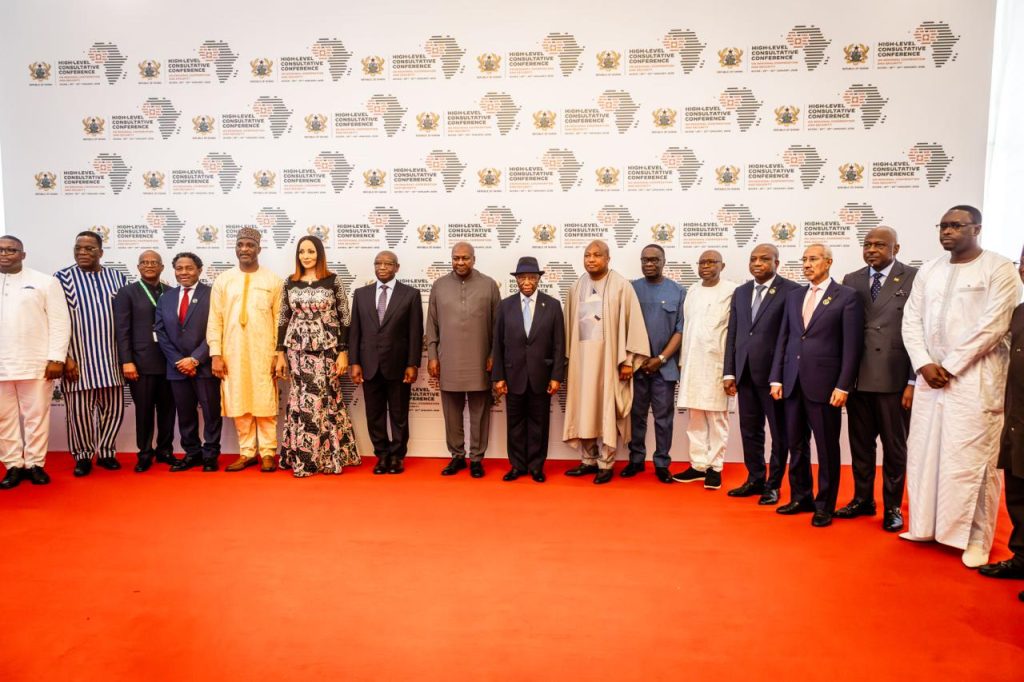
The conference, convened under the chairmanship of Ghanaian President H.E. John Dramani Mahama, brought together leaders and senior representatives from Ghana, Liberia, Sierra Leone, Burkina Faso, Mali, Mauritania, Nigeria, Senegal, and Togo to confront the escalating security crisis facing the sub-region.
Presidents Julius Maada Bio of Sierra Leone and Joseph Boakai of Liberia personally led their national delegations to the meeting, which focused on rebuilding trust, restoring collaboration, and responding decisively to the growing threat of terrorism and violent extremism in West Africa.
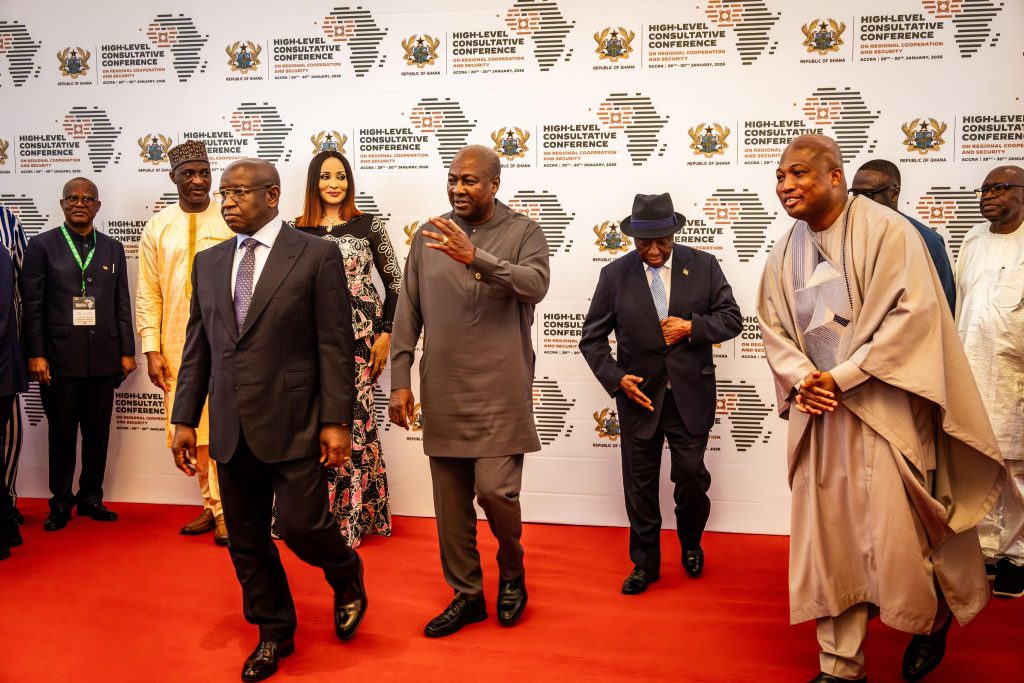
Participants acknowledged that the West African region has become the global epicentre of terrorism, recording an average of eight terror attacks daily and accounting for more than half of terrorism-related deaths worldwide. Leaders warned that inaction was no longer an option in the face of rising extremist violence, organised crime, and cross-border insecurity.
The conference was preceded by extensive deliberations involving Ministers of Foreign Affairs, Defence and Security, and Intelligence Chiefs, with technical input from the African Union Commission, the United Nations Development Programme (UNDP), and relevant civil society organisations.
In their deliberations, leaders emphasised the need to move beyond episodic diplomacy and fragmented responses by establishing a structured and permanent framework for regional cooperation. The framework aims to harmonise policies, share intelligence, coordinate infrastructure priorities, and manage shared security risks, recognising that fragmentation carries severe economic, social, and security costs.
At the conclusion of the meeting, participants reaffirmed their commitment to strengthening regional cooperation to address evolving peace, security, and governance challenges. They also endorsed a shift toward a human security approach, grounded in regional solidarity, respect for national sovereignty, and people-centred,
gender-responsive peacebuilding strategies.
On security and counterterrorism, the conference agreed to strengthen intelligence sharing, harmonise legal frameworks to support cross-border prosecution of terrorism-related offences, and scale up de-radicalisation programmes while safeguarding human rights.
To address border security challenges and the fluid movement of criminal and extremist groups, leaders committed to exploring “hot pursuit” mechanisms through bilateral, minilateral, or multilateral agreements. They further agreed to develop a foundational Memorandum of Understanding (MoU) and cooperation protocols within six months, with Ghana’s Minister for Foreign Affairs leading the drafting process within three months for consideration by Heads of State.
The conference also resolved to strengthen mechanisms to combat all forms of trafficking, including arms, narcotics, and human trafficking.
Recognising that military responses alone cannot secure lasting peace, leaders pledged to prioritise governance and human security by investing in food security, healthcare, education, job creation, and effective local governance. They further committed to leveraging digital and emerging technologies to modernise governance, improve border management, and enhance public service delivery.
On humanitarian and climate resilience, participants acknowledged climate change as a major threat multiplier and agreed to integrate climate and food security into regional peace planning, while developing a collective disaster preparedness and response framework to support displaced and vulnerable populations.
As part of the way forward, the conference agreed to institutionalise the Consultative Conference as a bi-annual platform, establish a monitoring mechanism to track implementation of decisions, and accelerate the development of the foundational MoU, including clear resource mobilisation strategies.
The meeting concluded with a renewed sense of regional solidarity and a firm commitment to translate dialogue into concrete, measurable outcomes that protect lives, livelihoods, and stability across West Africa.
The communiqué was issued in Accra, Ghana, on January 30, 2026.