
Council Cites 24 Million Child Brides, Calls for Stronger Enforcement of Marriage Laws and Investment in Girls’ Rights
By Sharon Akuboh
The National Council of Women’s Societies (NCWS) Nigeria has called for urgent government action to end child marriage, warning that millions of Nigerian girls remain exposed to early pregnancy, preventable health complications, interrupted schooling and lifelong economic disadvantage.
The council made the call on Sunday, October 11, 2026, to mark the International Day of the Girl Child, urging federal, state and local governments to enforce the minimum marriage age of 18, strengthen child protection mechanisms and provide targeted support for vulnerable families.
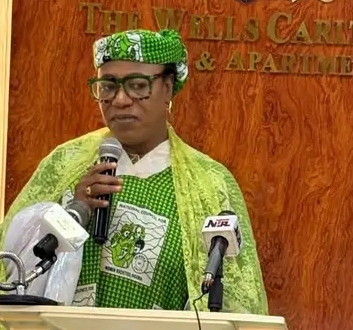
In a press statement issued in Abuja under the theme, “End Child Marriage and Invest in Girls’ Rights,” the NCWS said Nigeria could not meet its commitment to ending child marriage by 2030 without adequately funded interventions, effective enforcement of existing laws and sustained community engagement.
Citing UNICEF figures, the council noted that more than 24 million Nigerian women and girls alive today were married before their 18th birthday, placing the country among those with the highest numbers of child brides globally.
According to the 2023–2024 Nigeria Demographic and Health Survey, as reported by UNICEF in 2025, approximately 33.4 per cent of women aged 20–24 were married before turning 18. The prevalence approaches 50 per cent in the North-East and North-West, according to figures cited in the NCWS statement.
The organisation stressed that child marriage should not be treated as a private family matter or an issue affecting only particular religious, ethnic or geographical communities. Rather, it described the practice as a national development challenge requiring a coordinated response.
Poverty, Health Risks and Lost Opportunities
The NCWS identified poverty, limited access to essential services and inadequate protection for vulnerable children as important factors sustaining early marriage.
Figures from the Federal Government of Nigeria and UNICEF, cited by the council, indicate that girls from poor households are considerably more likely to marry during adolescence than those from wealthier families.
The health consequences can be severe. The World Health Organization (WHO) has warned that adolescent pregnancies carry increased risks of complications, including eclampsia and serious infections, while babies born to adolescent mothers face greater risks of prematurity and low birth weight.
The council also highlighted obstetric fistula, a debilitating childbirth injury associated with prolonged or obstructed labour. Affected women may experience lasting medical complications, stigma and social isolation.
Beyond these consequences, early marriage can limit girls’ independence and ability to make decisions about their health, family life and future. The NCWS argued that girls married too young may have fewer opportunities to seek help when exposed to violence or harmful practices.
The council also expressed concern about the number of Nigerian girls who remain outside the classroom. It cited government and UNICEF estimates of approximately 7.6 million out-of-school girls nationwide, with a substantial proportion living in northern Nigeria.
According to UNICEF figures referenced in the statement, women without formal education marry at a median age of 16.6 years, compared with 21.7 years among women who complete secondary education.
The council said these figures underline the importance of keeping girls in school while addressing the economic pressures that lead some families to arrange early marriages.
It further cited a 2025 study involving UNICEF and the Federal Ministry of Women Affairs, which estimated that investing US$114 million in out-of-school girls in two northern states could generate benefits worth US$2.5 billion, approximately ₦3.6 trillion.
The projected returns, the council argued, demonstrate the potential economic value of investing in girls’ development rather than allowing their opportunities to be cut short.
NCWS Seeks Stronger Legal Enforcement
Although all 36 states have adopted the Child Rights Act, the NCWS maintained that implementation remains a major challenge.
Section 21 of the Child Rights Act 2003 establishes 18 as the minimum age of marriage under the Act. However, the council called for stronger enforcement, improved access to justice and greater accountability for those who arrange or facilitate unlawful marriages involving children.
It urged authorities to train police officers, prosecutors, judges and customary and Sharia court officials on child protection laws. It also called for functional family courts to improve access to justice for vulnerable children.
The organisation appealed to the National Assembly to review Section 29(4)(b) of the Constitution, which contains a provision deeming a married woman to be of full age for the purposes of that section.
According to the NCWS, reviewing the provision would help address conflicting interpretations that may undermine efforts to protect children from early marriage.
The council also advocated free and accessible birth registration and compulsory registration of statutory, customary and religious marriages, with verification that both parties have attained the legal minimum age.
Eight-Point Action Plan
To accelerate progress, the NCWS outlined eight priority measures for governments at all levels.
These include enforcing 18 as the minimum marriage age, reviewing the constitutional provision, improving birth and marriage registration, and ensuring that girls can complete secondary education in safe environments.
It called for expanded school feeding, conditional cash transfers, menstrual hygiene support and increased recruitment of female teachers. It also urged authorities to strengthen school security and provide opportunities for married girls and young mothers to return to education.
On poverty reduction, the council recommended targeted financial assistance for vulnerable households, alongside skills acquisition and livelihood programmes for girls and their mothers.
It further demanded adequately funded child protection desks, helplines, safe shelters, free legal assistance and adolescent-friendly healthcare. Girls living in displacement camps and conflict-affected communities, it said, require particular protection.
The NCWS also urged traditional rulers, imams, pastors and other community leaders to promote later marriage and support girls’ rights through community dialogue conducted in local languages.
Finally, it called for the release of funds for the Costed National Action Plan to End Child Marriage, corresponding state-level plans with dedicated budget lines and annual public reports measuring progress towards the 2030 target.
The council insisted that every intervention should have a clear timeline, an identifiable implementing institution and measurable results.
Families and Community Leaders Have a Role
Beyond government action, the NCWS appealed to parents to consider the long-term consequences of early marriage, acknowledging that poverty and concerns about their daughters’ safety sometimes influence family decisions.
It maintained, however, that protecting girls requires safeguarding their health, preserving their childhood and allowing them to develop before making life-changing decisions.
The council urged fathers, brothers, husbands and sons to champion girls’ rights and encouraged traditional and religious leaders to use their influence to discourage child marriage.
It also called on journalists to keep the issue in the public domain while reporting affected girls’ experiences responsibly and protecting their dignity.
NCWS Reaffirms Commitment
The council pledged to complement its advocacy with practical action through its state chapters and affiliated organisations.
Its proposed activities include community engagements with parents and traditional and religious leaders, identifying girls at risk and linking them with education, healthcare and protection services.
The NCWS also said it would work with the Federal Ministry of Women Affairs and state governments to monitor the national action plan and report its findings.
The organisation reaffirmed its longstanding campaign against vesico-vaginal fistula, which it began in 1985.
Its National President, Princess Edna D. D. Azura, said the campaign was not intended to blame families, regions or faiths but to ensure that every child enjoys the protection guaranteed by law.
“A girl’s childhood is not ours to give away,” Azura declared, urging Nigerians and all levels of government to keep girls safe, protect their health and allow them to determine their futures when they are ready.
Formally inaugurated in 1959, the NCWS is the umbrella body of women’s organisations in Nigeria, with a longstanding focus on women’s welfare, maternal and child health, and the rights of girls.
As the country marks the 2026 International Day of the Girl Child, the council’s appeal highlights the need to translate existing laws and policy commitments into practical results.
For Nigeria to make meaningful progress towards ending child marriage, the NCWS maintains that government accountability, family support, community participation and sustained investment in girls’ rights must work together.
The council’s central message is clear: protect every girl’s childhood, uphold the law and give Nigerian girls the opportunity to shape their own futures.