
By Joy Omagha Idam
Nigeria and India have taken a significant step towards strengthening international human rights cooperation with the signing of a Memorandum of Understanding (MoU) between the National Human Rights Commission (NHRC) of Nigeria and its Indian counterpart.
The agreement is expected to open new opportunities for institutional collaboration, technical exchanges, capacity development and the sharing of best practices in the promotion and protection of fundamental human rights.
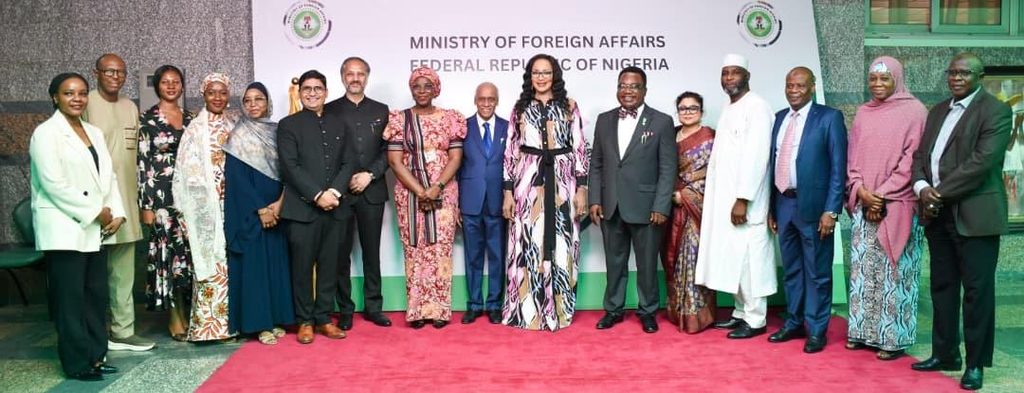
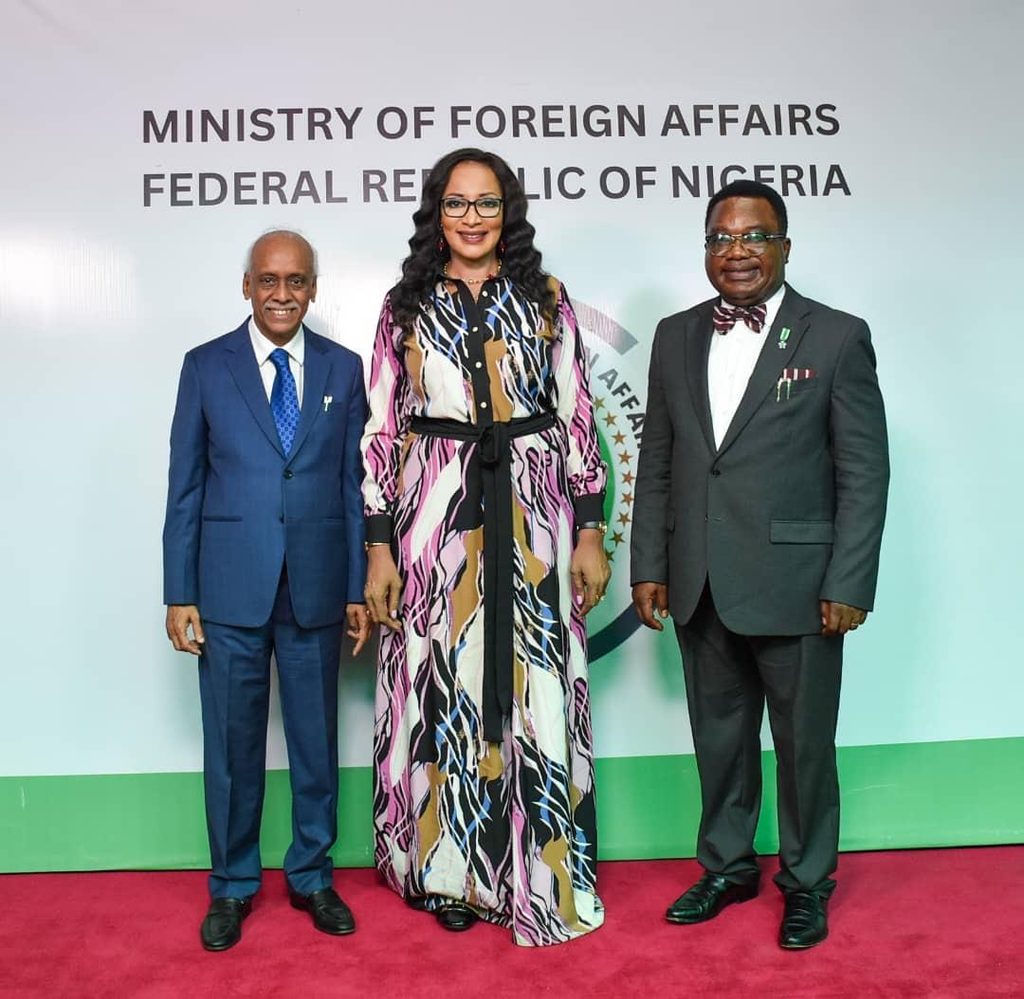
The development came into focus on Tuesday, November 10, 2026, when a joint high-level delegation of the National Human Rights Commissions of both countries paid a courtesy visit to the Minister of Foreign Affairs, Ambassador Bianca Odumegwu-Ojukwu, at the Ministry of Foreign Affairs in Abuja.
The delegation was jointly led by the Executive Secretary of Nigeria’s NHRC, Chief (Dr.) Anthony Ojukwu, OFR, SAN, and the Chairperson of India’s National Human Rights Commission, Hon. Justice V. Ramasubramanian.
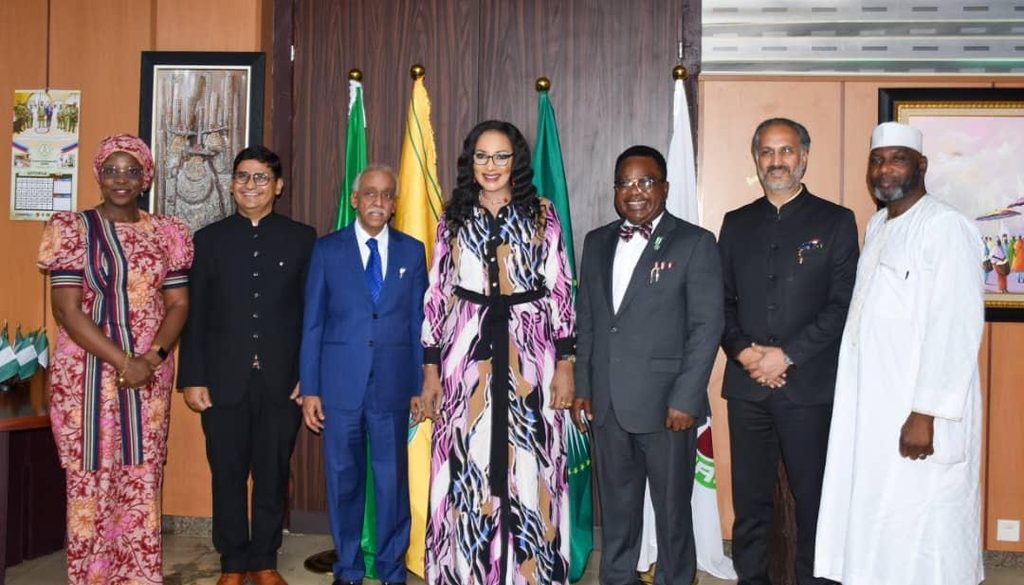
Receiving the delegation, Ambassador Odumegwu-Ojukwu described the MoU as a timely and strategic initiative that would translate the longstanding diplomatic relations between Nigeria and India into practical institutional cooperation.
She emphasised the importance of strengthening access to justice, improving complaint-handling mechanisms and enhancing the protection of persons in vulnerable circumstances.
According to the Minister, the agreement provides an opportunity for both countries to translate their shared commitment to human rights into practical actions that directly benefit citizens.
She stressed the need to ensure equitable access to essential support and services for vulnerable persons, noting that effective human rights protection must be reflected in the everyday experiences of the people.
The Minister further highlighted the strategic position of Nigeria and India as members of the Global South, urging stronger collaboration towards building a more inclusive international human rights architecture.

She expressed Nigeria’s readiness to deepen engagement with India and other international partners, particularly in advancing human rights diplomacy and strengthening the effectiveness of national and international human rights institutions.
Ambassador Odumegwu-Ojukwu stated that Nigeria’s approach to international human rights engagement would remain firmly anchored on established global principles.
She reaffirmed the country’s commitment to discharging its obligations under the United Nations Charter and the Universal Declaration of Human Rights, guided by the principles of “objectivity, non-selectivity and constructive international engagement.”
The Minister also expressed appreciation to United Nations Member States for their support towards Nigeria’s election to the Human Rights Council for the 2027–2028 term, describing the development as an important responsibility for the country.
She noted that Nigeria would continue to work with international partners to promote fundamental freedoms and strengthen the global human rights system.
In a significant aspect of the engagement, the Minister drew attention to concerns surrounding the treatment of Nigerian citizens serving in custodial centres in India.
She called for appropriate attention to their welfare, dignity and fundamental human rights, emphasising the importance of protecting the interests of Nigerian nationals wherever they may be.
Earlier, Chief Anthony Ojukwu described the newly signed MoU as an important framework for strengthening institutional relations and promoting technical cooperation between the two national human rights commissions.
He explained that the partnership would focus on improving complaint-management mechanisms, strengthening human rights compliance in security sector governance and promoting joint research on international law, human rights implementation and emerging issues.
The NHRC Executive Secretary also underscored the importance of closer collaboration with the Ministry of Foreign Affairs in integrating international human rights standards into Nigeria’s treaty obligations and diplomatic frameworks.
His remarks highlighted the importance of ensuring that international commitments translate into effective institutional practices and improved human rights protection at the national level.
On his part, India’s NHRC Chairperson, Justice V. Ramasubramanian, highlighted the longstanding historical, cultural and diplomatic relations between Nigeria and India.
He observed that both countries share important similarities, including large populations, ethnic and religious diversity, rich cultural heritage and democratic aspirations.
Justice Ramasubramanian described the MoU as an important step towards strengthening practical cooperation, institutional learning and capacity development through the exchange of experiences and best practices.
He emphasised the value of mutual learning between the two institutions, particularly in addressing emerging human rights challenges and improving the delivery of their respective mandates.
The partnership is expected to provide a platform for both commissions to exchange technical knowledge, strengthen institutional capacity and develop more effective approaches to human rights promotion and protection.
Beyond its immediate institutional benefits, the agreement represents another important dimension of Nigeria-India relations, extending their longstanding diplomatic engagement into the critical areas of human rights protection, governance and institutional development.
For Nigeria, the partnership comes at a significant time as the country prepares to assume its responsibilities on the United Nations Human Rights Council for the 2027–2028 term.
It also reinforces the importance of international partnerships in building stronger institutions, promoting accountability and ensuring that the rights and dignity of citizens remain central to governance.
The engagement ended with both sides reaffirming their commitment to advancing fundamental freedoms, strengthening human rights diplomacy and promoting meaningful international cooperation.
With the new agreement, Nigeria and India have opened another chapter in their bilateral relationship, one that places institutional development, shared experiences and the protection of human dignity at the centre of their cooperation.