
By Joy Omagha Idam
As political activities gradually gather momentum ahead of the 2027 general elections, the International Press Centre (IPC) and the Guild of Corporate Online Publishers (GOCOP) have called on Nigerian journalists to strengthen professional ethics, embrace rigorous fact-checking and focus more on issues that directly affect citizens.
The organisations warned that the increasing circulation of fabricated stories, manipulated photographs and videos, hate speech and politically motivated misinformation could distort public opinion, heighten political tensions and undermine confidence in Nigeria’s electoral process.
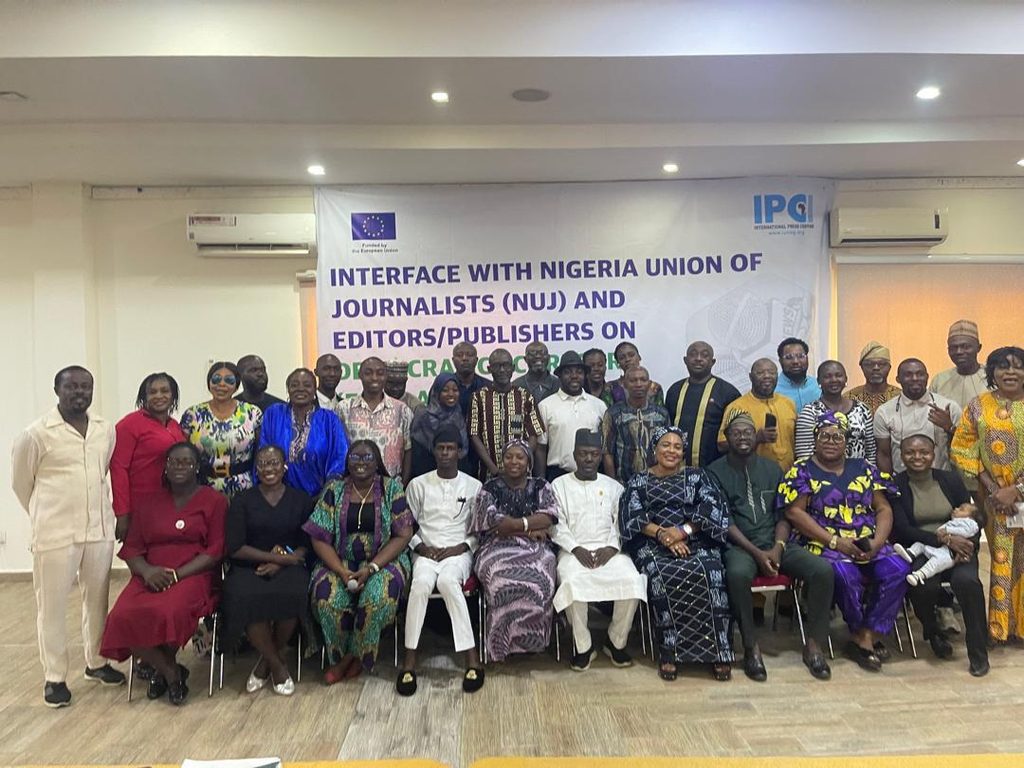
The call was made on Friday in Abuja during a one-day interface with journalists and online editors on professional and democratic accountability journalism ahead of the 2027 general elections.
Speaking at the engagement, the Executive Director of IPC, Dr. Lanre Arogundade, represented by the organisation’s Programme Officer, Melody Akinjiyan, challenged media practitioners to move beyond routine coverage of political campaigns, rallies and candidates to more meaningful reporting that reflects the needs, expectations and aspirations of Nigerians.
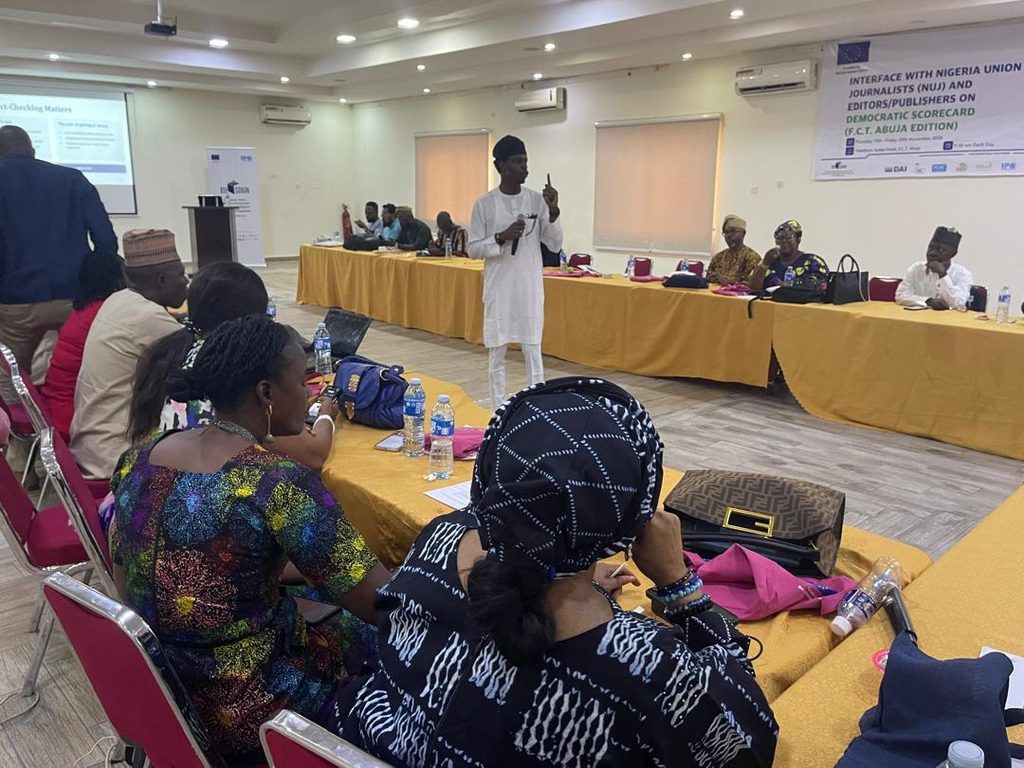
He maintained that elections should not be reduced to political contests, stressing that citizens’ welfare, governance performance and accountability must occupy a central position in media coverage.
According to him, the media has a critical responsibility to provide citizens with credible information, scrutinise campaign promises, hold political leaders accountable and create platforms for diverse voices in the democratic process.
He said the credibility of the electoral process would depend, to a considerable extent, on the quality, balance and accuracy of information available to voters.
Arogundade consequently urged journalists to embrace investigative and issue-based reporting, with particular attention to the economy, education, healthcare, insecurity, unemployment and infrastructure.
He challenged newsrooms to examine whether their coverage adequately reflected the concerns of ordinary Nigerians rather than concentrating excessively on political personalities and campaign activities.
The IPC executive director also called for inclusive electoral reporting that gives adequate visibility to women, young people, persons with disabilities and other groups whose perspectives are often underrepresented in mainstream political discussions.
Addressing the challenges posed by the digital information ecosystem, he observed that although social media platforms had expanded opportunities for public participation, they had also made it easier for false information, manipulated content and divisive political messages to spread rapidly.
He therefore cautioned journalists against sacrificing accuracy for speed, insisting that verification must remain a fundamental requirement of responsible journalism.
“Fact-checking and verification should not be treated as optional additions to journalism. They are integral to responsible electoral reporting,” he emphasised.
Arogundade further underscored the importance of protecting journalists’ safety and editorial independence, calling for an environment where media professionals could discharge their constitutional responsibilities without intimidation, harassment or unlawful interference.
In his goodwill message, GOCOP President, Mr. Danlami Nmodu, reinforced the need for vigilance among journalists, particularly in handling photographs, videos and other digital materials circulating on social media.
He warned that some online content could appear genuine while containing manipulated or entirely fabricated information, urging editors and reporters to establish the authenticity of materials before incorporating them into news reports.
“Before you publish, make sure that you are sure of what you are selling on the market,” Nmodu cautioned.
He noted that even experienced journalists could be misled by sophisticated digital manipulation if they failed to undertake proper verification.
According to him, the consequences of publishing false information go beyond damaging the reputation of media organisations, as misleading reports could influence voters’ perceptions, distort public debate and ultimately affect electoral choices.
Nmodu warned that journalists must recognise the enormous responsibility attached to their profession, particularly during election periods when inaccurate information could have far-reaching consequences for the country.
“The essence of our election is to elect leaders who will serve us. If we poison the minds of the people with facts that are not correct, they may elect the wrong people,” he said.
The GOCOP president urged media practitioners to remain committed to accuracy, credibility and public-interest journalism, irrespective of political pressure or the race to break news.
He also acknowledged the European Union for supporting initiatives designed to strengthen journalism and provide opportunities for professional engagement among media practitioners.
Earlier, Arogundade expressed appreciation to the European Union and other development partners for their support in organising the interface.
He also recognised the contributions of the resource persons, Dr. Sarah Gambo of the Department of Broadcasting, Film and Multimedia Studies, University of Abuja, and Mr. Ahmad Aluko, a researcher and information disorder analyst, whose presentations provided professional perspectives on the challenges confronting electoral journalism.
He urged participants to translate the lessons from the engagement into practical newsroom policies, stronger verification procedures and more accountable reporting as the country approaches the 2027 polls.
The engagement reinforced the growing need for a responsible media landscape in which facts take precedence over sensationalism, public interest over political propaganda, and professional integrity over the pressure to publish unverified information.