
The Centre for Information Technology and Development (CITAD) has warned that society cannot make meaningful progress without critical thinking and the ability of citizens, particularly young people, to question prevailing social and political assumptions.
The Executive Director of CITAD, Malam Y. Z. Ya’u, gave the warning during the graduation ceremony of 47 participants from the eighth cohort of the Mu’azzam Ibrahim Institute of Philosophy and Political Theory in Kano.
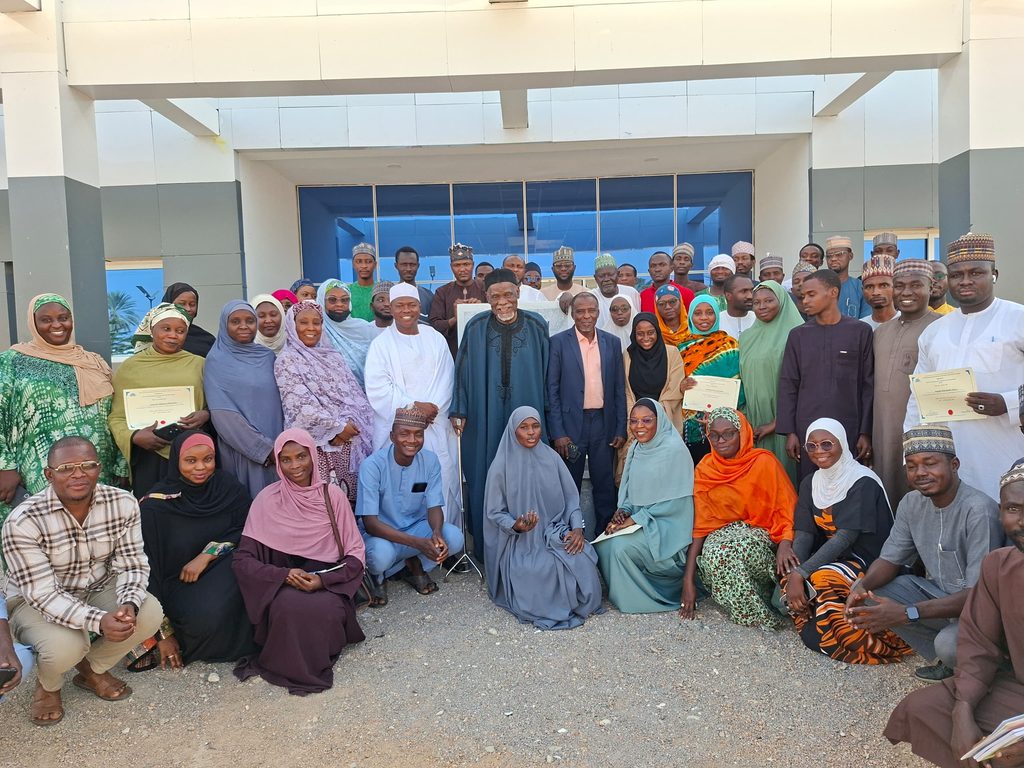
The ceremony, held on Thursday at Baba-Ahmed University, Kano, followed a three-day intensive learning programme organised from November 24 to 26.
Ya’u said the institute was established seven years ago in response to the declining quality of philosophy and political theory education, which he said had weakened critical thinking among young people.
“We discovered a growing need for a platform where young people can engage with philosophical and critical questions,” he said.
He explained that the institute was designed to strengthen participants’ analytical reasoning and encourage them to question established social and political beliefs.
The CITAD boss expressed concern that many young people were gradually losing the ability to ask questions, warning that the frontiers of knowledge were declining due to the absence of spaces for engaging with unanswered questions.
“Any society that’s not thinking critically, that’s not asking critical questions will not progress,” Ya’u added.
Also speaking, philosopher Malam Ibrahim Mu’azzam, a former lecturer in the Department of Political Science at Bayero University, Kano, stressed the importance of questioning in developing human understanding.
He urged the participants to “clear the fog in their heads” and challenge societal attitudes that discourage critical questioning.
“People should continue questioning themselves about how humans betray many things, from their values to their society,” Mu’azzam said.
The institute, named after Mu’azzam, was established by CITAD to challenge conventional thinking, promote lateral thinking and encourage young people to explore alternative perspectives and develop innovative solutions to societal challenges.
During the three-day programme, participants received training in political theory, philosophical inquiry, ethics, logic, democratic governance and African intellectual traditions.
The sessions also examined how philosophical approaches and critical thinking could help young people interrogate societal problems, challenge prevailing narratives and contribute to meaningful social change.
In his goodwill message, the Coordinator of the Institute, Dr Mohammed Aminu Aliyu, urged the graduates to apply the knowledge acquired to their personal development and the advancement of society.
He also encouraged them to share their knowledge with their respective communities, describing it as a collective responsibility.
CITAD said the institute was established to address the declining emphasis on philosophy and political theory in higher education while promoting critical reading, independent thinking and informed engagement with governance and societal issues.
At the end of the programme, the 47 participants were awarded certificates in recognition of their successful completion of the eighth cohort.