
By Joy Omagha Idam
The Economic Community of West African States (ECOWAS) Parliament has raised concerns over the growing impact of insecurity and armed conflicts on children’s education and safety, warning that thousands of school closures and mass displacement are increasing their vulnerability to human trafficking, forced labour and exploitation across the region.
The regional organisation has called for stronger coordinated interventions, improved social protection systems and increased investment in child welfare to address the worsening situation, particularly in conflict-affected communities where children are increasingly exposed to abuse, exploitation and recruitment into armed groups.
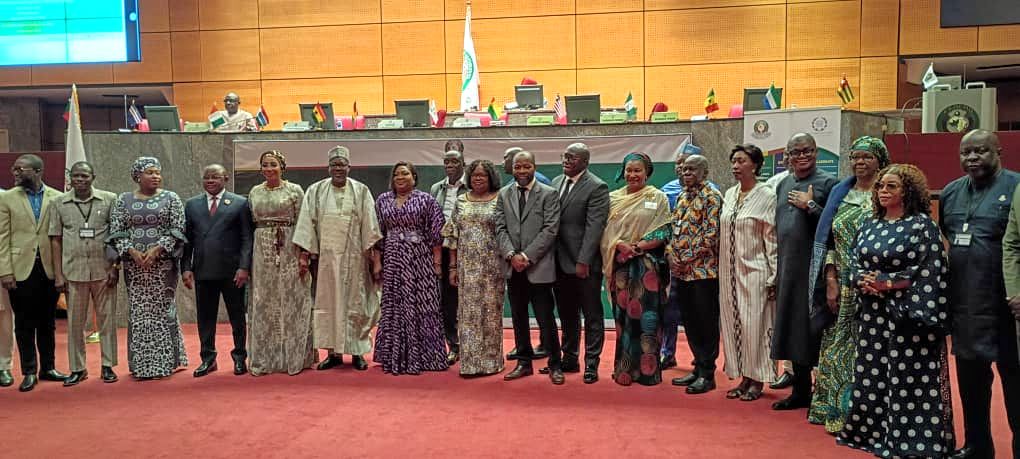
The Commissioner for Human Development and Social Affairs of the ECOWAS Commission, Prof. Nassirou Arifari Bako, raised the alarm during a presentation at a regional parliamentary workshop on child trafficking and child labour held as part of the ongoing Second Ordinary Session of the ECOWAS Parliament in Abuja.
Bako disclosed that approximately 8,450 schools had been affected by insecurity in the Central Sahel, while an estimated 4.1 million people had been displaced by conflicts, with women and children constituting a significant proportion of those affected.
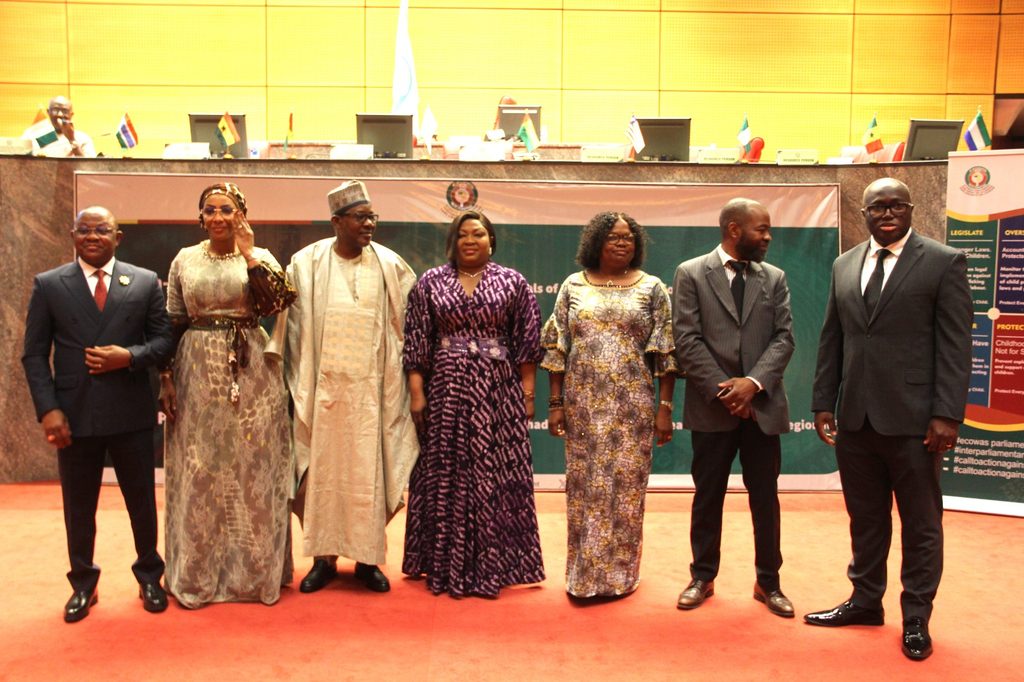
He explained that the disruption of educational activities, displacement of families and weakening of community support systems had created opportunities for traffickers and criminal networks to prey on vulnerable children.
According to him, children deprived of education and adequate family support are increasingly exposed to domestic servitude, forced labour, trafficking and recruitment by armed groups.
He stressed that insecurity goes beyond the immediate consequences of violence, as it also undermines children’s access to education, healthcare, protection and other essential social services.
The ECOWAS Commissioner further highlighted the scale of human trafficking in the region, disclosing that children accounted for 5,344 out of the 12,959 cases referenced in his presentation.
He also revealed that prosecutions and convictions relating to human trafficking across ECOWAS member states increased from 388 in 2024 to 515 in 2025.
The figures, he noted, underscore the importance of strengthening law enforcement institutions, improving regional collaboration and ensuring that perpetrators of trafficking and exploitation are brought to justice.
Bako, however, expressed concern over inadequate social protection coverage across West Africa, observing that vulnerable households often lack the necessary financial and institutional support to protect their children from exploitation.
He called for the establishment of a regional victim support fund, complemented by national victim trust funds, to provide assistance, rehabilitation and reintegration support for survivors of human trafficking.
He also advocated increased budgetary allocations to social protection programmes, improved coordination of national social registries and stronger parliamentary oversight to ensure effective implementation of child protection policies.
The Commissioner emphasised that protecting children requires more than the formulation of laws and policies, stressing the need for practical interventions that address poverty, insecurity, displacement and other factors that expose children to exploitation.
Earlier, the Senior Programme Officer of the Inter-Parliamentary Union (IPU), Akiyo Afouda, representing the organisation’s Secretary-General, described child trafficking and child labour as persistent challenges requiring sustained political commitment and collective action.
Afouda cited estimates from the International Labour Organisation (ILO) and the United Nations Children’s Fund (UNICEF), indicating that approximately 138 million children were engaged in child labour globally, with 46.6 million of them in sub-Saharan Africa.
He warned that the existence of national laws and regional agreements would have limited impact without effective implementation, adequate funding and consistent monitoring.
The IPU representative urged parliamentarians to take a more active role in monitoring the implementation of child protection legislation and policies, particularly through effective oversight, community engagement and collaboration with relevant institutions.
He further encouraged lawmakers across West Africa to strengthen cooperation through joint parliamentary initiatives and coordinated missions aimed at identifying and addressing the underlying causes of child trafficking and labour.
According to him, the cross-border nature of human trafficking makes it necessary for countries to move beyond isolated national responses and embrace stronger regional mechanisms for prevention, prosecution and victim support.
He also underscored the importance of collaboration between national parliaments and regional institutions in ensuring that commitments made at legislative and policy levels translate into measurable improvements in children’s welfare.
The workshop provided a platform for parliamentarians and regional stakeholders to examine practical strategies for strengthening legislative action, institutional accountability and cooperation in the fight against child trafficking, child labour and other forms of exploitation.
Participants were expected to explore ways of improving parliamentary oversight, strengthening existing legal frameworks and ensuring that governments prioritise the protection of vulnerable children.
The discussions come amid growing concerns over the humanitarian and social consequences of insecurity in parts of West Africa, where conflict, poverty, displacement and limited access to education continue to place millions of children at risk.
ECOWAS maintained that addressing the crisis requires a comprehensive regional approach that combines security interventions with education, social protection, stronger law enforcement and sustained support for victims.
The regional call reinforces the need for governments, lawmakers and development partners to treat child protection as a shared responsibility and ensure that every child, regardless of location or circumstance, has access to education, safety and the opportunity to enjoy a secure future.