
By Remi Johnson
As part of measures to protect casual staff and the general public from any form of hazard or damage within construction sites, the Abuja Metropolitan Management Council (AMMC) says all buildings under construction are to henceforth undergo Mandatory Builders’ Liability Insurance.
To this end, the Council has developed the AMMC Builders’ Liability Insurance Centralized Digital Platform to manage the submission, verification, assessment, approval, and administration of Builders’ Liability Insurance policies, as well as connect builders, surveyors, brokers, and insurers through a single system.
The platform enables users to submit applications online, track policy status in real time, support approval processes, and maintain transparency, accountability, and audit trails throughout the policy life cycle.
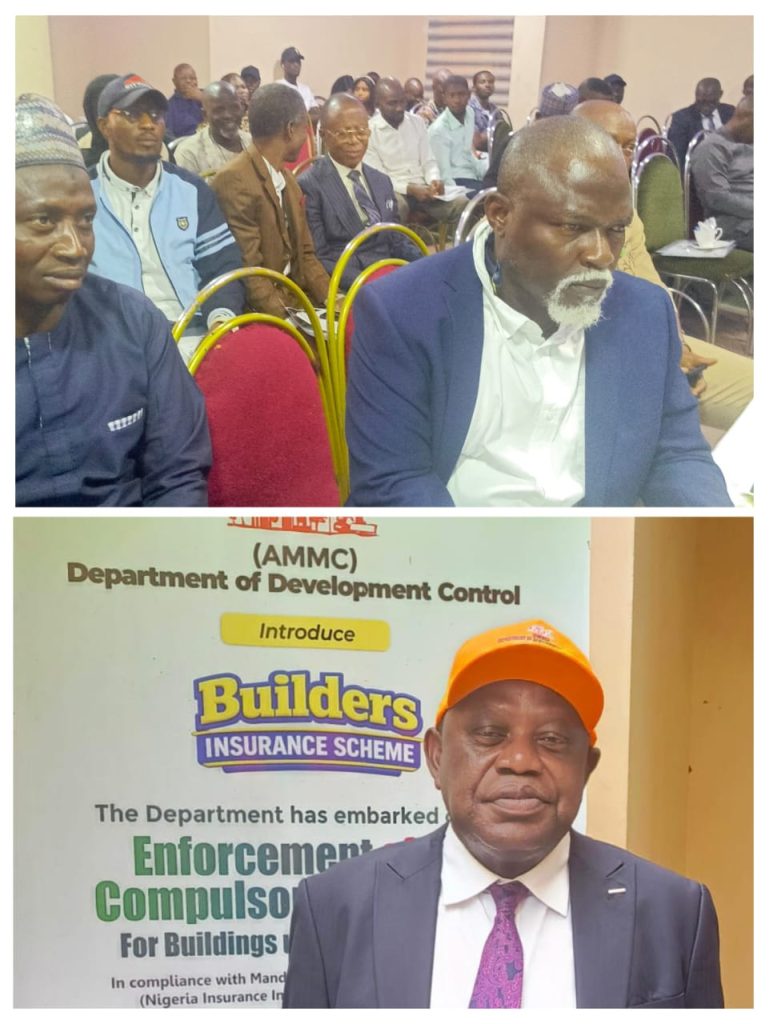
A Deputy Director and an architect with the Department of Development Control, Mr.Ajibade Olayinka made this known during a one-day training session on Builders’ Liability Insurance (BLI), held at Day Spring Hotel in Zone 6, Abuja.
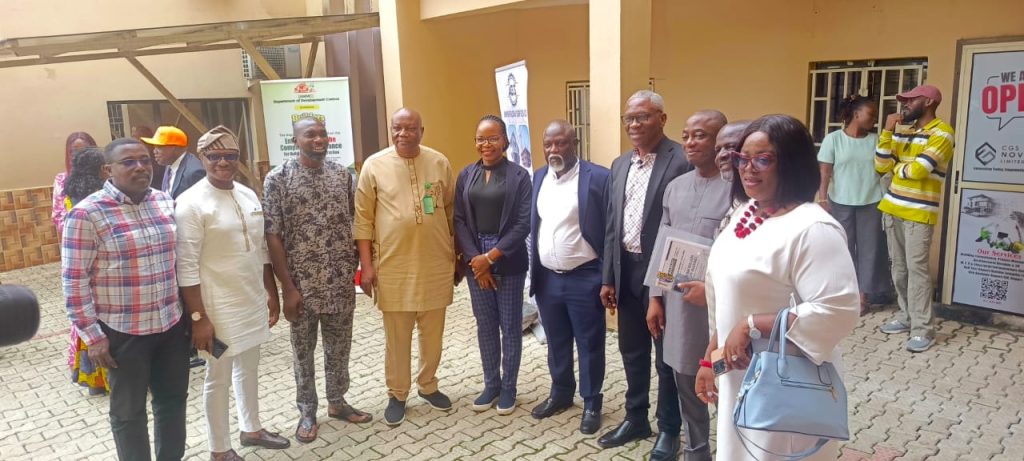
Mr. Olayinka explained that the training was organized by AMMC in collaboration with Insurance partners to bring developers, contractors, and other critical stakeholders in the building industry up to speed with the Nigeria Insurance Industry Reform Act (NIIRA), 2025.
According to Mr. Olayinka, with the introduction of the builders’ insurance scheme, more compliance would be observed on construction sites, while processes and protocols would be better enhanced to mitigate incidents of building collapse.
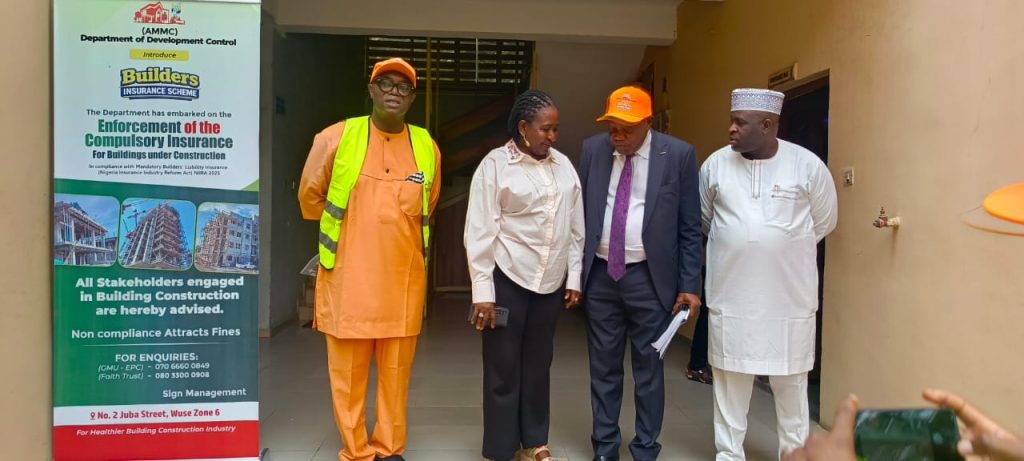
“The issue of insurance is another layer introduced by the administration to protect workers on site against hazards and building collapse. So, we are collaborating with the insurance industry to ensure that workers on site are protected from hazards resulting from negligence, natural disasters, or whatever might happen on site.
“In most cases, when you have a building collapse, most of the site workers are uninsured and unknown casual workers, and they are never compensated. But with this scheme, it ensures that they get some kind of remedy.”
In a presentation, one of the managers of the BLI Project, Dr. Sammy Olaniyi, emphasized the need for all stakeholders to comply with the NIIRA 2025 Reform Act by insuring their buildings under construction annually until the project is fully completed and certified for habitation.
Dr. Olaniyi also expressed the hope that, with the scheme, monitoring and supervision would be strengthened, as well as ensuring that each floor of a storey building under construction is certified by professionals before proceeding to the next floor.
Dr. Olaniyi noted that it is now compulsory for all developers of buildings above one floor under construction in the Federal Capital Territory to obtain Builders’ Liability Insurance.
He charged builders, developers, and contractors to comply, warning that non-compliance attracts a fine of ₦5 million and 12 months imprisonment, or project shutdown.
Dr. Olaniyi assured that the BLI scheme, apart from being a revenue drive, is primarily aimed at guaranteeing financial redress for victims of construction-related accidents, enforcing sound ethical practices, and promoting economic stability and sustainable growth in the sector.
“In Section 75 of the NIIRA Act 2025, the provision states that anybody constructing a building that is over one floor must have insurance. The whole essence is to protect third parties, people working on sites, passers-by, or properties located around the construction site that may be negatively affected. Basically, it is to ensure that innocent people or property owners are compensated.
He added that the era of lack of compensation for casual workers who sustain injuries on construction sites is over.
Dr. Olaniyi, who identified some of the major causes of building collapse in Nigeria as the use of substandard materials, poor supervision, and the engagement of quacks, among others, urged Nigerians to always engage the services of professionals.
“For those who already have approvals and are already on site, if they do not have insurance, we will visit them to ensure they obtain Builders’ Liability Insurance, because it is meant for every building under construction. Until the building is completed, you must continue to pay insurance on it.
“The life of every human being is important. Therefore, when you save lives by ensuring people do the right thing, you are building capacity for the country,” Olaniyi said.