By Sharon Akuboh, Abuja
The Federal Government, security agencies and media stakeholders have renewed their commitment to building stronger partnerships in the fight against insecurity, emphasizing that effective collaboration between journalists and security institutions is critical to safeguarding Nigeria’s future.
The renewed resolve emerged at the National Security Summit organised by the Nigeria Union of Journalists (NUJ) in collaboration with the Department of State Services (DSS) in Abuja. The summit, themed “Media and Security Agencies as Partners in Nation Building,” brought together top government officials, security chiefs, media executives, academics and civil society leaders to chart a collective path towards addressing Nigeria’s complex security challenges.
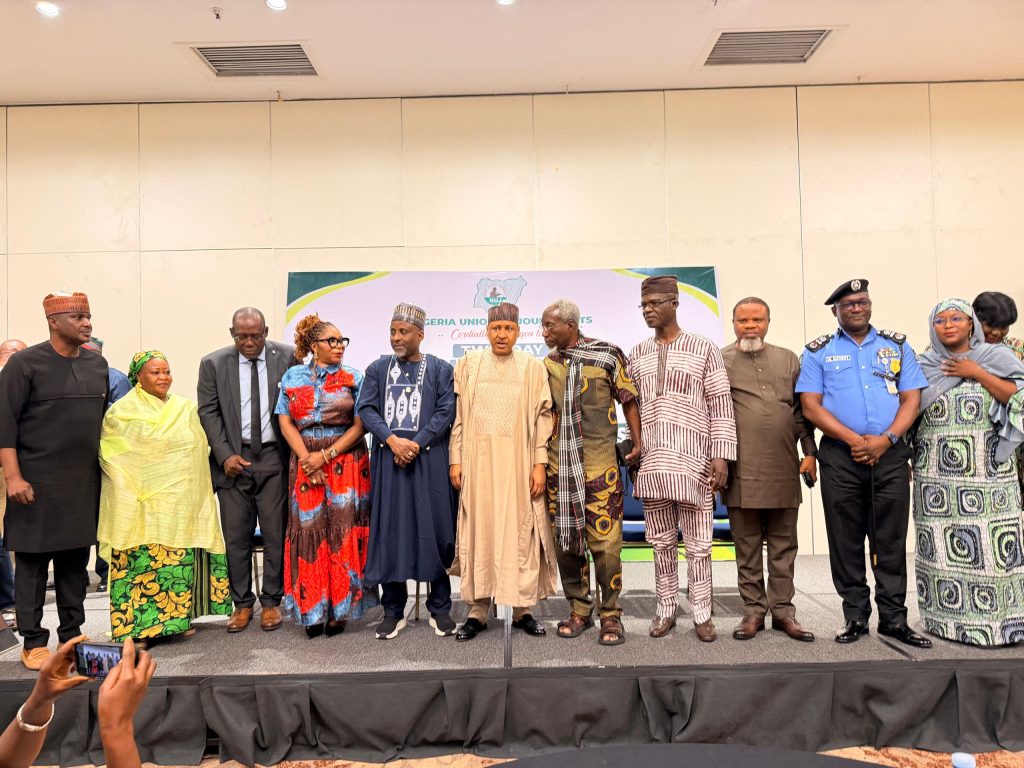
Speakers at the summit agreed that tackling terrorism, banditry, kidnapping, cybercrime, violent extremism and misinformation requires a coordinated national response involving government institutions, the media and the public. They stressed that national security can no longer be viewed solely through the lens of military action but must also include strategic communication, responsible journalism and public engagement.
President of the Nigeria Union of Journalists (NUJ), Alhassan Yahaya Abdullahi, said journalists occupy a strategic position in society and must work alongside security agencies to promote peace, stability and national cohesion.
According to him, while security agencies are charged with protecting lives and property, the media plays an equally important role in informing citizens, shaping public opinion and strengthening accountability in governance.
Declaring the summit open, the Minister of Information and National Orientation, Mohammed Idris, described the gathering as timely in view of the evolving security threats confronting the country. He urged journalists to maintain professionalism and uphold ethical standards in their reportage, warning that fake news and misinformation could undermine security operations and erode public trust.
The minister also cautioned media organisations against inadvertently amplifying the activities of insurgents and terrorists through sensational reporting, noting that criminal groups often thrive on publicity generated through media coverage.
Representing the Minister of Defence, Rear Admiral Olusanya Bankole reaffirmed the military’s recognition of the media as a critical stakeholder in modern security operations. He disclosed that the Ministry of Defence is considering arrangements that would allow journalists to accompany military units during selected operations to facilitate accurate reporting and deepen public understanding of security realities.
The National Security Adviser, Mallam Nuhu Ribadu, represented by Chido Onumah, highlighted the importance of balancing the public’s right to information with national security imperatives. He revealed that the Office of the National Security Adviser is developing a National Security Strategic Communication Framework designed to strengthen information sharing, fact-checking mechanisms and collaboration between security institutions and media organisations.
A major highlight of the summit was the intervention by the National Drug Law Enforcement Agency (NDLEA), which drew attention to the strong connection between substance abuse, violent crime and insecurity.
Speaking on behalf of NDLEA Chairman and Chief Executive Officer, Brigadier General Mohamed Buba Marwa (Rtd), an Assistant Superintendent of Narcotics described drug abuse as a major driver of criminality, insurgency and social instability across the country.
The agency called for increased investment in agriculture, sports development and youth empowerment programmes as practical strategies for steering young people away from drug abuse and criminal activities. According to the NDLEA, productive engagement through farming, entrepreneurship and sporting activities can significantly reduce the vulnerability of youths to drug addiction, gang recruitment and extremist influences.
The agency further urged media practitioners to intensify public enlightenment campaigns aimed at discouraging substance abuse while promoting healthy lifestyles and positive values among Nigerian youths.
Deliberations at the summit focused extensively on strengthening media-security relations, improving crisis communication, countering misinformation and building public confidence in national security institutions.
Participants unanimously agreed that trust, professionalism, responsible information management and sustained engagement between journalists and security agencies remain indispensable to achieving lasting peace, security and development in Nigeria.
The summit concluded with a renewed commitment by all stakeholders to foster closer cooperation in confronting emerging security threats and advancing national unity.