
By Joy Omagha Idam, Abuja
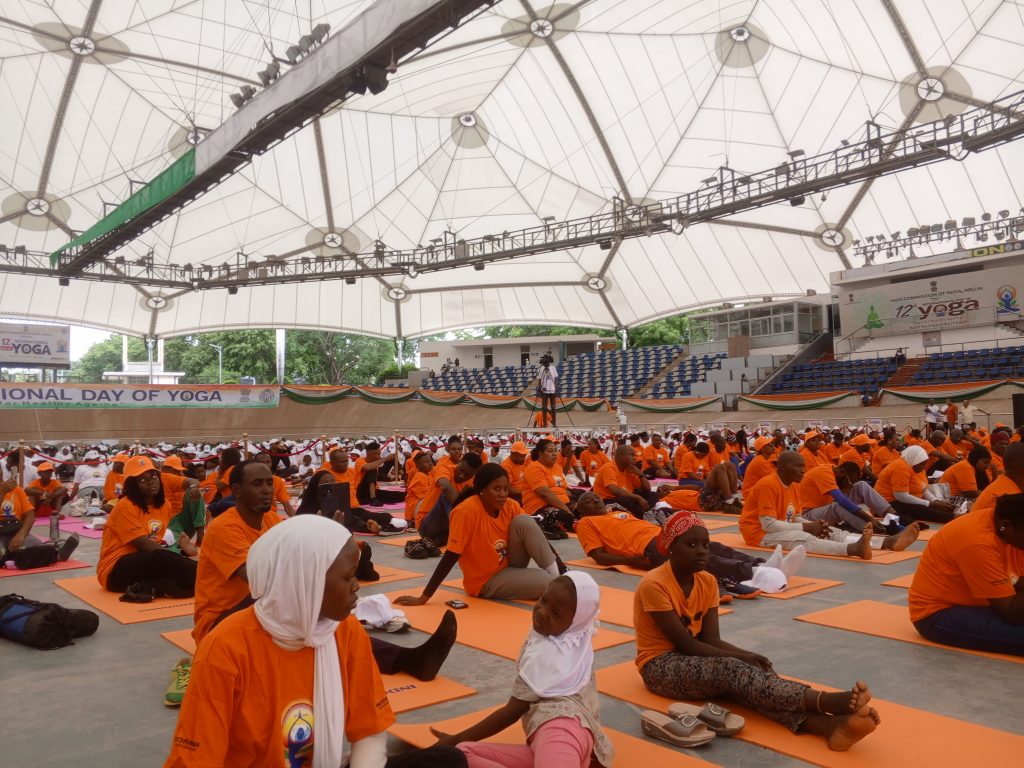
As the morning sun cast its gentle glow over the Velodrome at the National Stadium in Abuja, thousands of participants moved in unison, stretching, breathing, and embracing a centuries-old practice that has become a global symbol of wellness.
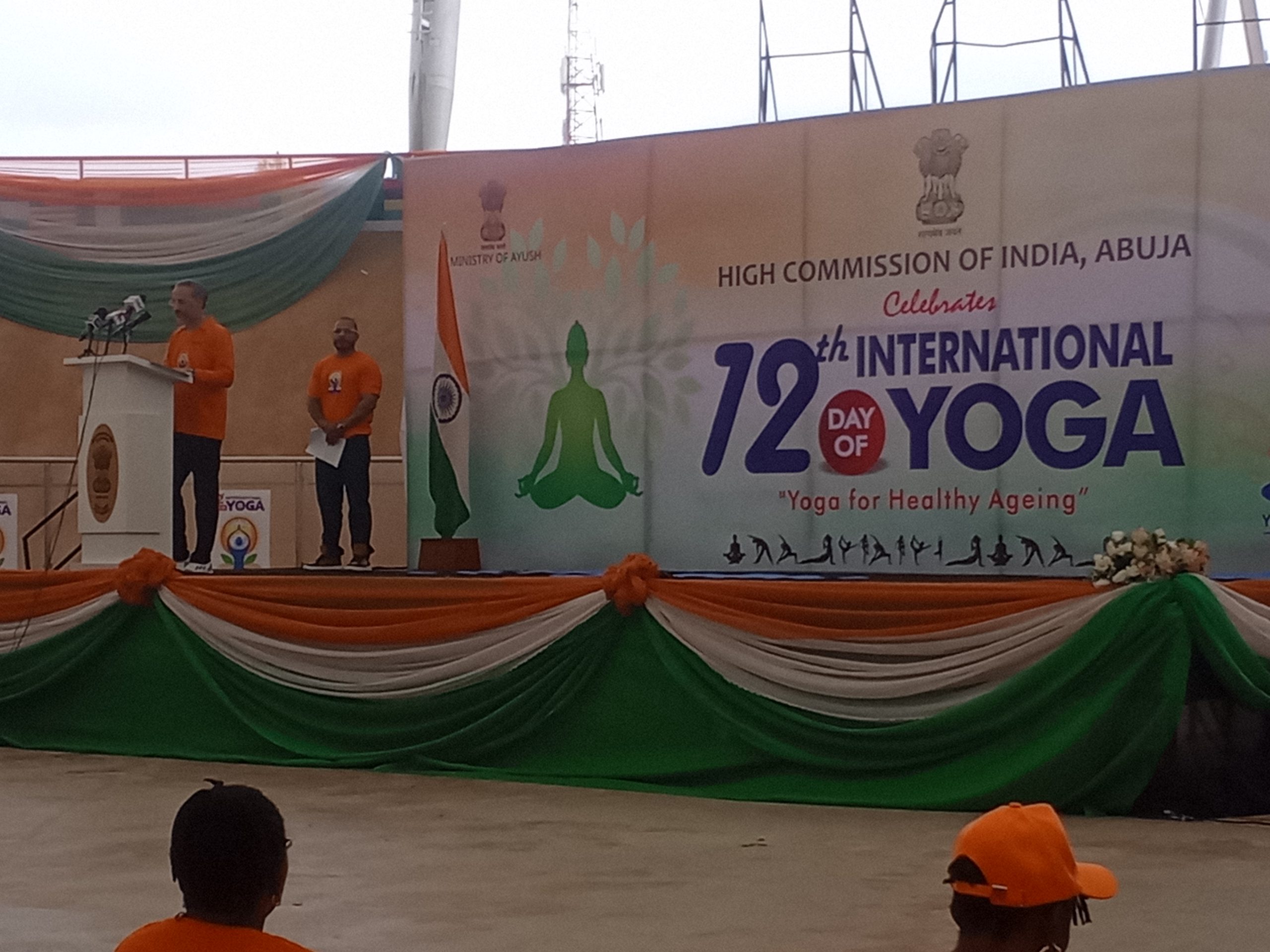
The occasion was the 12th International Day of Yoga (IDY) celebration, where more than 2,000 Nigerians joined diplomats, government officials, students, and members of the Indian community in a colourful display of unity, health consciousness, and cultural exchange.
Beyond the synchronized movements and peaceful atmosphere, the event carried a powerful message: healthy ageing is possible, and yoga could be one of the keys to achieving it.

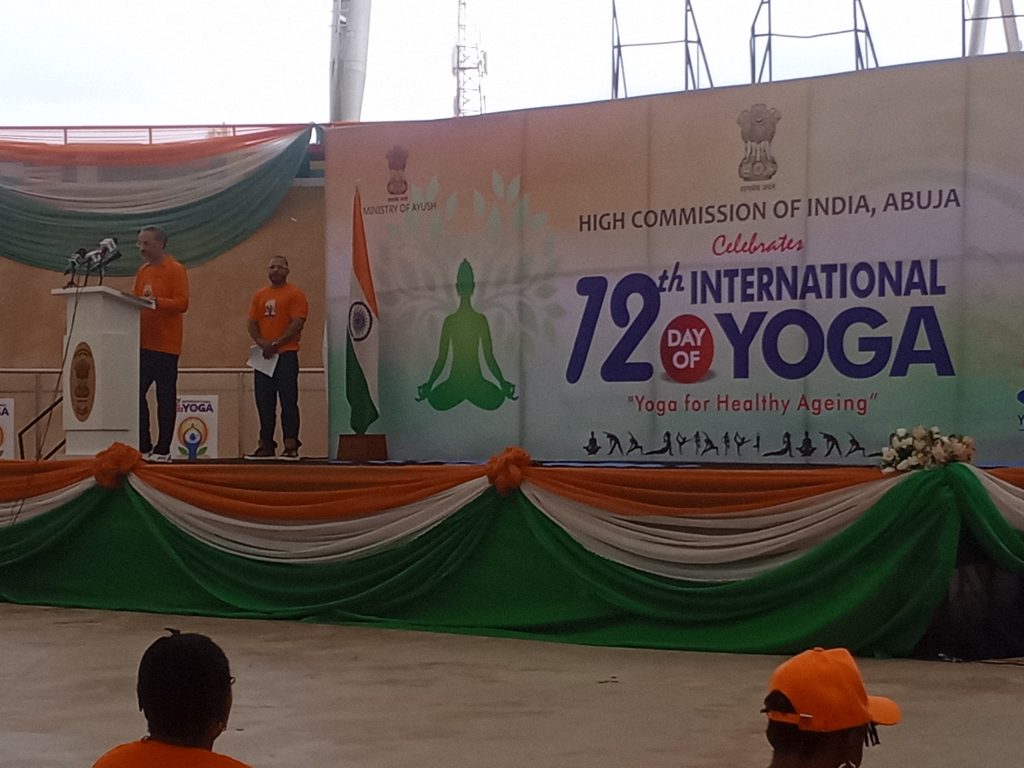
This year’s theme, “Yoga for Healthy Ageing,” resonated strongly with participants as the High Commission of India in Nigeria, Abhishek Singh used the occasion to encourage Nigerians to adopt healthier lifestyles through regular yoga practice.
Addressing the gathering, the High Commissioner of India described yoga as far more than a physical exercise. According to him, it is a holistic discipline that harmonizes the mind, body, and spirit while promoting peace, resilience, and overall well-being.
In a world increasingly characterized by stress, sedentary lifestyles, and rising health concerns, the envoy noted that yoga offers a practical and accessible solution for people of all ages.
“Yoga is a secret superpower. It builds strong bodies and teaches us how to find calm when life gets loud,” he said, drawing smiles and nods from the audience.
The message was particularly significant at a time when conversations around healthy ageing are becoming more urgent globally. As populations live longer, health experts are increasingly emphasizing not just longevity but the quality of life in later years.
Yoga, practitioners say, contributes to that goal by improving flexibility, balance, strength, and mobility while also reducing stress and supporting mental health. For older adults, these benefits can translate into greater independence, reduced risk of falls, and improved overall wellness.
The Abuja event highlighted yoga’s growing acceptance beyond its country of origin. What began thousands of years ago in India as a spiritual and physical discipline has evolved into a worldwide movement embraced across cultures, religions, and nationalities.
The journey of yoga to global recognition gained momentum in 2014 when the United Nations General Assembly adopted a resolution proclaiming June 21 as the International Day of Yoga following a proposal by Indian Prime Minister Narendra Modi. Two years later, UNESCO recognized yoga as part of humanity’s intangible cultural heritage, further cementing its global relevance.
At the Abuja celebration, that international spirit was evident. Diplomats mingled with students, government officials shared the space with fitness enthusiasts, and participants from different backgrounds came together under a common goal of promoting wellness.
Among the dignitaries present were Ambassador Babagana Wakil, Chief of Protocol at Nigeria’s Ministry of Foreign Affairs; Muhammad Saidu Dahiru, High Commissioner-Designate to India; Chairman of the National Sports Commission, Dr. Shehu Dikko; and Director-General of the Commission, Dr. Bukola Olopade.
Their presence reflected the growing recognition of wellness initiatives as an important component of national development.
Experts argue that preventive healthcare measures such as regular physical activity can help reduce the burden of chronic diseases, lower healthcare costs, and improve productivity. In this regard, yoga’s appeal extends beyond individual benefits to broader public health outcomes.
The celebration also served as a reminder that wellness is not solely about physical fitness. The breathing exercises, mindfulness techniques, and meditation practices associated with yoga are increasingly valued for their role in addressing anxiety, stress, and emotional challenges.
For many participants, the event provided an opportunity to disconnect from the pressures of everyday life and reconnect with themselves.
The atmosphere throughout the programme was one of calm, reflection, and optimism. Guided yoga sessions encouraged participants to focus on their breathing, posture, and inner balance, reinforcing the day’s central message of holistic well-being.
As the event drew to a close, the High Commissioner expressed appreciation to the National Sports Commission, corporate partners, members of the Indian community, and volunteers whose efforts made the gathering possible.
Yet perhaps the most enduring takeaway was his call for participants to carry the lessons of yoga beyond the mat and into their daily lives.
In an age where fast-paced living often leaves little room for self-care, the celebration offered a timely reminder that healthy ageing begins with simple, consistent choices. For the thousands who gathered in Abuja, yoga was not merely an exercise routine—it was presented as a pathway to a healthier, calmer, and more balanced future.
As Nigeria joins the rest of the world in marking the International Day of Yoga, the message remains clear: wellness is a lifelong journey, and yoga may be one of its most enduring companions.