
By Tamunokuro Briggs
In a political climate often dominated by conflict and calculation, the celebration of sports and those who excel in it, can sometimes seem like an afterthought. Yet, Vice Admiral Ibok-Ete Ibas (retd.), the Sole Administrator of Rivers State, has demonstrated a striking appreciation of the role sports play in shaping identity, fostering unity, and inspiring hope. Nowhere has this been more visible than in his decision to honour the Rivers Queens, the state’s formidable female handball team, for their sterling performance in the national championship.
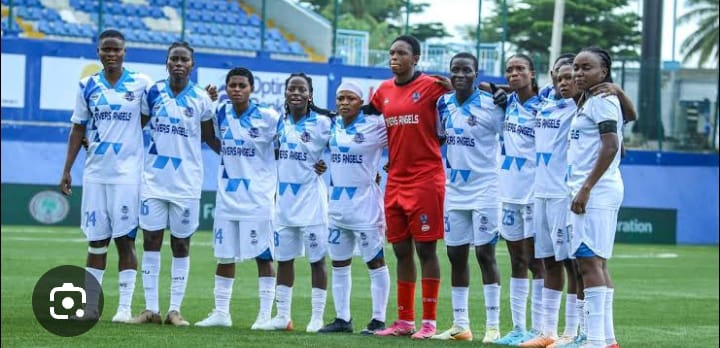
At a time when most administrative attention is consumed by security, infrastructure, and political reconciliation, Ibas’s recognition of the Queens is both symbolic and strategic. It acknowledges the resilience and excellence of Rivers women in sport, while also sending a clear message that the emergency government is not solely about stabilisation, it is about celebration, inclusion, and long-term investment in the state’s human capital.
The event itself was modest in pomp but rich in substance. Held at the Government House in Port Harcourt, Ibas welcomed the victorious team not with perfunctory handshakes but with heartfelt commendation, lauding their discipline, grit, and sportsmanship. He awarded each team member a monetary gift, pledged additional support for their training and welfare, and promised to upgrade their sporting facilities. In doing so, he set a new precedent for valuing female athletes, not merely as ceremonial guests at state functions, but as key ambassadors of the state’s pride and promise.
It’s important to understand what makes this moment historic. For years, sports development in Rivers State, particularly for women has lagged behind its potential. While the state boasts strong football clubs and athletic tradition, systemic neglect, poor funding, and a lack of structured reward mechanisms have hindered broader growth. The Rivers Queens’ success, therefore, is not just a victory on the court but a triumph over years of infrastructural deficit and gendered marginalisation.
By celebrating the team, Ibas has reignited the hope that sports can once again be a tool for both state branding and youth empowerment. More so, he has placed gender inclusion at the heart of this strategy. In a state where young girls often face cultural and structural hurdles to participation in sports, such visible support from the highest level of government challenges outdated perceptions and opens up new avenues of aspiration.
The broader impact of such recognition cannot be overstated. Across Nigeria, female athletes often labour in obscurity, receiving far less attention and reward than their male counterparts. When a state leader chooses to invert that narrative, it echoes far beyond the stadium. It tells girls in Bonny, Bori, Eleme, and Etche that their talent is valid. That with hard work and focus, the state will stand behind them.
Furthermore, the gesture fits neatly into the broader pattern of Ibas’s leadership style—quiet, disciplined, and impact-focused. Just as he has reformed contract procedures without the drumbeat of press releases, and stabilised health service delivery without the blare of sirens, he has made a statement in sports without turning it into spectacle. But it is precisely this understated style that is resonating with Rivers people, many of whom have grown weary of showmanship without substance.
Analysts believe the renewed support for the Rivers Queens may trigger a wave of investment in youth and grassroots sports across the state. Already, the State Ministry of Sports Development has hinted at plans to establish a Women’s Sports Excellence Academy in conjunction with local and international partners. If realised, such a project could transform Rivers into a regional hub for female athletic development.
This is not to say that the road ahead is without challenges. Facilities still need upgrading. Qualified coaches are in short supply. Corporate sponsorship remains minimal. And, perhaps most critically, societal attitudes toward women in competitive sports still need to evolve. However, leadership, especially the kind that leads by example, can catalyse the change required.
Vice Admiral Ibas’s honouring of the Rivers Queens may seem like a simple act, but in a state trying to regain its balance after political tumult, it is a masterstroke in morale building. It exemplifies a government that sees, listens, and responds. It reflects an administrator who understands that development is not only built in roads and bridges, but also in dreams nurtured and aspirations elevated.
In the final analysis, sports is not just play; it is power. The power to unify fractured communities. The power to empower girls and women. The power to restore hope where cynicism once reigned. By choosing to invest his time and resources in honouring the Rivers Queens, Ibas has invested in all of us.
Tamunokuro Briggs writes from Bonny
