
By Sharon Akuboh
The National Chairperson of the Nigeria Association of Women Journalists (NAWOJ), Hajia Aishatu Ibrahim, has presented a comprehensive account of her three-year stewardship, highlighting institutional achievements, restored internal harmony, strategic partnerships and areas requiring urgent attention as she prepares to lead the Association into another three-year tenure.
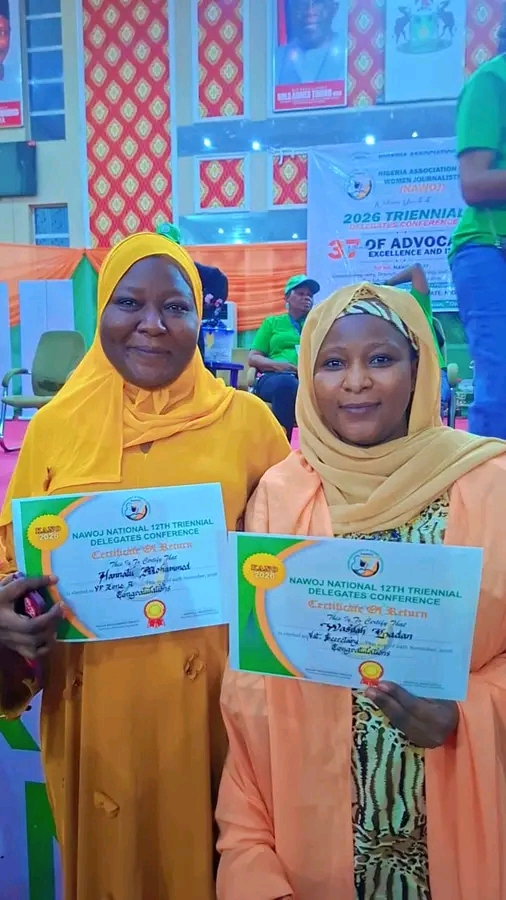
Speaking at the opening ceremony of the 2026 Triennial National Delegates Conference in Kano State on November 24, 2026, Ibrahim described her administration’s journey as one defined by institutional rebuilding, collective commitment and efforts to reposition NAWOJ as a stronger voice in the advocacy for women’s rights, press freedom, peacebuilding and good governance.
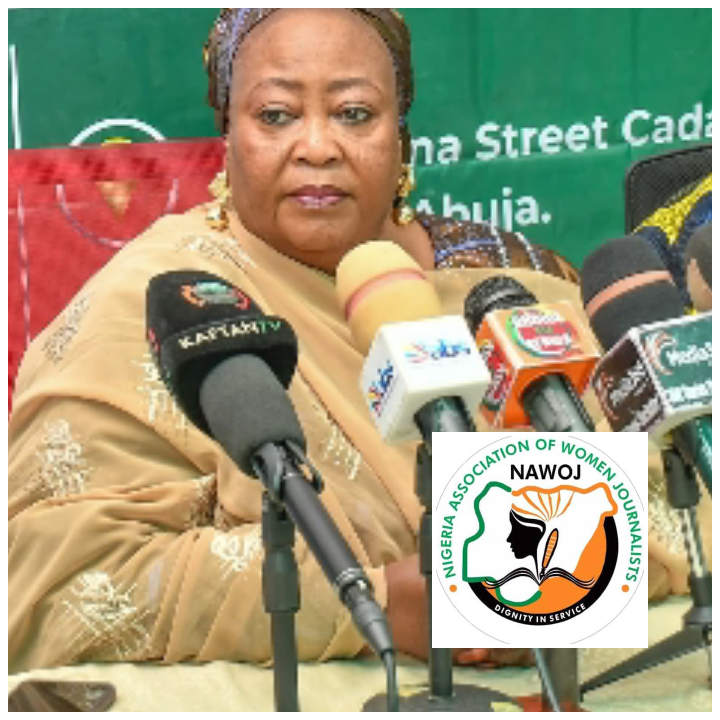
The National Chairperson, who secured a renewed mandate alongside most members of her team through an unopposed return, said the development was not a personal victory or an entitlement but a profound expression of confidence by members and a greater call to responsibility.
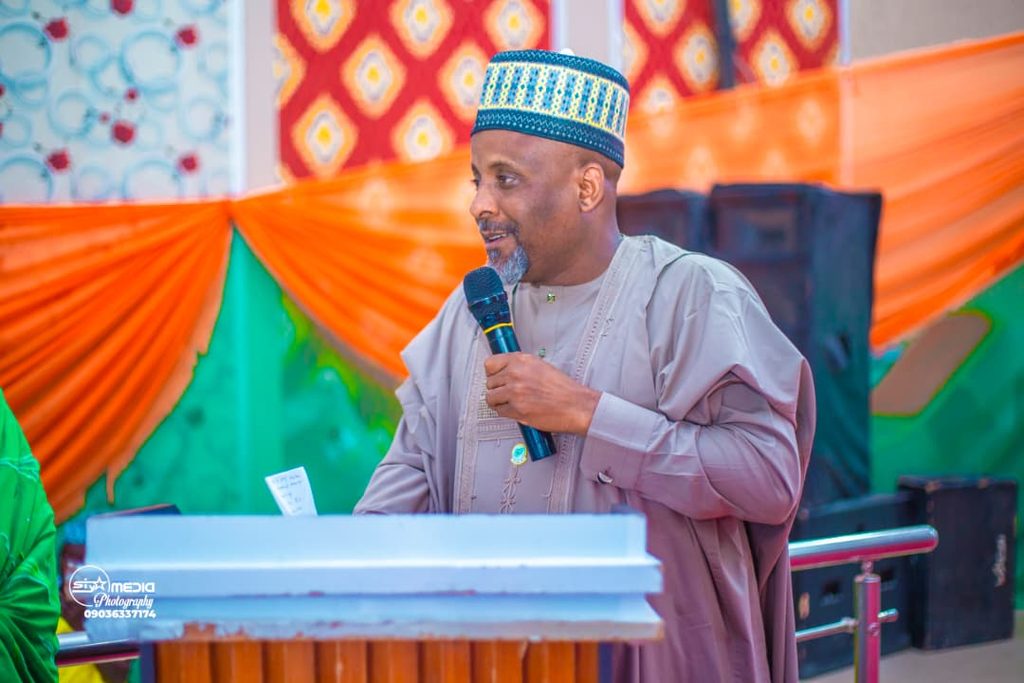
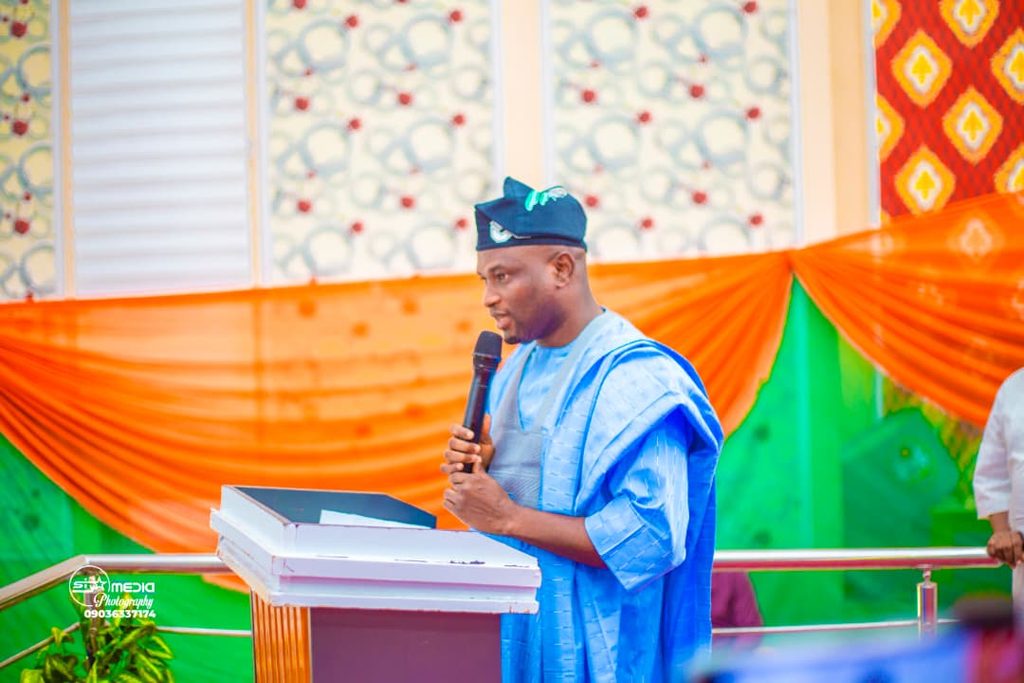
According to her, an unopposed return should not be interpreted as freedom from accountability but as an obligation to deliver more effectively.
“An unopposed return is not an exemption from accountability; it is a heightened obligation to perform. It is not a reason to rest on our achievements, but a compelling reason to work harder,” she declared.
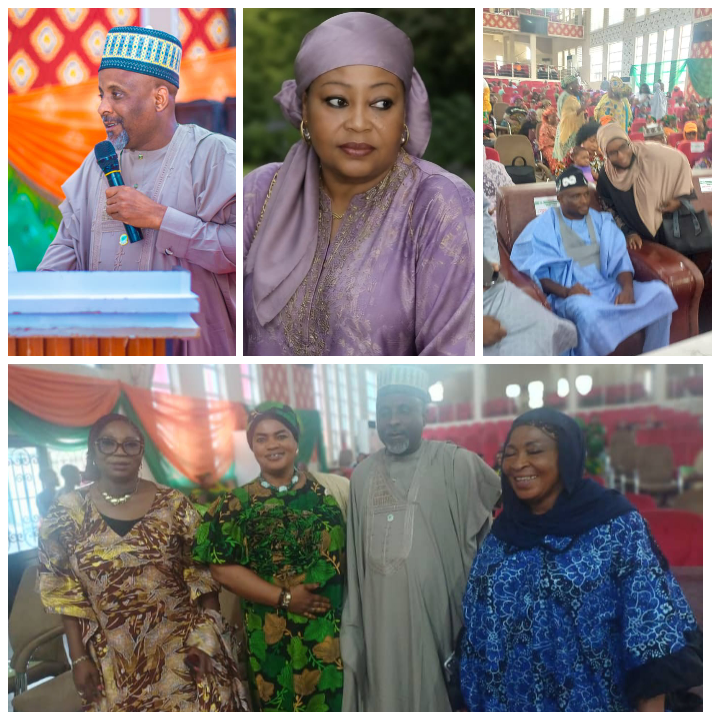
Her address provided an opportunity to assess the administration’s performance, reflect on the challenges encountered and outline a renewed vision for an Association established to promote the professional interests and welfare of women journalists across Nigeria.
REBUILDING INSTITUTIONAL CONFIDENCE
Reflecting on the past three years, Ibrahim acknowledged that her administration inherited an Association with considerable potential but significant institutional, administrative, financial and structural challenges.
She explained that the administration’s priority was to strengthen the organisation, rebuild members’ confidence, promote unity and reposition NAWOJ to participate more effectively in national and international conversations concerning gender equality, media freedom and women’s participation in governance.
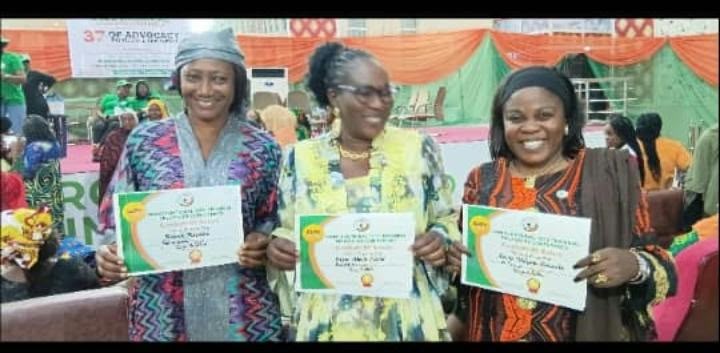
Among the areas of progress she highlighted was the strengthening of partnerships with development organisations, including Plan International and ActionAid.
These engagements, she noted, created opportunities for collaboration, professional capacity development and increased participation of women in governance and decision-making processes.
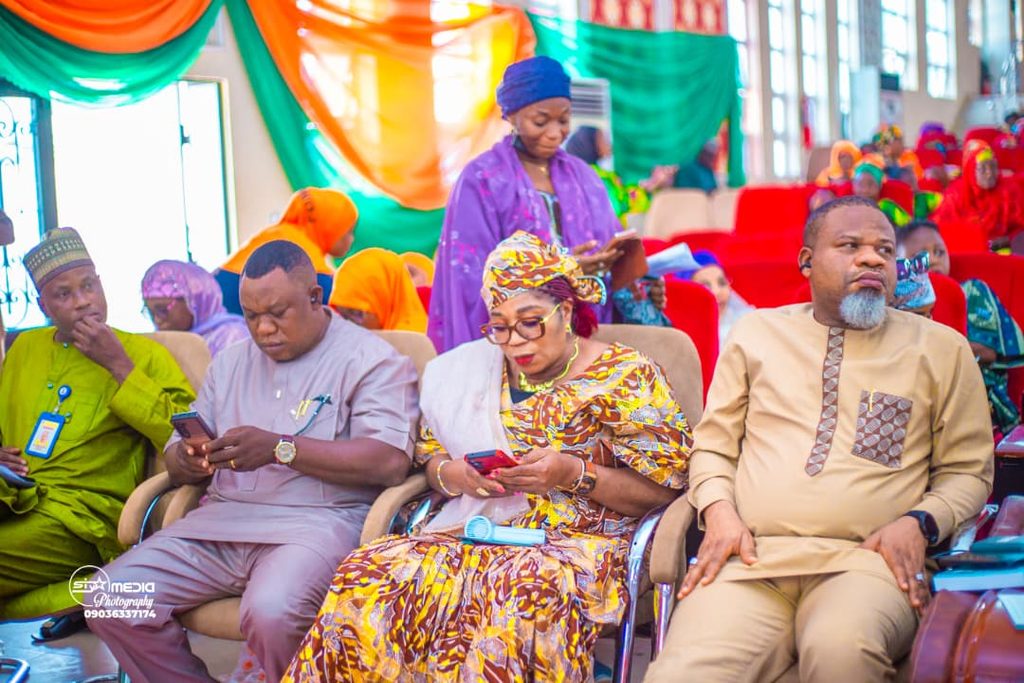
Her administration also sustained advocacy on gender equality, the elimination of gender-based violence, women’s political representation and the proposed Special Seats for Women legislation.
The National Chairperson further emphasised NAWOJ’s commitment to responsible journalism, media freedom and the welfare of women journalists, stressing that the Association must remain relevant not only as a professional body but also as an advocacy platform for women and vulnerable groups.
A PERMANENT HOME FOR NAWOJ
One of the major institutional milestones identified in her stewardship report was the acquisition of a Certificate of Occupancy for the land belonging to the Association’s national secretariat.
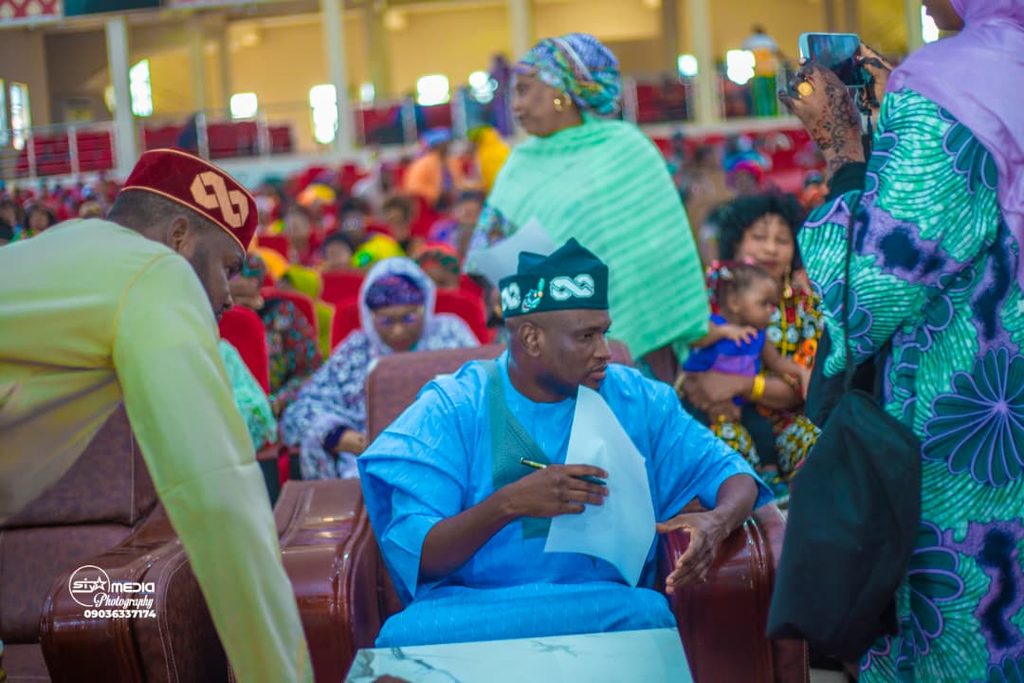
Ibrahim described the development as a significant step towards actualising the long-standing dream of providing NAWOJ with a permanent national headquarters.
The achievement represents an important foundation for the Association’s institutional growth and future administrative stability.
She also highlighted the Women in Security, Peacebuilding and Conflict Resolution Summit and Awards (WINSEC) as another initiative that enhanced NAWOJ’s visibility and strengthened its engagement with stakeholders across the media, security and development sectors.
Through such engagements, the Association continued to expand its reach beyond conventional journalism advocacy to issues affecting peace, security and sustainable development.
PEACE AND UNITY AS A LEGACY
Perhaps one of the most significant themes of Ibrahim’s address was the restoration of peace, stability and harmony within NAWOJ.
She expressed satisfaction that the administration had made progress in rebuilding relationships and encouraging members to place the collective interest of the Association above personal differences.
According to her, achieving this level of harmony required patience, dialogue, restraint and a willingness to accommodate differing opinions.
“Peace is one of the most valuable legacies we can leave behind because no institution can truly thrive in perpetual conflict,” she stated.
Her remarks underscored the importance of internal cohesion in strengthening professional associations, particularly one whose mandate includes promoting women’s voices, leadership and participation in public life.
ACKNOWLEDGING THE GAPS
In a moment of candour, the NAWOJ National Chairperson acknowledged that her administration had not accomplished every objective it set out to achieve.
She identified financial constraints as a major limitation that affected the implementation of some programmes, while admitting that members’ welfare interventions had not reached everyone as desired.
She also acknowledged that capacity-building opportunities were not evenly distributed and that the Association’s communication and internal coordination mechanisms required further improvement.
Rather than presenting these challenges as excuses, Ibrahim described them as lessons that should guide the next phase of leadership.
She maintained that the renewed mandate must inspire greater commitment to addressing the concerns of members.
“Our unopposed return must challenge us to do better. We must never mistake the absence of opposition for the absence of expectations,” she cautioned.
THE ROAD AHEAD: WELFARE, CAPACITY BUILDING AND ACCOUNTABILITY
Looking towards the next three years, Ibrahim outlined a number of priorities designed to consolidate the gains of her administration and address existing institutional gaps.
These include strengthening NAWOJ’s structures, improving members’ welfare, expanding professional development opportunities, deepening strategic partnerships and providing stronger support for state chapters.
She also emphasised the importance of transparency, accountability and inclusiveness in the administration of the Association.
For her, the next chapter must be defined by measurable achievements rather than promises.
The renewed leadership, she said, must work harder, listen more, accommodate differing views and ensure that the confidence reposed in them translates into tangible benefits for members.
This commitment, she suggested, would be the real measure of the administration’s renewed mandate.
APPRECIATION AND INSTITUTIONAL CONTINUITY
Ibrahim expressed appreciation to members of the National Executive Council, Board of Trustees, state chairpersons, state secretaries and the entire membership for their support and contributions throughout the administration’s tenure.
She also acknowledged the contributions of development partners, the Nigeria Union of Journalists, government institutions and individuals who supported the Association’s programmes and vision.
She particularly thanked the Government and people of Kano State for hosting the 2026 national gathering.
The National Chairperson also recognised members whose expectations might not have been fully met, assuring them that their concerns remained important to the leadership.
In a message that reflected her understanding of institutional responsibility, Ibrahim reminded delegates that NAWOJ, established in 1989, was bigger than any individual administration.
She stressed that those entrusted with leadership were merely custodians of an institution whose relevance must transcend successive tenures.
“Our greatest achievement will not simply be what we accomplish during our respective tenures, but the strength of the institution we leave behind,” she said.
BEYOND A RENEWED MANDATE
As the 2026 Triennial Delegates Conference brought together women journalists and stakeholders from across the 36 states and the Federal Capital Territory, Ibrahim’s stewardship address offered both an account of achievements and a reminder of the responsibilities that come with leadership.
Her message was clear: the confidence expressed through the electoral outcome must be justified by improved performance, stronger institutions and a more responsive leadership.
For NAWOJ, the next three years present an opportunity to consolidate institutional progress, address welfare concerns, strengthen professional development and expand the Association’s contribution to national conversations on women, journalism and development.
Ultimately, the success of the renewed mandate will be determined not by the circumstances of the leadership’s return, but by the quality of service delivered to members and the enduring institutional legacy left for future generations of women journalists.