
As new platform emerges in Abuja, promoters outline plans to connect government policies with communities, opportunities and citizens ahead of 2027
By Joy Omagha Idam
Abuja witnessed the unveiling of a new political mobilisation platform, Nigeria Forward, as its promoters announced plans to take the conversation around government policies, development and the 2027 presidential election to communities across the country.
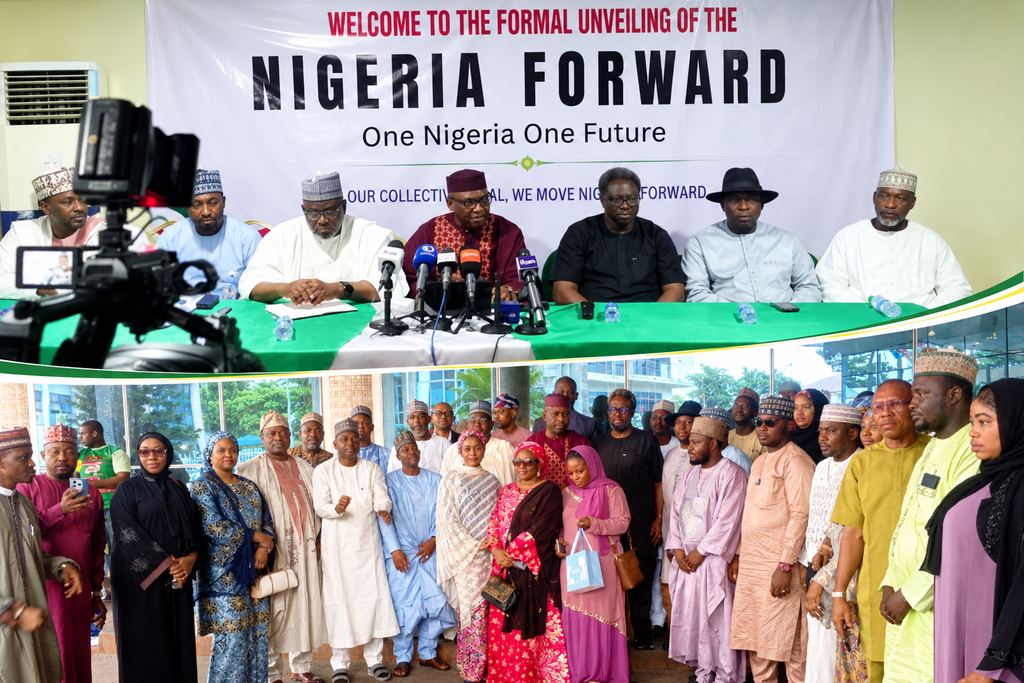
The movement, unveiled in the Federal Capital Territory, says it intends to mobilise grassroots support for President Bola Ahmed Tinubu while creating a platform through which citizens can engage with, assess and discuss the programmes and projects of the administration.
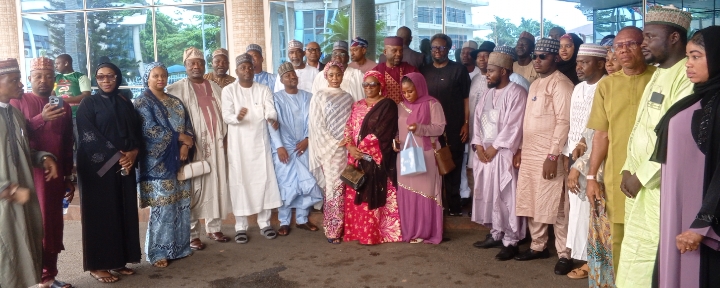
For the promoters, however, the initiative is being presented as more than a conventional political mobilisation structure.
At its core, Nigeria Forward says it wants to establish a connection between government policies and the everyday experiences of Nigerians — particularly young people, entrepreneurs, women, communities and other groups whose economic fortunes are closely linked to the success or failure of public policies.
Speaking at the unveiling, one of the promoters, the Minister of Innovation, Science and Technology, Dr Kingsley Udeh, said the movement would seek to take its message beyond political gatherings and engage Nigerians directly at the grassroots.
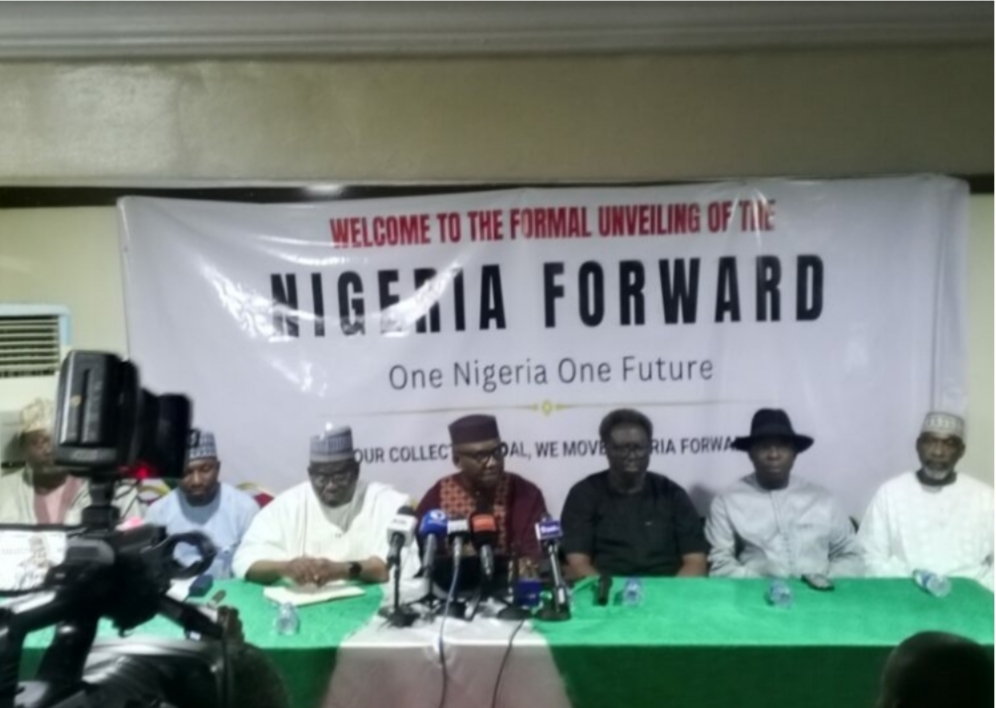
He said members would examine government interventions in their communities and encourage citizens to participate actively in national development.
According to Udeh, the country’s development story should not be reduced to political slogans or isolated announcements of projects.
Instead, he said citizens should be able to ask practical questions about public investments: what is being constructed, where it is located, the problem it is intended to solve, who stands to benefit and what challenges remain.
That approach, he suggested, would make citizens participants in development rather than passive recipients of government programmes.
Beyond Politics, Into the Communities
One of the central themes emerging from the Abuja unveiling was the proposed relationship between government and the communities it serves.
Nigeria Forward says it intends to operate as a bridge between public policy and citizens, linking government initiatives with investments, opportunities, institutions and communities.
The movement is also expected to place emphasis on innovation, digital transformation, youth development, skills acquisition and enterprise.
For a country with a large and youthful population, the promoters argue that development must ultimately be measured by whether infrastructure and economic policies create tangible opportunities.
Roads, railways, electricity and digital connectivity, Udeh noted, should not exist merely as statistics in government reports. Their wider purpose, he argued, is to stimulate businesses, improve productivity, connect communities and expand opportunities for citizens.
This emphasis on outcomes is significant because infrastructure development often becomes part of political debate, with competing arguments over the pace, scale and impact of government projects.
Nigeria Forward says its proposed grassroots engagement will allow citizens to assess such interventions within the context of their own communities.
A Country With Untapped Potential
Udeh also drew attention to Nigeria’s considerable human and economic resources.
He pointed to the country’s entrepreneurial population, agricultural potential, human capital and access to domestic and regional markets as assets that could be converted into productive capacity and sustainable economic opportunities.
The challenge, according to the minister, is creating the conditions through which these resources can translate into improved livelihoods.
That perspective places youth development and enterprise at the centre of the movement’s proposed activities.
For Nigeria Forward, young Nigerians are not simply a demographic group to be addressed during elections; they are a major constituency in conversations about technology, innovation, enterprise and the country’s economic future.
The movement says it therefore plans to engage young people in discussions about government programmes and their practical impact.
Mobilisation With Accountability
Perhaps one of the more notable elements of Udeh’s address was his emphasis on accountability alongside political mobilisation.
While calling on members to communicate the achievements of the Tinubu administration, he also urged them to identify challenges affecting citizens and communicate those concerns to the appropriate authorities.
In that sense, the movement’s stated approach seeks to combine political advocacy with citizen feedback.
“This is the essence of informed citizenship. Patriotism does not require us to abandon accountability. Indeed, responsible citizenship demands both,” Udeh said.
The statement reflects an argument that political support and scrutiny of government performance need not necessarily be mutually exclusive.
Udeh also urged members of Nigeria Forward to support the renewal of President Tinubu’s mandate in the 2027 presidential election.
He commended governors, ministers, political leaders, traditional rulers, community leaders, youth groups, women entrepreneurs and other stakeholders for their support for the initiative.
“Together, We Move Nigeria Forward”
The movement’s motto — “Together, We Move Nigeria Forward” — was also placed at the centre of its message.
Udeh urged members to treat the slogan not merely as a campaign phrase but as a commitment to citizenship and national development.
The task ahead, he said, should include contributing to the country’s development while supporting the aspirations of young Nigerians and the broader dreams associated with Nigeria’s future.
His comments suggest that the movement intends to frame its activities around a combination of political mobilisation, development communication and grassroots engagement.
The Northern Question
Another dimension of the Abuja launch emerged in the comments of the Kano State Commissioner for Information and Internal Affairs, Comrade Ibrahim Waiya, who called for evidence, inclusiveness, innovation and national unity to guide the activities of Nigeria Forward.
Waiya said the movement should reach communities across the country and particularly engage young Nigerians in understanding and assessing government policies and programmes.
He also linked the movement’s message to the political relationship between the North and the Tinubu administration.
According to Waiya, the North should support Tinubu for a second term, arguing that such support would allow the administration to continue its work and consolidate existing initiatives.
“The North did eight years; it is therefore only fair that President Tinubu is supported to conclude the great work he has begun. He is working and we should re-elect him to complete it,” Waiya said.
His comments represent the political position of the movement’s promoters and supporters as the country moves towards the 2027 electoral cycle.
A New Political Conversation?
The emergence of Nigeria Forward adds another layer to the growing political activity ahead of the 2027 presidential election.
But beyond the political messaging, the movement’s effectiveness will ultimately depend on how successfully it translates its stated objectives into sustained grassroots engagement.
Mobilising citizens across Nigeria is a considerably different undertaking from unveiling a platform in Abuja.
The country’s diverse regions, communities and socioeconomic realities mean that messages that resonate in one part of the country may require a different approach elsewhere.
The movement’s stated commitment to evidence, citizen feedback and accountability could therefore become an important test of its grassroots strategy.
For now, Nigeria Forward has announced its intention: to take the conversation from political centres into communities, explain government policies, highlight projects and opportunities, listen to citizens and simultaneously mobilise support for President Tinubu’s bid for another term.
As Nigeria approaches another politically significant electoral cycle, the emergence of platforms such as Nigeria Forward signals that the contest for political support is already moving beyond the traditional structures.
The larger question is how these new movements will engage citizens — and whether their grassroots conversations will remain primarily electoral or develop into sustained platforms for public participation and accountability.
For Nigeria Forward, the journey begins with its promise encapsulated in four words:
Together, We Move Nigeria Forward.