
By Joy Omagha Idam, Abuja
Nigeria’s creative industry has thrown its weight behind President Bola Ahmed Tinubu’s efforts to reposition the sector as a major driver of economic growth, job creation, and global cultural influence, citing a series of unprecedented reforms and investments aimed at unlocking the vast potential of the nation’s creative talents.
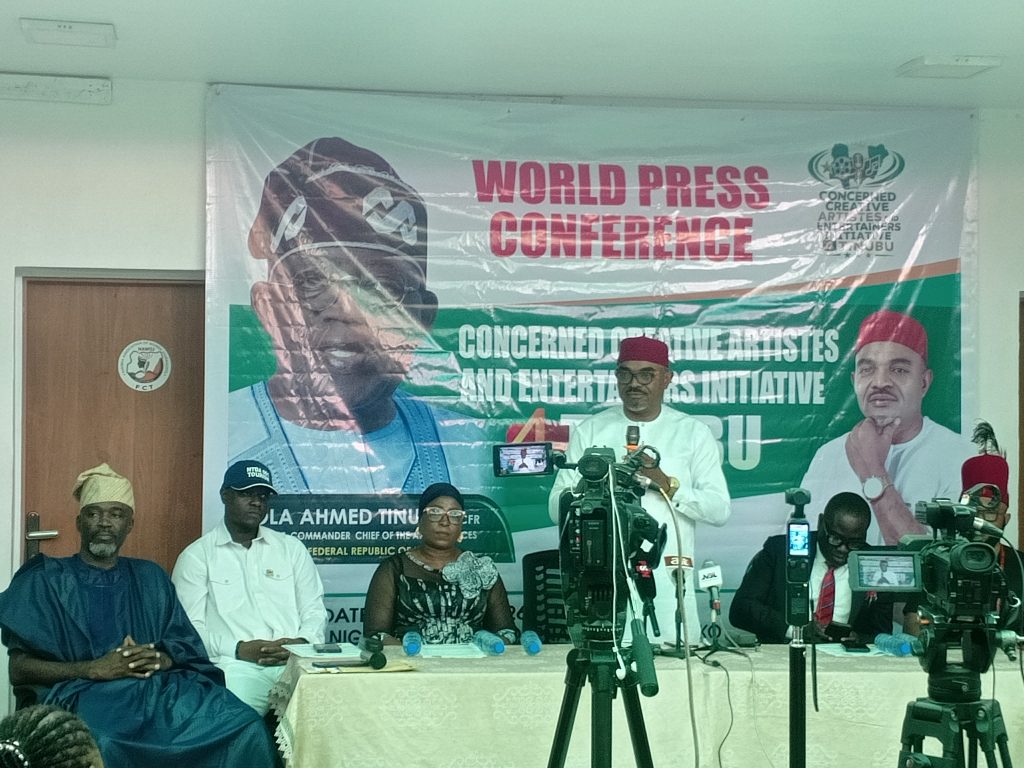
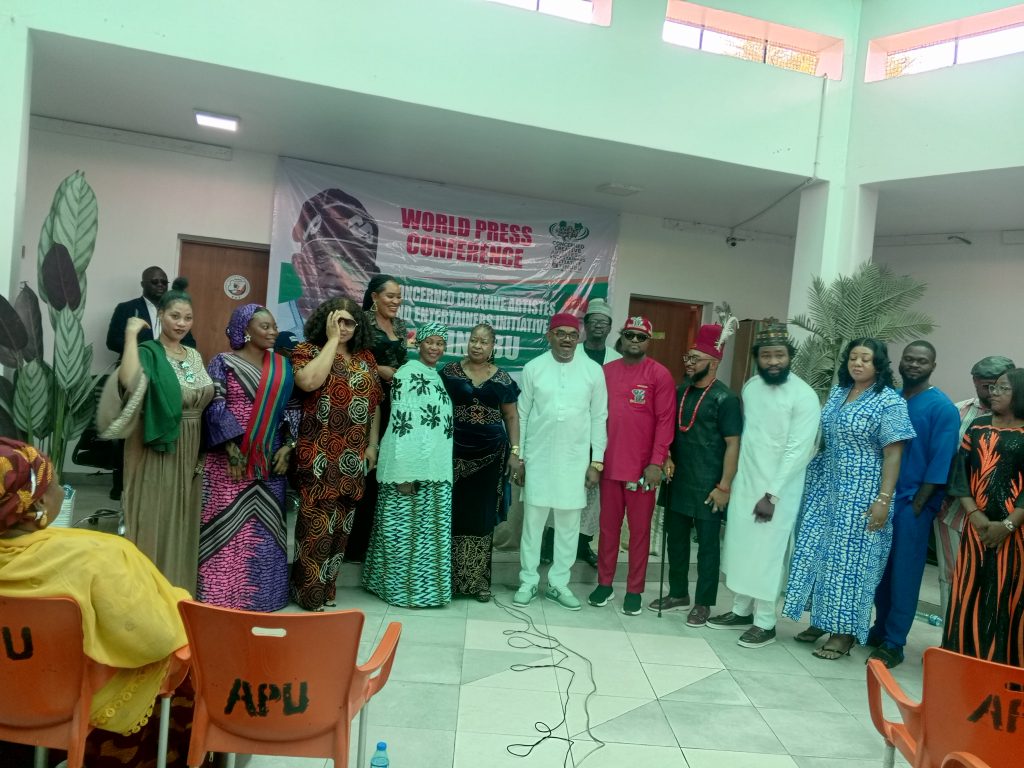
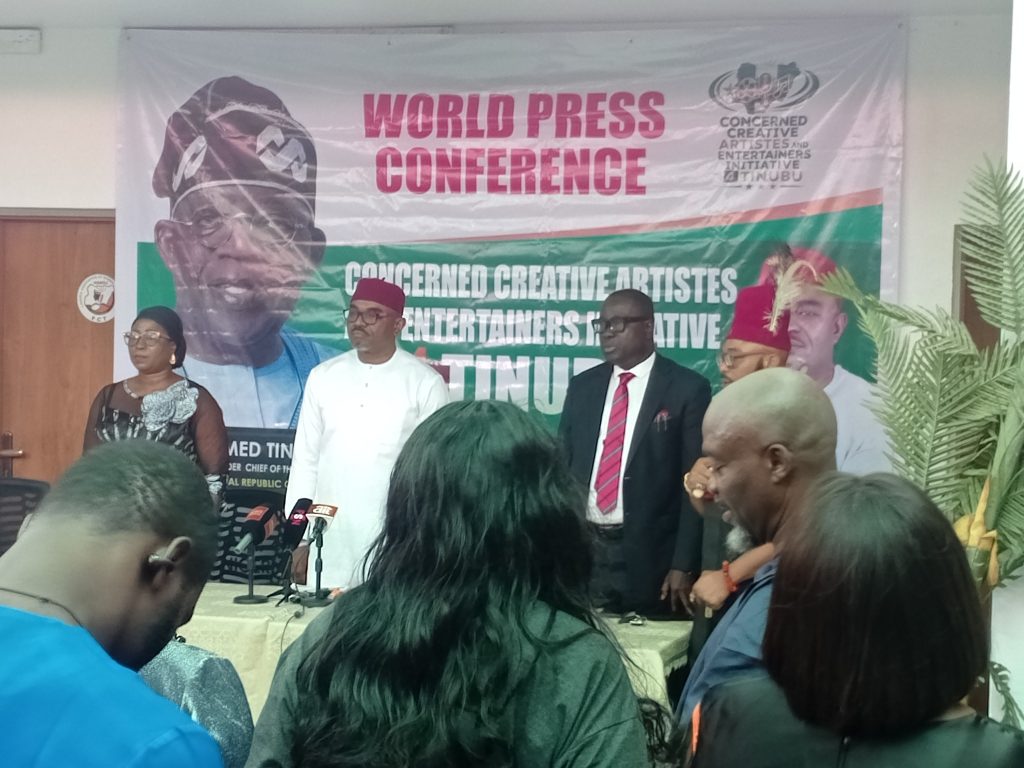
This position was made known by the National President and Convener of the Concerned Creatives Artistes and Entertainers Initiative 4 Tinubu, Dr. Ejezie Emeka Rollas, MON, during a press briefing held at the Nigeria Union of Journalists (NUJ) Secretariat in Utako, Abuja.
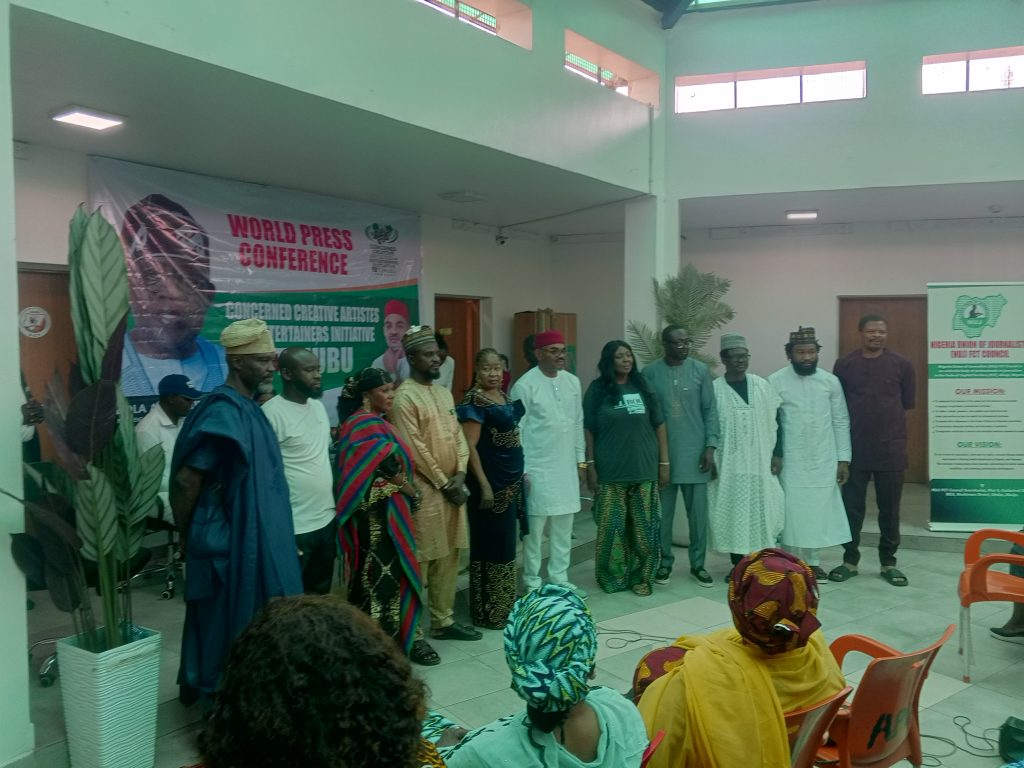
The event began on a solemn note as participants observed a minute of silence in honour of a teacher recently killed in Oyo State and other Nigerians who have lost their lives due to insecurity across the country. Dr. Rollas expressed sympathy to affected families while emphasizing the need for sustained efforts to improve national security.
Speaking on the evolution of Nigeria’s creative sector, Rollas noted that for decades, Nigerian artists, filmmakers, musicians, writers, comedians, fashion designers and digital content creators have projected the country’s image positively across the globe despite operating with limited institutional support and inadequate infrastructure.
According to him, the industry’s remarkable achievements were largely driven by resilience and innovation in the face of challenges such as piracy, poor distribution networks, insufficient financing and weak policy support. He observed that despite these obstacles, Nigerian creatives have continued to generate employment, attract foreign audiences and contribute significantly to the nation’s cultural identity.
Rollas, however, stated that the current administration has demonstrated a new level of commitment to the creative economy. He described President Tinubu’s decision to establish the Federal Ministry of Arts, Culture, Tourism and the Creative Economy as a historic move that has given the sector dedicated government attention and strategic direction. 4 Visible Appointments.
He further highlighted the establishment of the $100 million Creative Economy Development Fund, describing it as one of the most significant financial interventions ever targeted at Nigeria’s creative industry. The fund, he said, is expected to provide much-needed access to financing for filmmakers, musicians, fashion entrepreneurs, designers, digital innovators and other creative professionals.
The creative industry leader also applauded the implementation of the $617.7 million Investment in Digital and Creative Enterprises (IDICE) Programme, which aims to empower young Nigerians through enterprise development, innovation support, funding opportunities and job creation initiatives. The programme is supported by international development partners and is expected to strengthen Nigeria’s digital and creative ecosystem.
Another major initiative cited by Rollas is the proposed establishment of Renewed Hope Creative Villages across the country. These hubs are designed to provide world-class facilities for training, production, innovation, collaboration and cultural preservation.
He stressed that access to modern infrastructure is essential for Nigerian creatives seeking to compete effectively on the global stage.
He noted that beyond infrastructure and financing, the administration has also prioritised human capital development through various training and capacity-building programmes aimed at equipping young Nigerians with the skills required to thrive in an increasingly competitive creative economy.
Rollas maintained that the growing recognition of the creative sector as a strategic economic asset marks a significant departure from the past and reflects a broader national vision of harnessing culture, creativity and innovation as tools for sustainable development. He urged stakeholders within the industry to support policies that promote growth, create opportunities and position Nigeria as a global creative powerhouse.
The briefing underscored the increasing role of the creative industry in national development and highlighted the expectations of stakeholders who believe that sustained government support could transform the sector into one of Nigeria’s leading contributors to economic prosperity and youth employment.