
From Political Realignment to Grassroots Mobilisation: Why Kano Remains a Critical Battleground
By Joy Omagha Idam
The Kano State Governor, Engr Abba Kabir Yusuf, has emerged as a significant political figure in the build-up to the 2027 general elections, following his political realignment with the All Progressives Congress (APC) and his open declaration of support for President Bola Ahmed Tinubu’s second-term ambition.
With Kano occupying a strategic position in Nigeria’s electoral calculations, the governor’s political influence, administrative record, party structures and relationships with key stakeholders will be important factors in determining the APC’s performance in the state.
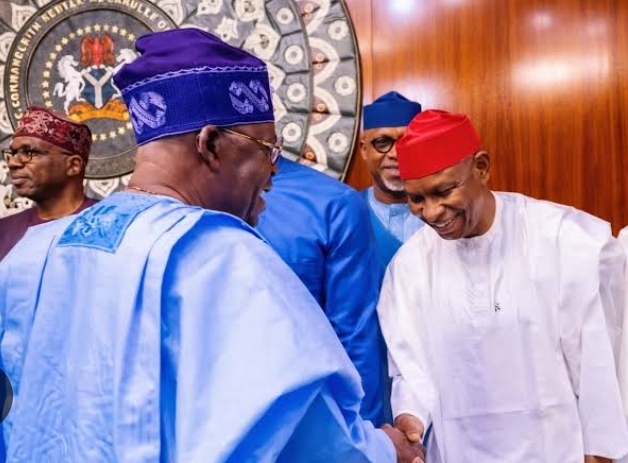
Here are 20 factors shaping the political conversation around Governor Yusuf and the 2027 elections.
1. Control of Government Machinery
As the incumbent governor, Yusuf occupies a strategic position in Kano’s political landscape. His administration has access to established government institutions and structures that can facilitate communication of government policies and programmes to citizens.
2. Political Realignment with APC
His movement from the New Nigeria Peoples Party (NNPP) to the APC in January 2026 represents a major political development. The realignment has repositioned him within the ruling party at the national level and created a new platform for political collaboration.
3. Direct Support for President Tinubu
Yusuf has publicly declared his commitment to President Tinubu’s 2027 re-election. He has repeatedly called on Kano residents and political stakeholders to support the President, presenting continuity as an important consideration.
4. Establishment of a 2027 Campaign Council
The inauguration of the presidential and gubernatorial campaign council in October 2026 demonstrates the administration’s early preparation for the elections. The council is expected to coordinate mobilisation and political engagement across the state.
5. Relationship with Federal Government
The governor has consistently highlighted federal interventions in Kano, particularly in infrastructure, agriculture, water supply and security. Effective collaboration between the state and federal governments could become an important political selling point.
6. Infrastructure Development
The Kano Government has reported substantial investments in road construction, urban renewal and other infrastructure projects. In August 2026, the government announced commitments of ₦996.29 billion to 1,557 projects across the state’s 44 local government areas.
7. Education as a Major Political Consideration
Education remains a critical issue in Kano. The administration’s reported recruitment of 8,588 teachers in 2026, alongside payment of examination fees for more than 150,000 students, provides measurable areas for public assessment.
8. Rural Development Agenda
The administration’s emphasis on rural development and projects across the 44 local government areas could influence its relationship with communities outside metropolitan Kano.
9. Grassroots Political Mobilisation
Kano’s political environment is heavily influenced by grassroots networks. The effectiveness of the governor’s campaign council in reaching wards, communities, traditional institutions and local political groups will be an important consideration.
10. Expansion of APC Membership
In September 2026, Yusuf received reports of 136,040 members of opposition parties and political groups joining the APC. If the new members remain committed and actively participate in party activities, the development could strengthen the party’s organisational reach.
11. Relationship with Political Stakeholders
The ability of Yusuf to maintain constructive relationships with influential political figures, elected representatives, party executives and community leaders will be important to the stability of the APC in Kano.
12. Support from Federal Political Appointees
Kano indigenes serving in federal positions represent another potential channel for political engagement. Their ability to work together with state stakeholders could strengthen coordination between the national and state political structures.
13. Endorsement by Community Groups
The endorsement of Yusuf and Tinubu by sections of the Yoruba community in Kano on November 15, 2026, illustrates the importance of engaging communities beyond the state’s dominant political constituencies. Broader acceptance, however, will depend on sustained engagement and individual voter choices.
14. Inter-Regional Political Understanding
Yusuf has publicly defended the argument that the presidency should remain in the South until 2031, citing political rotation and national cohesion. This position provides his stated justification for supporting Tinubu’s second term.
15. Kano’s Strategic Electoral Importance
Kano is one of Nigeria’s most politically significant states because of its large electorate and influence in national electoral calculations. Consequently, the performance of the APC in Kano will attract considerable national attention.
16. Performance in Healthcare and Social Services
The administration’s performance in healthcare delivery, social welfare and essential public services will influence public assessment of its leadership. Tangible improvements in these areas could strengthen citizens’ confidence in the government.
17. Economic Opportunities and Youth Engagement
Kano’s large youth population makes employment, entrepreneurship, skills development and economic opportunities major electoral considerations. The administration’s ability to demonstrate progress in these areas will matter.
18. Security and Peaceful Coexistence
Security remains an important concern for residents. Sustained efforts to improve public safety, protect communities and strengthen peaceful coexistence could influence public confidence in the administration.
19. Ability to Manage Political Differences
The transition into a new political platform comes with the challenge of reconciling different interests and political loyalties. How effectively Yusuf manages disagreements within the APC and maintains relationships with former political allies could shape the party’s cohesion.
20. Delivery of Measurable Results Before Election Day
Ultimately, the governor’s political fortunes and his capacity to mobilise support for Tinubu will be influenced by what residents can see, experience and independently verify before the elections. Completed projects, improved public services, economic opportunities and accountability will remain important measures of performance.
CONCLUSION: KANO’S 2027 POLITICAL EQUATION
Governor Abba Kabir Yusuf’s political realignment, relationship with the Tinubu administration, infrastructure agenda and early mobilisation efforts have placed him at the centre of Kano’s emerging 2027 political calculations.
His declaration of support for President Tinubu has also established a clear political position ahead of the general elections.
However, Kano’s electoral history demonstrates that political structures, endorsements and incumbency are only part of the equation. Voter satisfaction, party unity, opposition strength, economic conditions and the credibility of campaign promises will also matter.
For President Tinubu, Kano represents a strategically important electoral constituency. For Governor Yusuf, the 2027 elections will provide an opportunity for voters to assess his administration and determine whether its achievements and political direction deserve another mandate.
The ultimate decision, however, rests with the people of Kano at the ballot box, and Most of them are pleased with Gov Yusuf’s performance in all sectors.