
By Sharon Akuboh, Abuja
When the Federal Government delegation lands in Kano on Tuesday, October 13, 2026, for the national commemoration of the International Day of the Girl Child, it will not be another ceremonial gathering of speeches and photo opportunities.
At the centre of it is a new national roadmap — the National Strategy and Costed Action Plan for Ending Child Marriage — and a deliberate shift in strategy: bringing fathers, traditional rulers and male allies into the heart of the conversation.
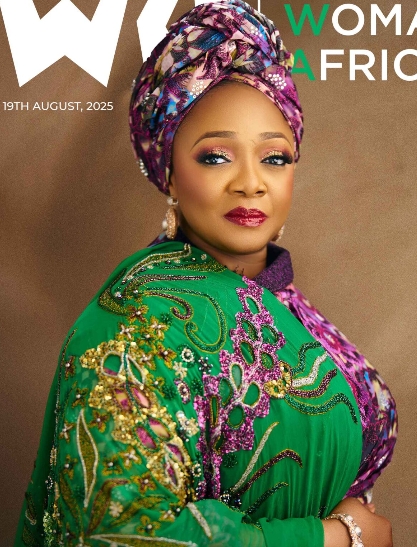
Leading the delegation is the Minister of Women Affairs and Social Development, Hon. Imaan Sulaiman-Ibrahim, fsi, who says Nigeria is entering a decisive phase in its campaign to protect the girl child.
Observed globally on October 11 under the theme “End Child Marriage and Invest in Girls’ Rights,” this year’s International Day of the Girl Child is being framed by the Federal Government not just as a celebration of girls, but as a call to moral responsibility.
From Policy To Kano
According to a statement issued by the Federal Ministry of Women Affairs and Social Development on Saturday, the national mega commemoration in Kano will feature three major components: the official launch of the National Strategy and Costed Action Plan for Ending Child Marriage, direct empowerment and educational support for vulnerable girls and families, and high-level intergenerational dialogues.
“The official launch of the National Strategy and Costed Action Plan for Ending Child Marriage in Kano will provide a clear operational and budgetary roadmap to guide federal, state, and development partner interventions,” the statement said.
The ministry added that beyond policy launch, government will distribute targeted empowerment packages to selected vulnerable girls and families, “translating national policy into tangible relief, recognizing supportive parents, and encouraging sustained school retention.”
The choice of Kano is significant. The North-West state, with its large population and deep traditional structures, represents both the challenge and the opportunity in ending child marriage. By taking the launch there, the Federal Government is signalling that solutions must be built with traditional and faith institutions, not around them.
Why Men and Boys Matter Now
Perhaps the most striking shift in this year’s commemoration is the emphasis on men and boys as champions of reform.
“Across the country, encouraging shifts are taking place as communities witness the transformative power of positive fatherhood and male allyship,” the ministry noted.
The statement pointed to rising cases of fathers choosing to keep daughters in school, supporting their career ambitions and protecting them from early marriage — trends now reflected in increased school retention, rising female literacy, and a growing presence of young women in higher education and national service.
The Federal Government argues that ending child marriage cannot be achieved by women alone.
“Ending child marriage requires a united front where men and boys stand shoulder-to-shoulder with women and girls,” Minister Imaan Sulaiman-Ibrahim said.
“When fathers champion their daughters, when traditional and religious leaders use their voices to protect young girls, and when young boys are raised to respect and uplift their sisters, whole communities thrive,” she added. “No girl should ever be denied her childhood, and together with our male allies across Nigeria, we are building a nation where every girl is safe, educated, and empowered.”
Families At The Centre Of Renewed Hope
The 2026 commemoration is also being linked to President Bola Ahmed Tinubu’s broader social development agenda.
Under the Renewed Hope Agenda, the Federal Government has declared 2026 as the Year of Families and Social Development, with emphasis on building safe, supportive and resilient family structures.
According to the ministry, the declaration “highlights the critical role of positive male leadership within the home, encouraging fathers and male guardians to serve as the first line of defense for the rights, dignity, and education of their daughters.”
It is a framing that moves the conversation from the girl as a victim to the family as a protective system.
38 Policies, One Ecosystem
Giving concrete expression to the vision, the Federal Ministry of Women Affairs and Social Development said it has developed, reviewed and validated over 38 policy instruments, Standard Operating Procedures (SOPs), and specialised frameworks to strengthen the protection ecosystem for women, children, families and vulnerable groups.
The statement listed key reforms currently underway, including:
“The ongoing review of the Child Rights Act 2003 in collaboration with the Federal Ministry of Justice;”
“The comprehensive review of the National Child Policy of 2008 to incorporate emerging realities surrounding adolescent girls, digital safety, and modern social protection;”
“The adoption of the first National Strategy on Menstrual Health and Hygiene;”
“The ongoing review of the Second National Gender Policy to ensure emerging national and global priorities are fully integrated into the broader gamut of government planning; and”
“The deliberate, systematic inclusion of women and girls with disabilities across all ecosystem interventions, guaranteeing equal access to protection, education, digital skills, and economic empowerment.”
These measures, the ministry said, are further reinforced by the dedicated Girl Child Development Desk, the “See Something, Say Something, We Do Something” child protection campaign, the Future Now Initiative for STEM education, and the Care Economy agenda designed to relieve young girls from excessive unpaid domestic burdens.
Complementing the protection frameworks is the Nigeria for Women Program Scale-Up (NFWP-SU), supported by a $500 million World Bank expansion, which seeks to strengthen household financial security for both mothers and fathers.
“By strengthening household financial security and promoting economic stability for mothers and fathers alike, the program relieves the financial strain on families, enabling parents to prioritize their children’s long-term growth and education over early marriage,” the ministry explained.
The Kano Dialogue: Fathers, Emirs And Girls Face-to-Face
A major highlight of the Kano commemoration will be an interactive, intergenerational dialogue focused on positive masculinity and social norm change.
The sessions will bring together traditional rulers, religious leaders and fathers alongside adolescent girls themselves.
“This platform will highlight exemplary male role models who actively champion girl-child education, encouraging more men to leverage their leadership to end harmful practices and mentor the next generation,” the ministry said.
For organisers, the dialogue is crucial because lasting reform requires the active partnership of men in positions of influence.
It is also a recognition that laws alone do not end child marriage. Norms do. And norms are shaped in homes, palaces, mosques, churches and community gatherings — spaces where fathers and male gatekeepers hold influence.
From Kano To 36 States
The Federal Government is now calling on all state governments, traditional and faith institutions, community leaders, fathers and youth groups across the 36 states and the Federal Capital Territory to embrace positive masculinity and move from policy to action.
The ministry said its flagship 9-Pillared Renewed Hope Social Impact Intervention 774 (RH-SIIP 774) is already being executed across every local government area “to ensure that no girl child, no child, no family, and no person living with disabilities or vulnerable individual is left behind in national development.”
As the delegation heads to Kano, the message is clear: ending child marriage is no longer being framed as a women’s issue.
It is a family issue. A community issue. A national development issue.
And this time, fathers are being asked to lead from the front.