
By Joy Omagha Idam
China has disclosed that it has recorded 8.1 million corruption cases involving public officials since 2012, with more than 7.9 million officials sanctioned, as the country expressed readiness to deepen anti-corruption cooperation and share its governance experience with Nigeria.
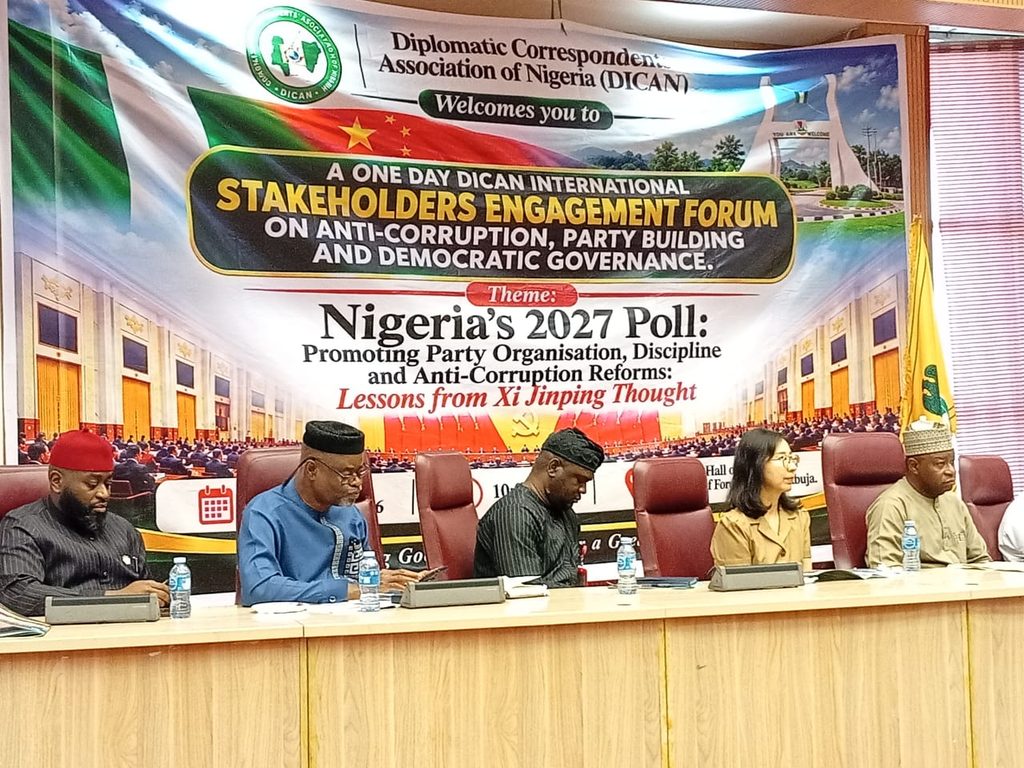
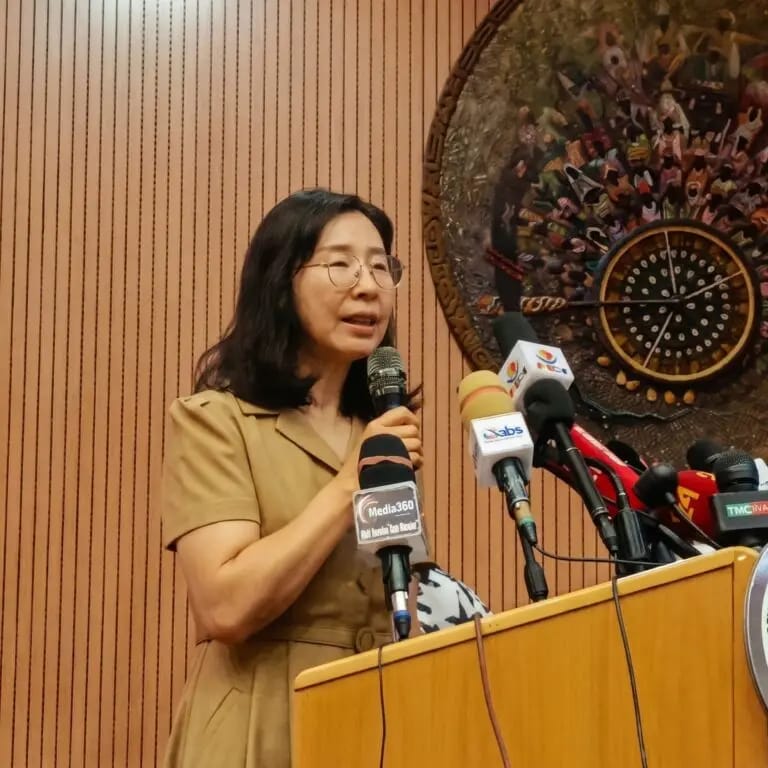
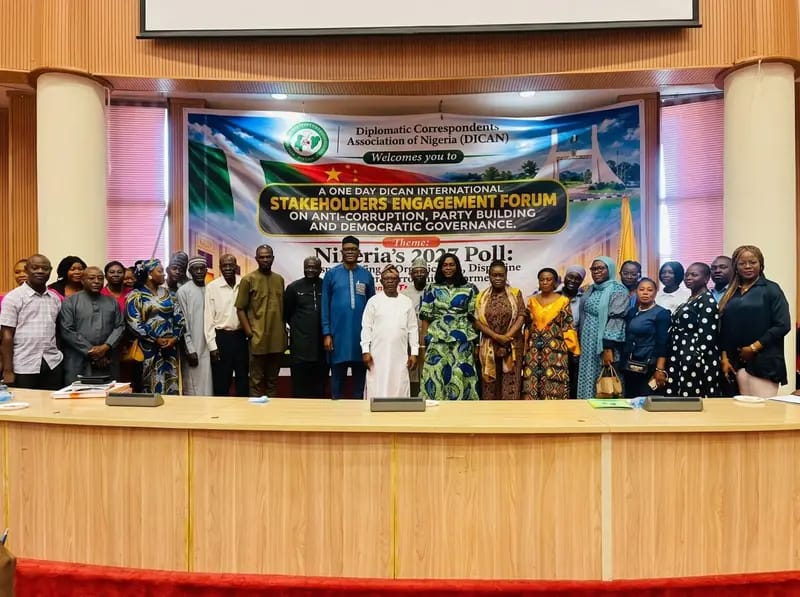
The disclosure was made by Chinese Counsellor, Dong Hairong, at the International Stakeholders Engagement Forum on Anti-Corruption, Party Building and Democratic Governance, organised by the Diplomatic Correspondents Association of Nigeria (DICAN) in Abuja.
Hairong said China’s sustained anti-corruption campaign had also resulted in disciplinary and administrative sanctions against more than 900 officials at ministerial level and above, demonstrating what he described as the country’s determination to confront corruption at every level of government.
He explained that China’s anti-corruption framework was anchored on zero tolerance, comprehensive supervision and the principle that no official should be exempted from accountability.
According to him, public support for the campaign had reached 97.4 per cent, reflecting growing confidence in the country’s efforts to promote transparency, discipline and responsible leadership.
The diplomat stressed that corruption and official misconduct remained significant threats to effective governance, requiring strong institutions, consistent supervision and political commitment to ensure that public office was not abused.
China: Party Discipline Key to Effective Governance
Explaining the philosophy behind China’s governance model, Hairong linked the country’s anti-corruption drive to the Communist Party of China’s commitment to full and rigorous self-governance.
He referenced the Fifth Plenary Session of the 20th Central Committee of the Communist Party of China, held in Beijing from October 26 to 29, 2026, which adopted a resolution on strengthening party discipline and maintaining strict internal governance.
According to him, the resolution outlined measures aimed at improving the party’s governing capacity, safeguarding its integrity and strengthening its relationship with the people.
He argued that political parties must continuously evaluate their internal structures, identify institutional weaknesses and take corrective measures to sustain public confidence.
The Chinese diplomat observed that prolonged stay in power comes with greater responsibility for political parties to strengthen internal accountability and guard against abuse of authority.
Citing President Xi Jinping’s position, Hairong said the greatest danger to a major political organisation could emerge from weaknesses within its own ranks.
He maintained that China’s experience demonstrated the importance of confronting internal challenges rather than allowing institutional weaknesses to undermine national development.
Strict Monitoring of Public Officials
Hairong further identified effective supervision of public officials as a critical pillar of China’s anti-corruption strategy.
He explained that the country’s approach involved strict standards for the education, training, recruitment, appointment, management and monitoring of government officials.
He said accountability must apply across all levels of public administration, while government institutions must remain focused on delivering services that improve the lives of ordinary citizens.
According to him, integrity in public office is not merely about enforcing disciplinary measures but also ensuring that government policies and programmes translate into tangible benefits for the population.
He added that political discipline, responsible leadership and effective service delivery must work together to achieve sustainable national development.
China Extends Anti-Corruption Cooperation Offer to Nigeria
On bilateral relations, Hairong expressed China’s readiness to share its experience in party self-governance, anti-corruption mechanisms and institutional accountability with Nigeria.
He noted that although countries operate within different political, historical and institutional environments, valuable lessons could be drawn from international governance experiences and adapted to local realities.
He specifically highlighted the importance of regulating the exercise of public power, protecting citizens’ interests and strengthening the capacity of government institutions.
The diplomat said the Communist Party of China was willing to expand exchanges with Nigerian political parties and institutions, particularly in areas relating to governance reforms, internal discipline and the fight against corruption.
He also reaffirmed China’s commitment to strengthening bilateral engagement with Nigeria through mutual support, broader institutional exchanges and cooperation on issues of common interest.
Hairong expressed confidence that deeper collaboration in anti-corruption and governance would further advance the China-Nigeria Comprehensive Strategic Partnership.
His presentation formed part of broader deliberations at the DICAN forum, which brought together stakeholders to examine the relationship between anti-corruption, political party development, institutional accountability and democratic governance ahead of Nigeria’s 2027 general elections.