
By Joy Omagha Idam
India’s remarkable socio-economic progress over the past decade is increasingly reflected in the lives of ordinary citizens, as expanded access to essential services, poverty reduction, financial inclusion and women’s empowerment reshape households and communities across the country.
From improved access to clean water and electricity to affordable healthcare, housing, sanitation and financial services, India has pursued a development strategy that places citizens at the centre of national growth.
In an article highlighting the country’s transformation, the High Commissioner of India to Nigeria, Benin and the Economic Community of West African States (ECOWAS), Abhishek Singh, said the achievements recorded under Prime Minister Narendra Modi’s administration demonstrate the importance of inclusive development and people-centred policies.
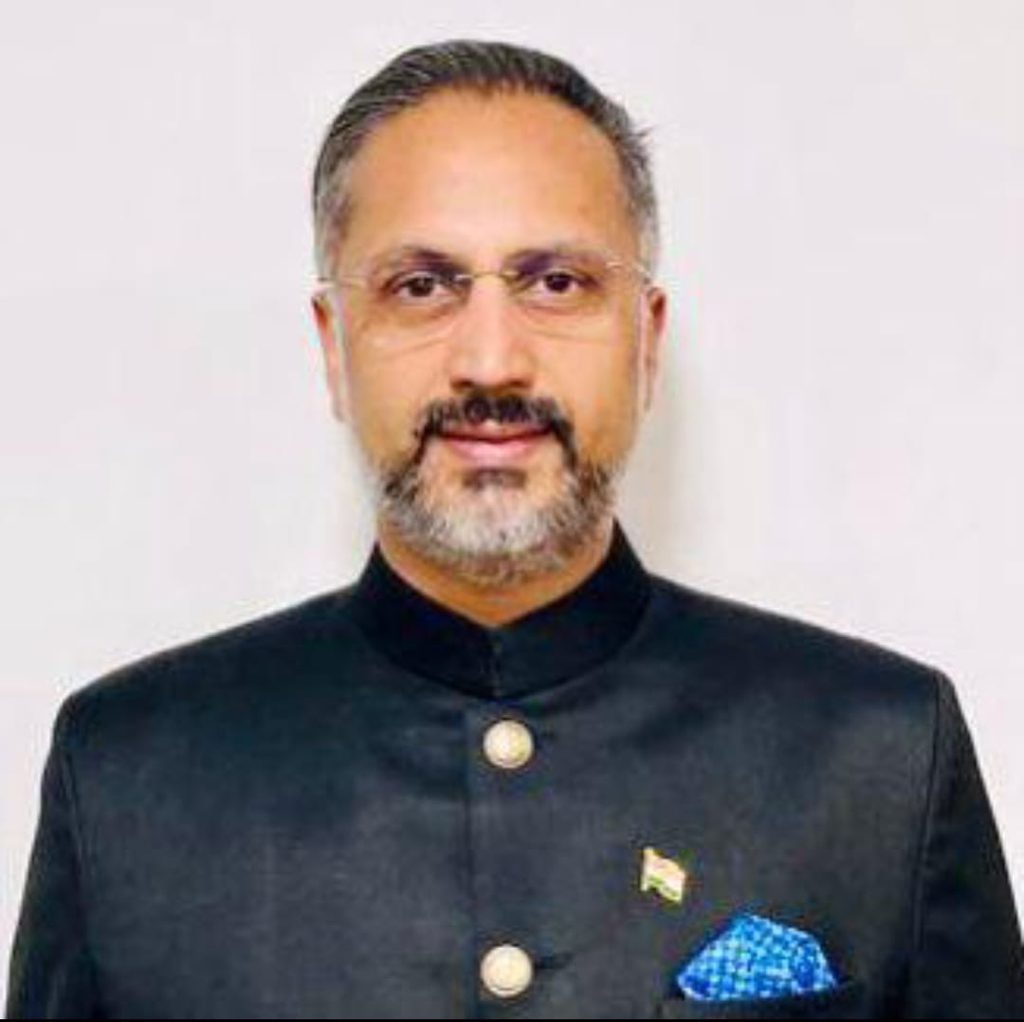
He explained that the guiding philosophy of the administration, Sabka Saath, Sabka Vikas, Sabka Vishwas, Sabka Prayas—meaning Together with All, Development for All, Trust of All and Efforts of All—has shaped India’s approach to socio-economic development over the last decade.
According to him, the strategy focuses not merely on providing welfare assistance but on empowering citizens to participate actively in the country’s economic advancement.
The World Bank’s October 2026 Poverty and Equity Brief provides an indication of the scale of progress, highlighting a significant reduction in poverty across India.
Between 2011 and 2023, extreme poverty, measured at US$3 per day, declined from 27.1 per cent to 2.6 per cent. At the lower-middle-income poverty threshold of US$4.20 per day, the poverty rate also dropped from 57.7 per cent to 16.1 per cent, lifting approximately 496 million people above the poverty threshold.
Similarly, multidimensional poverty, which measures deprivation in health, education and living standards, fell from 29.17 per cent in 2013–14 to 11.28 per cent in 2022–23. This development reportedly enabled approximately 248 million people to move out of multidimensional poverty.
Singh noted that poverty extends beyond inadequate income, encompassing challenges such as limited access to clean water, unsafe cooking conditions, poor sanitation and healthcare difficulties that place additional burdens on vulnerable households.
Consequently, India has adopted a coordinated approach to addressing these challenges through programmes designed to improve living conditions and expand access to basic necessities.
Under the country’s rural water supply initiative, the number of rural households with functional tap-water connections increased from 32.3 million in August 2019 to 158.4 million by May 2026, representing approximately 82 per cent coverage.
The Swachh Bharat Mission has also facilitated the construction of more than 121 million household toilets, while over 105 million free cooking-gas connections have been provided to women from low-income households.
In the housing sector, more than 30 million rural homes and 9.8 million urban homes have been completed under the Pradhan Mantri Awas Yojana.
Electricity supply has also improved considerably, with average daily power availability in rural communities increasing from 12.5 hours in 2014 to 22.6 hours in 2025.
Beyond infrastructure, the Indian government has expanded social protection programmes to provide greater security for vulnerable families.
More than 810 million people benefit from free foodgrain distribution, while the Ayushman Bharat health insurance programme provides eligible families with hospital coverage of up to ₹500,000 annually.
The country has equally recorded improvements in maternal and child health indicators. Maternal mortality declined from 130 deaths per 100,000 live births in 2014–16 to 88 in 2021–23, while child stunting reduced from 38.4 per cent in 2015–16 to 29.3 per cent in 2023–24.
Social protection coverage has expanded from 19 per cent of the population in 2015 to 68.4 per cent in 2026, reaching nearly one billion people.
A significant factor behind the delivery of these programmes has been the integration of technology into public administration through the JAM Trinity, which combines Jan Dhan bank accounts, Aadhaar digital identity and mobile connectivity.
The framework has strengthened the government’s capacity to deliver financial assistance directly to beneficiaries, reduce administrative barriers and improve transparency in welfare distribution.
India now has more than 580 million Jan Dhan bank accounts, while direct benefit transfers amounted to ₹6.83 trillion in the 2024–25 financial year.
Digital payment systems, particularly the Unified Payments Interface (UPI), alongside portable food distribution arrangements, have further strengthened financial inclusion and access to public services.
Singh also emphasised the importance of community participation in sustaining development achievements, noting that government interventions become more effective when citizens take ownership of the process.
He explained that sanitation has evolved into a nationwide people’s movement, while village assemblies and trained local women play important roles in monitoring water supply and testing water quality.
Women’s economic empowerment has emerged as another important component of India’s development strategy.
Approximately 100 million rural women belong to more than nine million self-help groups, which provide platforms for savings, access to credit, entrepreneurship and collective economic activities.
By May 2026, more than 30 million women had reportedly attained the status of Lakhpati Didis, a programme milestone recognising women whose annual household income exceeds ₹100,000.
Access to collateral-free loans has also improved opportunities for small-scale entrepreneurs, with women accounting for approximately two-thirds of the loans disbursed under relevant credit initiatives.
According to Singh, these community-level achievements contribute significantly to national economic growth by strengthening household incomes, improving productivity and expanding opportunities for women and young people.
He further cited figures from the World Bank’s October 2026 brief, indicating that India added 134 million jobs between 2017 and 2023, almost twice the increase in its working-age population.
The growth was supported by increased rural women’s participation in paid employment, stronger household consumption and expanded social protection programmes.
However, the High Commissioner acknowledged that significant challenges remain, particularly in regions where poverty is still concentrated and among workers seeking more productive and better-paying employment opportunities.
He said addressing these concerns remains central to India’s ambition of becoming a developed nation, known as Viksit Bharat, by 2047.
INDIA AND NIGERIA: BUILDING A PARTNERSHIP FOR SHARED PROSPERITY
Beyond its domestic development achievements, India is also strengthening international partnerships, particularly with Nigeria, through trade, investment, technology transfer and capacity building.
India and Nigeria share longstanding diplomatic and economic relations, supported by their positions as large, diverse and youthful democracies.
India established its liaison office in Lagos in 1958, two years before Nigeria gained independence in 1960. The relationship was subsequently elevated to a Strategic Partnership in 2007.
Bilateral trade between the two countries stood at approximately US$8 billion between April and September 2026, according to the figures provided by the High Commissioner.
More than 200 Indian companies currently operate in Nigeria, contributing to employment, industrial development and investment across different sectors. These companies are also described as collectively representing one of the largest sources of private-sector employment in the country, after the Federal Government.
Singh stressed that India’s development experience offers useful lessons for countries pursuing inclusive growth, particularly in the areas of digital public infrastructure, access to essential services, women’s empowerment and community-driven development.
He noted that India is working closely with Nigeria to deepen cooperation in digital public infrastructure, affordable medicines, agriculture, food security, defence, trade and capacity building.
The High Commissioner maintained that meaningful South-South cooperation should go beyond trade figures and diplomatic engagements to deliver measurable improvements in the lives of ordinary citizens.
For India and Nigeria, the shared opportunity lies in translating their longstanding relationship into practical partnerships that promote economic resilience, create employment, strengthen institutions and expand opportunities for their populations.
Ultimately, India’s decade-long development experience underscores the importance of connecting economic growth with improved living standards, ensuring that the benefits of national progress reach households, communities and the most vulnerable segments of society.