
By Joy Omagha Idam
A new chapter in Africa’s quest for deeper regional integration may be taking shape, as parliamentary leaders from West and East Africa move to transform inter-parliamentary relations from occasional diplomatic encounters into structured, practical cooperation.
The development followed a high-level engagement between the leadership of the ECOWAS Parliament and the East African Legislative Assembly (EALA) in Arusha, Tanzania, where the two institutions explored a framework for linking Africa’s regional and supranational parliamentary bodies.
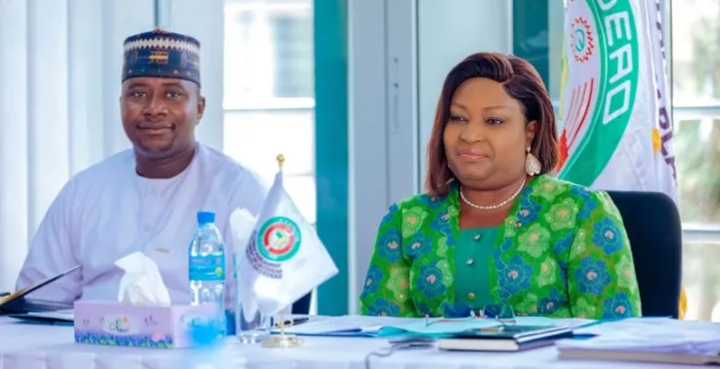
At the centre of the three-day working visit by the Speaker of the ECOWAS Parliament, Rt. Hon. Hadja Memounatou Ibrahima, was a proposal that could significantly reshape the way African legislative institutions collaborate, share knowledge and articulate the continent’s interests.
Hosted by the Speaker of EALA, Rt. Hon. Joseph Ntakirutimana, and Clerk, Mr. Alex Obatre, the engagement focused on strengthening parliamentary diplomacy while creating sustainable channels for legislative institutions across Africa to exchange experiences, expertise and policy solutions.
A Network Beyond Borders
Perhaps the most significant outcome of the visit was the presentation of a joint Concept Note proposing the establishment of a Network of Regional and Supranational Parliamentary Institutions.
The proposed network could bring together institutions including EALA, the ECOWAS Parliament and the Pan-African Parliament, while creating opportunities for engagement with other supranational legislative bodies around the world.
The idea reflects a growing recognition that many of the challenges confronting African nations can no longer be effectively addressed within individual national or even regional boundaries.
Climate change, migration, peace and security, economic integration, digital transformation and emerging global challenges increasingly require coordinated responses.
Through the proposed network, parliamentary institutions would have an organised platform for exchanging legislative practices, strengthening governance systems, promoting institutional development and learning from one another’s experiences.
Giving Africa a Stronger Voice
Beyond institutional cooperation, the proposed network carries a wider ambition — helping Africa speak with greater coordination and authority in international affairs.
One of the key elements of the concept is the development of common African positions on issues of strategic importance, particularly during multilateral engagements.
Such coordination could enable regional parliamentary institutions to harmonise their perspectives and collectively advocate issues affecting the continent.
The proposed engagement with institutions such as the European Parliament could further broaden the platform for dialogue and give African parliamentary institutions an opportunity to influence global policy conversations from a more coordinated position.
Leadership on a Rotational Basis
To promote inclusiveness and ensure that no single institution dominates the proposed arrangement, the Concept Note envisages a rotational leadership structure, alongside biannual meetings.
Such an arrangement could provide continuity while ensuring balanced participation among member institutions.
It also offers the possibility of developing a sustained parliamentary diplomacy framework in which relationships are built around concrete programmes, rather than being limited to ceremonial visits and goodwill exchanges.
From Diplomacy to Practical Results
The significance of the Arusha engagement lies particularly in its potential to move Africa’s parliamentary diplomacy into a more practical phase.
For decades, regional integration has been discussed largely in terms of economic cooperation, political relations and trade. Yet legislatures play an equally important role in translating regional aspirations into laws, policies and institutional frameworks.
A stronger connection among regional parliamentary institutions could therefore facilitate the exchange of successful legislative models and enable lawmakers to learn directly from approaches adopted in other parts of the continent.
A policy innovation developed in East Africa, for instance, could provide lessons for West African lawmakers, just as experiences from the ECOWAS region could offer valuable insights to their counterparts in East Africa.
Broadening the Conversation
The ECOWAS Parliament delegation did not limit its engagements to EALA.
During the visit, consultations were also held with the EAC Secretariat, the East African Court of Justice and the Pan African Postal Union, further expanding discussions around regional integration, institutional cooperation and the mechanisms required to strengthen Africa’s interconnected systems.
These engagements underscore the multidimensional nature of the proposed parliamentary cooperation.
Africa’s integration project extends beyond legislatures alone; it requires collaboration among political institutions, courts, regional organisations and other continental bodies.
A New Opportunity for African Integration
The Arusha initiative comes at a time when African countries are increasingly confronted by challenges that cut across borders.
Conflicts and insecurity do not stop at national boundaries. Neither do climate-related emergencies, migration pressures, economic shocks, technological disruptions or public health threats.
Against this backdrop, stronger parliamentary cooperation could provide an important additional layer to Africa’s integration efforts.
For ECOWAS Parliament and EALA, the proposed network represents an opportunity to institutionalise the exchange of ideas, strengthen legislative capacity and develop coordinated responses to challenges affecting millions of Africans.
More importantly, it could help transform Africa’s parliamentary institutions into stronger partners in shaping the continent’s future.
The proposal emerging from Arusha is therefore more than another diplomatic initiative. It is a potential framework for building bridges between Africa’s legislative regions, strengthening the continent’s collective voice and ensuring that parliamentary diplomacy delivers practical results for African people.
If successfully developed, the proposed network could ultimately become one of the important pillars supporting Africa’s long-term ambition for greater unity, stronger institutions and deeper regional integration.