
Why the truth must travel faster than misinformation as Nigeria prepares for 2027
By Sharon Akuboh
As Nigeria moves towards the 2027 general elections, the Nigeria Police Force and the Nigeria Union of Journalists (NUJ), FCT Council, have called for greater responsibility, verification and restraint in the reporting of security-related issues, warning that misinformation can turn isolated incidents into wider crises.
The call was made in Abuja at a one-day capacity-building workshop organised by the NUJ FCT Council on “Responsible Security Reporting in the Age of Citizen Journalism: Protecting Nigeria’s Stability Ahead of the 2027 Elections.”
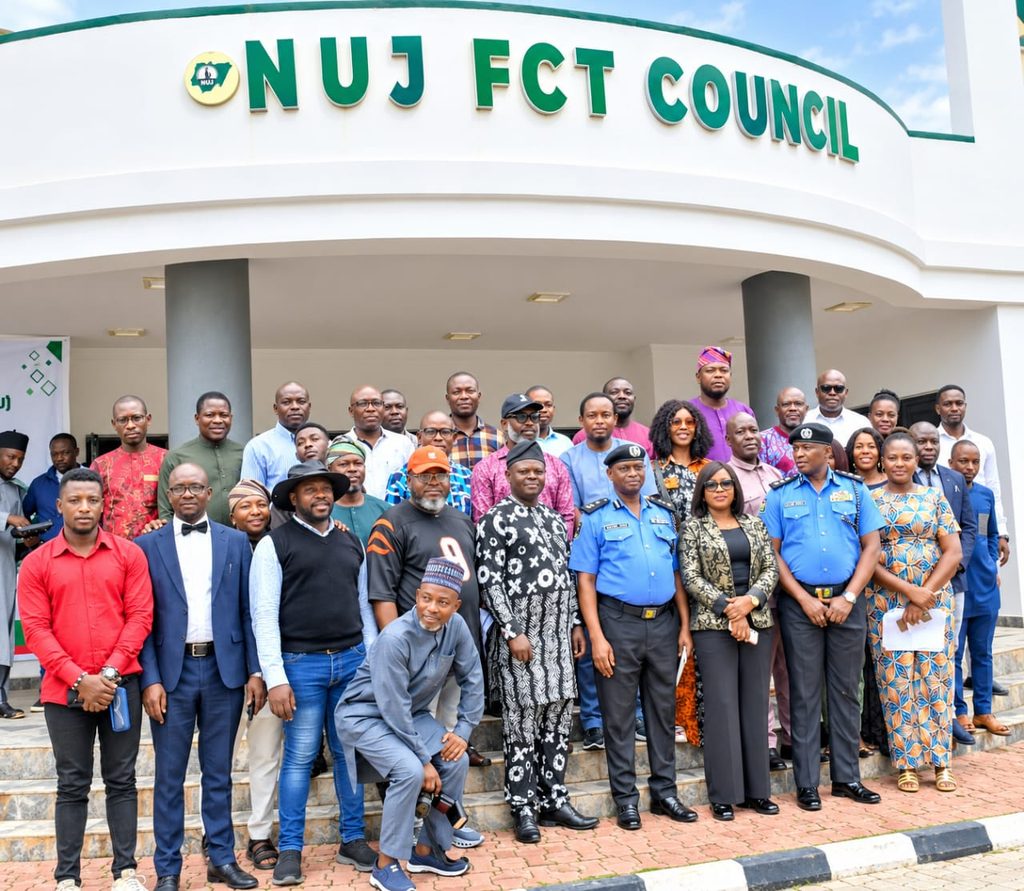
The workshop brought together journalists, security stakeholders and media trainers at a time when the boundaries between professional journalism and citizen-generated information are becoming increasingly blurred.
Representing the Inspector-General of Police, Olatunji Rilwan Disu, the Director in charge of the National Cybercrime Centre, AIG Akaninyene Ezimma, urged journalists to make verification the foundation of election and security reporting.
According to him, the media possesses enormous power to influence how citizens understand unfolding events, particularly during politically sensitive periods.
He described election security as a shared responsibility between security agencies and the media, stressing that responsible reporting could help save lives, while misinformation could heighten fear and provoke confrontation.
“The media has the power to shape how Nigerians understand what is happening around them. That power must be exercised with responsibility,” he said.
The police chief warned that the digital environment has made the spread of false information considerably faster, with old photographs and videos, fabricated statements and artificial intelligence-generated materials capable of being presented as fresh events.
He therefore challenged journalists to adopt a simple principle before publishing sensitive information: “Stop! Check! Confirm! Report!”
The message, he noted, should be particularly relevant during the election period, when the pressure to break news first can sometimes overshadow the more important responsibility of getting the facts right.
Police Promise Access, Urge Professional Restraint
The Commissioner of Police, FCT Command, Ahmed Muhammed Sanusi, represented by DCP Ibrahim Jibrin, also called for responsible engagement between the police and the media.
He assured journalists that the command would remain accessible and responsive to legitimate media enquiries while protecting sensitive operational information.
Sanusi said accurate security reporting could help reduce tension and improve public understanding of security operations, whereas unverified or sensational reports could have the opposite effect.
“Responsible security reporting can calm tension, promote public understanding and support security operations; inaccurate, unverified or sensational reporting, on the other hand, can unintentionally create fear, panic and distrust,” he said.
For a country preparing for another major electoral cycle, the message carries significance beyond the newsroom. Election-related rumours can travel through social media within minutes, reaching thousands of people before professional journalists have had an opportunity to establish what actually happened.
NUJ: Citizen Journalism Has Changed the Rules
In her welcome address, the Chairman of the NUJ FCT Council, Comrade Grace Ike, said the workshop was designed to help journalists navigate an increasingly complex information environment without abandoning the fundamental principles of journalism.
She said citizen journalism had expanded the number of people capable of generating and distributing information, making digital literacy and verification indispensable skills for modern reporters.
According to Ike, the training was aimed at strengthening the ability of security correspondents to verify eyewitness materials, provide context, operate within ethical and legal boundaries and engage security agencies without compromising journalistic independence.
Among the issues highlighted were verification of eyewitness photographs and videos, source protection, contextual reporting, ethical restraint and the ability to identify deepfakes and manipulated digital content.
“As the NUJ FCT Council, we pledge our support to journalists undertaking this demanding beat,” Ike said.
She added that the council would continue to advocate for professional safety, access to training, legal protection and mental-health support for journalists exposed to traumatic events.
The NUJ FCT leadership also called on security agencies to maintain transparent communication with the media and respect press freedom while carrying out their constitutional responsibility of protecting public safety.
Alobi: Citizen Journalists Must Also Understand the Consequences
Retired Commissioner of Police Lawrence Alobi, in a goodwill message, advocated wider digital-literacy campaigns, stronger fact-checking mechanisms and clearer ethical guidelines for citizen journalists handling sensitive security information.
His intervention reflects one of the major challenges confronting the information ecosystem ahead of the 2027 elections: information no longer originates only from newsrooms.
A witness with a smartphone can record an incident, post it online and potentially reach a larger audience before a trained journalist arrives at the scene.
The challenge, therefore, is not simply to stop citizens from sharing information, but to ensure that information capable of influencing public behaviour is properly verified and responsibly presented.
From “First” to “Right”
Resource persons at the workshop, including former NUJ Chairman Abduljelil Adebayo and Deputy Director of the Centre for Journalism Innovation and Development (CJID), Busola Ajibola, among others, stressed the importance of distinguishing between unofficial claims and confirmed information.
They urged journalists to clearly identify unverified materials, avoid sensational headlines capable of inflaming ethnic or religious tensions and protect vulnerable sources.
News organisations were also encouraged to establish stronger verification systems and fact-checking procedures while providing psychological support for journalists covering violence, disasters and other traumatic events.
The Bigger Battle Ahead of 2027
Perhaps the most important lesson from the Abuja workshop is that Nigeria’s 2027 electoral security will not depend solely on what happens at polling units.
It will also depend on what Nigerians see, hear and believe before, during and after election day.
A misleading video can create fear. A fabricated statement can trigger anger. An unverified allegation can damage reputations or provoke confrontation. Conversely, accurate and carefully contextualised journalism can help citizens understand events without unnecessarily escalating tensions.
This makes the journalist’s notebook, microphone, camera and smartphone important instruments of democratic responsibility.
For Weekenders, the emerging challenge is therefore not simply citizen journalism versus professional journalism. It is about creating an information culture in which speed does not defeat accuracy, technology does not replace verification, and public interest remains at the heart of reporting.
As Nigeria approaches the 2027 elections, the instruction from the workshop is simple but consequential:
Stop. Check. Confirm. Then report.
That may be one of the most practical contributions journalism can make to protecting lives, preserving public trust and strengthening peaceful democratic participation.