
By Destiny Jemiriayegbe
The Correspondents’ Chapel of the Nigeria Union of Journalists (NUJ), FCT Council, has reaffirmed its commitment to partnering with the Joint Revenue Board (JRB) to promote public understanding of Nigeria’s ongoing tax reforms and encourage voluntary tax compliance through accurate and responsible journalism.
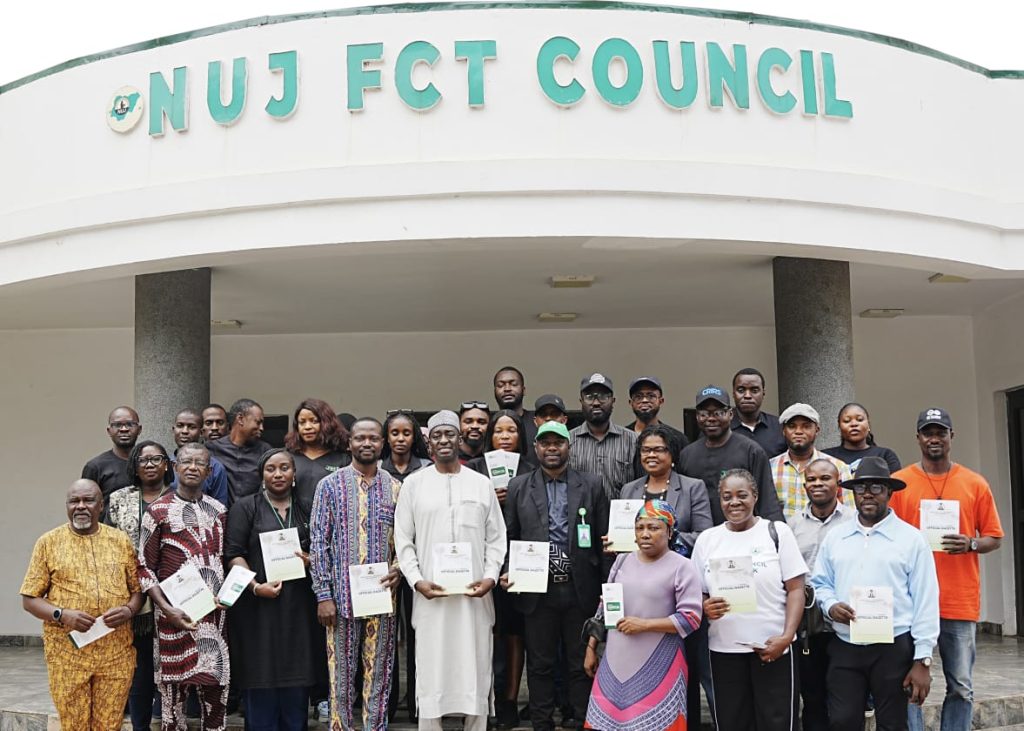
The commitment was made during an interactive session held in Abuja between members of the Chapel and officials of the Joint Revenue Board as part of activities marking the 2026 World Public Relations Day. The engagement was hosted by the Chairman of the Correspondents’ Chapel, Comrade Felix Ojo.
The Executive Secretary of the Joint Revenue Board, Mr. Olusegun Adesokan, was represented by the Board’s Head of Legal and Secretarial Services, Mr. Ibrahim Ja’afaru, who led discussions on the Federal Government’s tax reform agenda, particularly the newly introduced Presumptive Tax Regulations 2026.

Ja’afaru explained that the Joint Revenue Board is the statutory body responsible for coordinating and harmonising revenue administration across Nigeria. He noted that the engagement formed part of the Board’s efforts to strengthen collaboration with the media in recognition of the vital role of the media in informing the public, promoting transparency and building confidence in government policies.
According to the Board, the Presumptive Tax Regulations 2026 were introduced to simplify tax administration, eliminate multiple taxation, encourage businesses in the informal sector to formalise their operations and protect nano scale businesses from excessive tax burdens.
The Board disclosed that businesses with an annual turnover of ₦12 million and below are exempt from presumptive tax, while those earning above the threshold are required to pay one per cent of their annual turnover under the new framework. It added that several categories of small-scale operators, including roadside food vendors, artisans, shoemakers, pure water sellers and other micro-business owners, also enjoy tax exemptions.
The JRB emphasised that the presumptive tax regulations outlaws cash payment. Taxpayers are to make all payments through approved electronic platforms.
The Board further stressed that communication and stakeholders engagement remain central to the successful implementation of the reforms. He described the meeting with the Correspondents’ Chapel as the beginning of a stronger working relationship that will ensure accurate information on tax policies reaches Nigerians while providing channels for public feedback.
Clarifying tax filing obligations, the Board explained that both individuals and registered businesses are required by law to file annual tax returns.
The Board emphasised that taxation is only applicable where there is income, profit or gain, adding that businesses with no financial activity are not liable to pay tax but must still fulfil their filing obligations. Such businesses, it noted, are expected to submit “nil returns” to maintain compliance with statutory requirements.
The JRB also highlighted the reliefs available to low-income workers, noting that many taxpayers now fall below the taxable threshold after applicable exemptions and reliefs are considered.
On dispute resolution, the Board drew attention to the creation of the Office of the Tax Ombud, established under the JRB Establishment Act 2025, to provide taxpayers with free, impartial and accessible mechanism for resolving complaints with tax authorities without resorting to litigation.
The Board stated that the reforms aimed at simplifying the tax system and improving revenue administration, eliminating multiple taxation, supporting small businesses and expanding inclusion within Nigeria’s tax system, align with President Bola Ahmed Tinubu’s Renewed Hope Agenda.
Speaking the Chapel, Chairman Comrade Felix Ojo commended the Joint Revenue Board for engaging journalists on issues of national importance. He reaffirmed the Chapel’s readiness to partner with the Board in educating Nigerians on the objectives, benefits and practical implications of the tax reforms.
He described the engagement as timely and productive, urging Nigerians, especially operators within the informal sector, to take advantage of the reliefs, exemptions and protections provided under the Presumptive Tax Regulations 2026 while maintaining proper records and complying with relevant tax laws.
The Correspondents’ Chapel also called on government institutions to sustain regular stakeholder engagements as a means of strengthening public trust, improving voluntary tax compliance and supporting national development.
The Chapel further appealed to the Joint Revenue Board to support the ongoing building project of the NUJ FCT Council and assist the Correspondents’ Chapel in furnishing its office and providing capacity-building programmes for members to enhance effective public enlightenment on tax matters.
This was contained in a Statement signed by
Henrietta Momodu, Secretary, Correspondents’ Chapel, NUJ FCT.