
By Sharon Akuboh
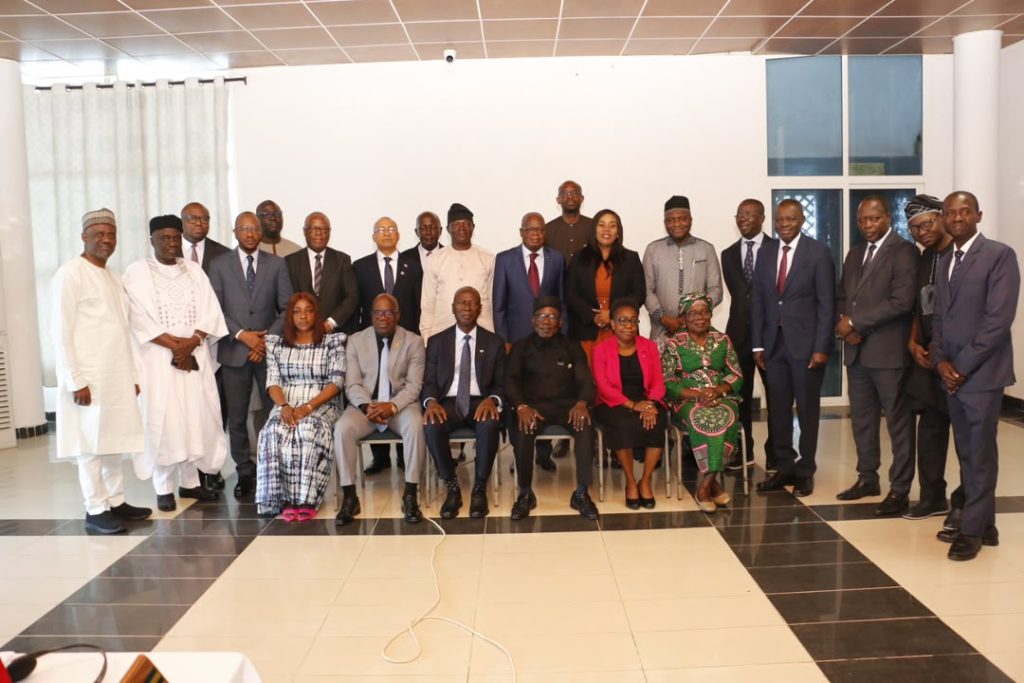
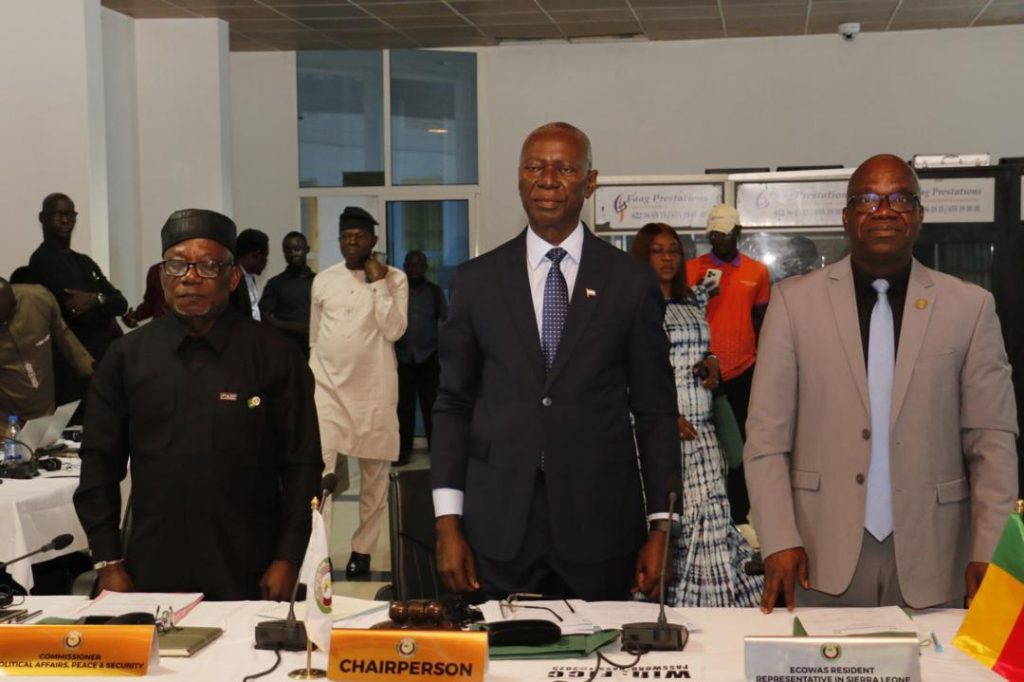
FREETOWN, SIERRA LEONE – The Economic Community of West African States (ECOWAS) has reaffirmed its commitment to regional unity, peace, security and integration as it officially opened the 44th Session of the Permanent Representatives Committee (PRC) at the Bintumani International Conference Centre in Freetown, Sierra Leone.
The high-level meeting, which brought together Ambassadors, Permanent Representatives and senior ECOWAS officials from across the sub-region, is expected to review key political, peace and security issues while preparing recommendations for consideration by the ECOWAS Authority of Heads of State and Government.
Welcoming delegates, Sierra Leone’s High Commissioner to Nigeria and ECOWAS, Dr. Julius F. Sandy, described the hosting of the session in Freetown as a significant milestone that reflects ECOWAS’ determination to strengthen regional integration by bringing its institutions closer to the people.
According to him, the decision to convene the meeting in Sierra Leone demonstrates the Community’s commitment to building a people-centred institution capable of addressing the aspirations and challenges of West Africans while enhancing the visibility of ECOWAS across Member States.
Dr. Sandy noted that Freetown was a fitting venue, given its rich historical contribution to West Africa’s political, educational and cultural development. He recalled that the city, once the capital of British West Africa, was home to Fourah Bay College, the first university in sub-Saharan Africa, earning Sierra Leone the enduring title of the “Athens of West Africa.”
He also highlighted the country’s pioneering achievements in railway development, journalism and aviation, while reflecting on Sierra Leone’s historic role as a refuge for liberated Africans following the abolition of the transatlantic slave trade.
“This enduring legacy continues to inspire Sierra Leone’s commitment to justice, peace, human dignity and regional cooperation,” he said.
While acknowledging ECOWAS’ achievements over the years, Dr. Sandy stressed that the region continues to grapple with complex political, humanitarian, economic and security challenges that require stronger collaboration among Member States and renewed commitment to the Community’s founding ideals of unity, solidarity and peaceful coexistence.
He described the Permanent Representatives Committee as a critical bridge between Member States and the ECOWAS Commission, responsible for examining policy proposals and making recommendations that shape decisions at the highest level of the regional bloc.
The Sierra Leonean diplomat urged delegates to approach their deliberations with openness, objectivity and a spirit of cooperation, expressing confidence that the meeting would further strengthen ECOWAS institutions and accelerate regional integration.
Speaking on behalf of the President of the ECOWAS Commission, Dr. Omar Alieu Touray, the ECOWAS Commissioner for Political Affairs, Peace and Security warned that West Africa is facing one of the most critical periods in its history, with democracy increasingly threatened by terrorism, violent extremism, transnational organised crime, unconstitutional changes of government, maritime insecurity, intercommunal conflicts, climate-related pressures and economic instability.
He called for stronger collective action, stressing that no Member State can effectively confront these challenges in isolation.
The Commissioner commended Sierra Leone for hosting the session and applauded Member States and Permanent Representatives for their continued dedication to promoting democracy, peace and regional integration.
Although he acknowledged recent democratic gains recorded through successful elections, constitutional reforms and peaceful political transitions, he cautioned that these achievements remain fragile without sustained regional cooperation.
He revealed that the Committee would deliberate extensively on preventive diplomacy, the region’s evolving security landscape and preparations for the activation of the ECOWAS Counterterrorism Force, expected to enhance the bloc’s capacity to combat terrorism across West Africa.
The Commissioner also drew attention to the enormous financial burden of maintaining regional peace operations, disclosing that the ECOWAS Stabilisation Mission in Guinea-Bissau has cost over 44.6 million US dollars since 2022, while the mission in The Gambia has exceeded 174.7 million US dollars since its deployment in 2017.
He further revealed that the Commission currently owes more than 116 million US dollars in reimbursements to troop- and police-contributing countries, warning that resolving these financial obligations is essential to achieving the planned deployment of the ECOWAS Counterterrorism Brigade by 2027.
Beyond military responses, he emphasised that human security must remain central to ECOWAS’ agenda, highlighting humanitarian crises, forced displacement, climate-related disasters and conflict prevention as critical priorities.
He also underscored the need to strengthen the ECOWAS Early Warning and Response Mechanism and sustain election observation missions to preserve democratic governance across the region.
Reflecting on what he described as his final Ambassadorial session as Commissioner for Political Affairs, Peace and Security, he reviewed major milestones achieved during his four-year tenure, including mediation during political crises, support for democratic transitions, reinforcement of governance institutions, expansion of election observation missions and the operationalisation of the ECOWAS Logistics Depot.
He further cited the activation of the ECOWAS Standby Force in its kinetic mode, the establishment of the ECOWAS Maritime Security Architecture, implementation of the West African Police Information System (WAPIS) and the Automated Fingerprint Identification System (AFIS), alongside strengthened regional efforts to curb the proliferation of small arms and light weapons.
Looking ahead, the Commissioner announced that preparations are at an advanced stage for the Special Summit on the Future of Regional Integration in West Africa, scheduled for 19 July 2026, where regional leaders are expected to adopt the Compact of the Future, a strategic framework designed to guide the next phase of ECOWAS integration.
He also highlighted the successful Third Joint Consultative Meeting between the African Union Peace and Security Council and the ECOWAS Mediation and Security Council as evidence of growing cooperation between continental and regional institutions.
Concluding his address, the Commissioner thanked Member States, ambassadors and development partners for their support throughout his tenure and appealed for continued cooperation with his successor.
He reaffirmed that the future of West Africa depends on unity, solidarity and sustained collaboration, urging Member States to remain committed to building a peaceful, democratic, secure and prosperous region for present and future generations.