
By Halima Jibrin
The political atmosphere in Rivers State took a dramatic turn with the announcement by Siminalayi Fubara withdrawing from the APC gubernatorial primaries ahead of the state election.
In a strongly worded and emotionally layered statement released on May 20, 2026, the Rivers State Governor framed his decision not as political defeat, but as an act of sacrifice for peace, stability, and unity in the oil-rich state.
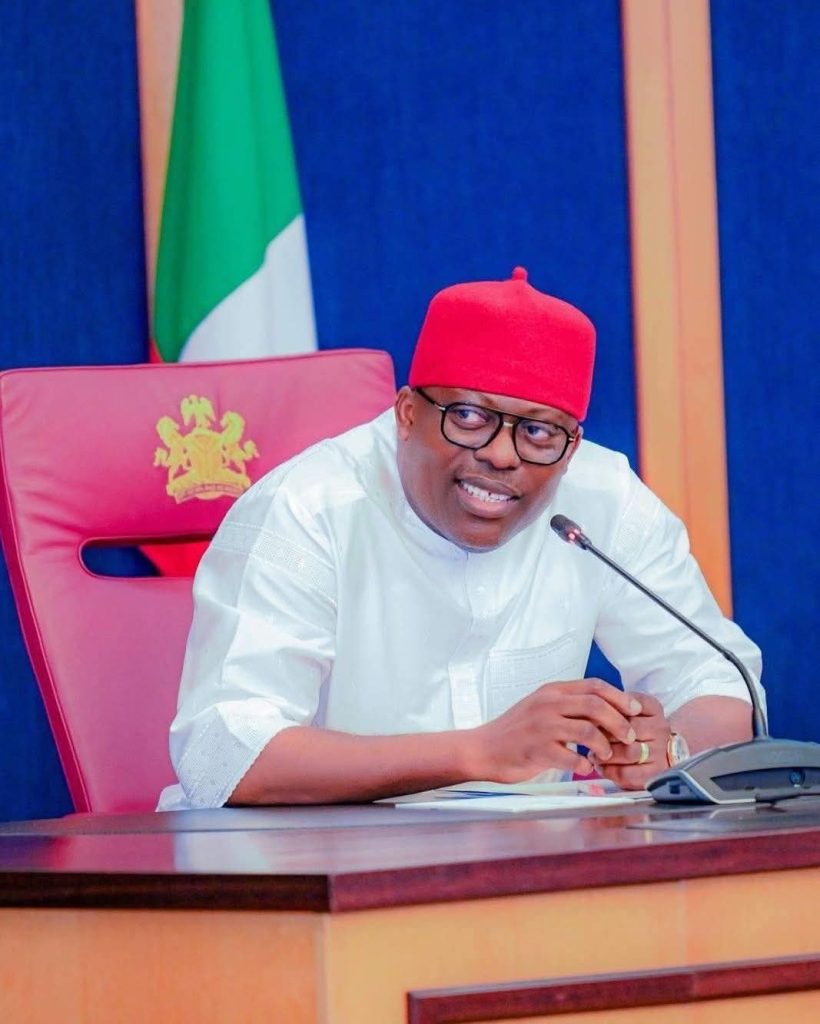
For many observers, however, the statement carried meanings far beyond its carefully selected words. It reflected the intense undercurrents shaping Rivers politics, the fragile balance within the ruling political structure, and the continuing battle for influence in one of Nigeria’s most politically strategic states.
Fubara’s withdrawal has already sparked widespread debate across political circles, with analysts describing it as one of the most consequential political decisions in recent Rivers history.
A Decision Wrapped in Restraint
The Governor’s statement was remarkable not only for what it said, but also for what it chose not to reveal.
“Not everything a hunter sees in the forest is spoken of in the marketplace,” Fubara declared, invoking a proverb that immediately triggered speculation about unseen pressures and behind-the-scenes negotiations.
The language of restraint, sacrifice, and silence suggested a leader navigating turbulent political waters while deliberately avoiding direct confrontation.
Political watchers believe the Governor’s words hinted at deep internal dynamics within the All Progressives Congress and the broader Rivers political establishment.
By repeatedly emphasizing peace and unity, Fubara appeared to acknowledge the volatility that has long characterized the state’s political environment.
Rivers Politics and the Burden of Power
Politics in Rivers State has never been ordinary. The state remains one of Nigeria’s economic nerve centres, rich in oil resources and deeply influential in national politics. Control of Rivers is therefore never merely local; it carries regional and national implications.
For decades, political transitions in the state have often been accompanied by fierce rivalries, shifting loyalties, and intense power struggles.
Fubara’s rise to leadership itself came amid major political realignments, making his latest decision even more significant.
His withdrawal from the gubernatorial primaries now raises several critical questions:
Was the move entirely voluntary?
Was it part of a broader political arrangement?
Does it signal reconciliation within the power structure?
Or is it a strategic retreat ahead of future political calculations?
While answers remain uncertain, one thing is clear: the Governor’s decision has altered the political equation in Rivers State.
The Language of Sacrifice
One of the strongest themes in the statement was sacrifice.
“Leadership is ultimately about sacrifice,” Fubara wrote, portraying himself as a leader willing to subordinate personal ambition for collective stability.
This framing is politically important.
In Nigerian politics, stepping aside is often interpreted as weakness or loss of influence. Fubara appeared determined to reject that narrative directly.
He insisted his withdrawal was “not out of weakness, fear, or surrender,” but rather a conscious choice made in the interest of peace.
That declaration may have been intended to reassure supporters who see him as a symbol of resistance, courage, and political survival.
For his loyalists, the statement transforms the withdrawal from a political setback into an act of statesmanship.
A Message to Supporters
Fubara’s appreciation of his supporters formed one of the emotional high points of the statement.
He acknowledged the disappointment and anger many followers might feel after investing heavily in his political journey.
By recognizing their sacrifices, the Governor sought to preserve the emotional bond between himself and his political base.
This is significant because political strength in Rivers State has always depended heavily on grassroots loyalty and mobilization.
Even while stepping away from the primaries, Fubara carefully positioned himself as still deeply connected to the people.
Importantly, he also pledged continued commitment to serving Rivers State until the end of his tenure, signaling that his political relevance remains intact despite the withdrawal.
Tinubu, APC and National Calculations
The Governor’s public appreciation of Bola Ahmed Tinubu also drew attention.
By thanking the President for his “support and encouragement,” Fubara appeared keen on maintaining cordial relations with the national leadership of the ruling party.
Analysts say this could indicate ongoing efforts to stabilize internal party relations and avoid further escalation of political tensions.
His repeated emphasis that the APC “remains our collective home” was equally strategic.
At a time when defections and political fragmentation frequently reshape Nigerian politics, Fubara’s statement sought to project party unity despite obvious underlying tensions.
Beyond Withdrawal: The Future Ahead
While Fubara may have stepped aside from the gubernatorial race, his political story in Rivers State is far from over.
In fact, many believe the withdrawal may mark the beginning of a new political phase rather than an ending.
His carefully measured words suggest a leader preserving political capital, avoiding open warfare, and keeping future possibilities alive.
In politics, retreat can sometimes become strategy.
For Rivers people, however, the deeper concern remains whether this decision will truly bring the peace and stability repeatedly referenced in the statement.
The state has endured years of political uncertainty and division. Citizens now hope that the sacrifice Fubara speaks about will translate into improved governance, reduced tensions, and a more stable democratic environment.
The Unspoken Reality
Perhaps the most powerful aspect of Fubara’s statement lies in its silences.
The Governor spoke of “immense pressures” and “difficult choices” without revealing details. Those omissions may continue to fuel speculation for months to come.
Yet in many ways, the silence itself became the message.
In stepping away from the gubernatorial contest while insisting he remains committed to Rivers State, Fubara has presented himself as a reluctant actor choosing peace over confrontation.
Whether history ultimately interprets his decision as sacrifice, compromise, strategy, or survival may depend on what unfolds next in the ever-unpredictable politics of Rivers State.