
By Joy Omagha Idam, Abuja
Nigeria has taken another significant step toward strengthening gender equality, human rights protection, and access to healthcare services as key stakeholders converged in Abuja for the Global Fund Grant Cycle 8 (GC8) National Consultative Workshop on Gender Equality, Gender-Based Violence (GBV), and Intimate Partner Violence (IPV) Programming.
The one-day national consultation, themed “Strengthening Coordinated Pathways to GBV and IPV Programming within the Global Fund Framework in Nigeria,” was organized by the United Nations Development Programme (UNDP) with support from the Global Fund and in collaboration with the Federal Ministry of Health, Federal Ministry of Justice, Federal Ministry of Women Affairs, National Human Rights Commission (NHRC), UN Women, UNFPA, the Institute of Human Virology Nigeria (IHVN), the National GBV Technical Working Group, and other development partners.
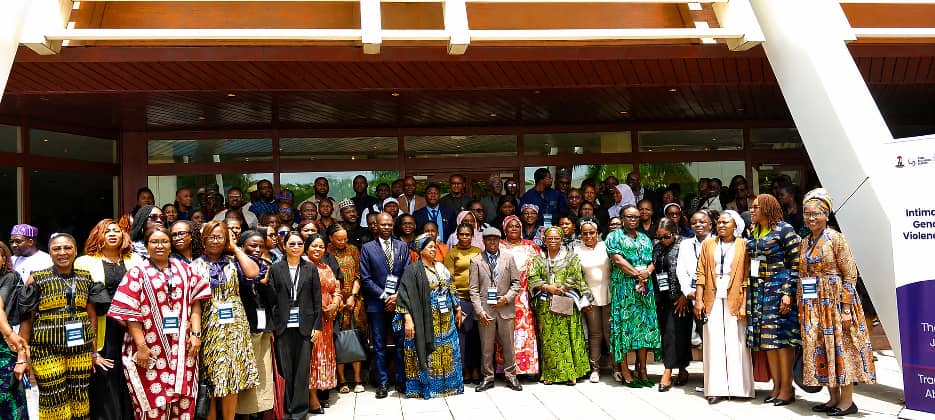
Held at the Transcorp Hilton Hotel, Abuja, the workshop brought together government officials, development partners, civil society organizations, women and youth groups, human rights advocates, academia, and technical experts to develop strategies aimed at strengthening gender-responsive interventions and addressing the growing challenges of GBV and IPV in Nigeria.
Development Programme (UNDP), Onyinye Belinda Ndubuisi, has commended Civil Society Organisations (CSOs) for their sustained efforts in addressing gender inequality and Intimate Partner Gender-Based Violence (GBV) across Nigeria, noting that significant progress has been made through advocacy, community engagement, and support services for survivors.
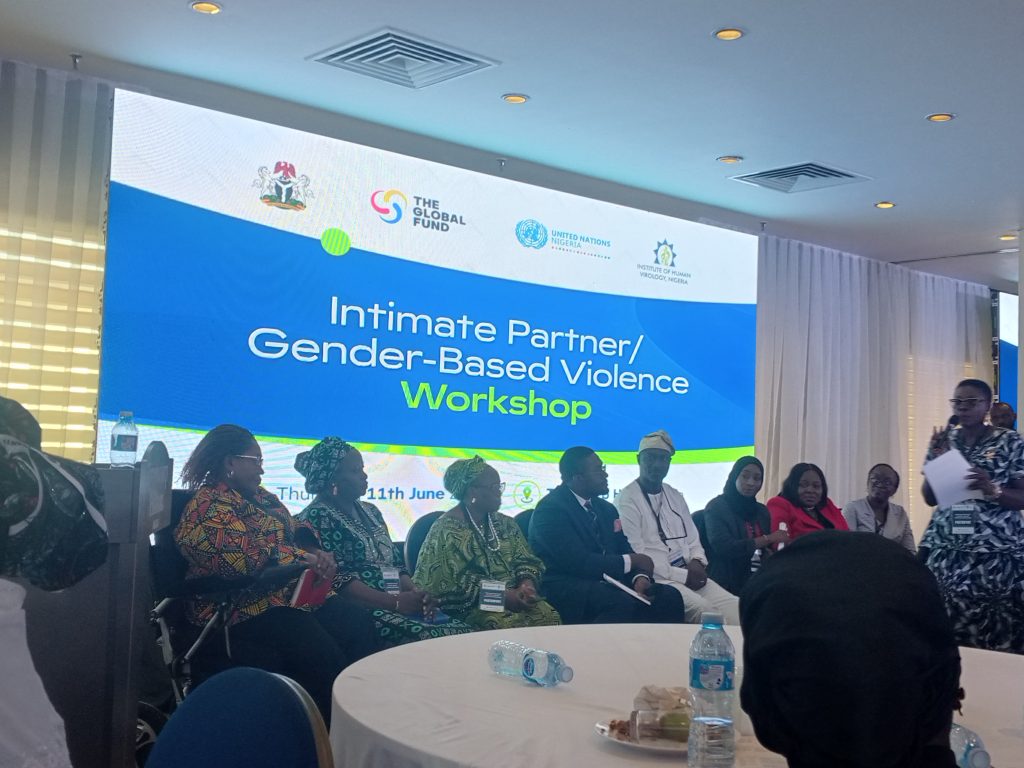
Speaking during the Global Fund Grant Cycle 8 (GC8) National Consultative Workshop on Gender Equality, Intimate Partner Gender-Based Violence (GBV), Programming in Abuja, Ndubuisi stressed that GBV remains a critical challenge that cannot be ignored. She emphasized that stakeholders must confront the reality of violence against women and girls and intensify efforts to tackle intimate partner violence, which continues to affect families and communities across the country.
She also highlighted concerns around women’s rights and autonomy within healthcare settings, observing that pregnant women are routinely screened for HIV when they visit hospitals, often without adequate consultation or informed consent. According to her, such experiences underscore the need for more people-centred and rights-based approaches in the delivery of health services.
Ndubuisi urged government institutions, development partners, civil society groups, and community leaders to take collective responsibility for driving meaningful change. She called on all stakeholders to become champions of gender equality and human rights, stressing that lasting progress can only be achieved when individuals and institutions commit to being the change they wish to see in society.
The Head of HIV at the Global Fund, Dr Izukanji Sikazwe, stressed these concerns, describing gender-based violence and intimate partner violence as major structural barriers to HIV epidemic control.
According to the Fund, violence and discrimination often prevent vulnerable individuals from accessing HIV prevention, testing and treatment services, thereby increasing the risk of new infections and poor health outcomes.
The organisation said it would continue working with the Federal Government, state institutions and community organisations to identify investments capable of reducing violence, strengthening protection systems and improving access to health services.
Speaking at the opening ceremony, the Director of Public Prosecutions of the Federation, Oyedepo Iseoluwa Rotimi, SAN, who delivered the welcome address on behalf of the Attorney-General of the Federation and Minister of Justice, stressed the urgent need to integrate health, justice, and human rights interventions in the fight against HIV, Tuberculosis (TB), Malaria, and gender-based violence.
According to him, the country’s efforts to combat communicable diseases cannot succeed without addressing the structural inequalities, stigma, discrimination, and violence that continue to hinder access to healthcare, particularly among vulnerable and marginalized populations.
Rotimi noted that despite Nigeria’s reduction in HIV prevalence to 1.4 percent among the general population, key populations continue to account for nearly 40 percent of new infections, largely due to systemic barriers including discrimination, social exclusion, and fear of seeking medical care.
“The fight against HIV, Tuberculosis, and Malaria cannot succeed in isolation from the fight against gender-based violence, intimate partner violence, stigma, discrimination, and structural inequality,” he stated.
He further highlighted alarming statistics showing high rates of tuberculosis among HIV-positive key populations, including people who inject drugs, female sex workers, and transgender persons, warning that healthcare access remains severely constrained by stigma and institutional barriers.
The Director of Public Prosecutions also drew attention to the plight of inmates in correctional facilities, describing them as a neglected key population facing heightened risks of HIV and TB transmission due to overcrowding, poor living conditions, and inadequate healthcare services.
He emphasized that the justice sector bears a responsibility to address these challenges through criminal justice reforms and improved healthcare access within custodial settings.
On the issue of human trafficking, Rotimi underscored the strong link between exploitation, sexual violence, and increased vulnerability to HIV and other diseases. He called for stronger integration of anti-trafficking initiatives with healthcare services, forensic medical care, and psychosocial support for survivors.
The consultation also focused extensively on the impact of gender-based violence and intimate partner violence on public health outcomes. Citing findings from the National Demographic and Health Survey, the DPP revealed that nearly one-third of Nigerian women aged between 15 and 49 have experienced sexual violence, while intimate partner violence remains prevalent across the country.
He warned that women who experience violence are less likely to access HIV testing, adhere to treatment, or seek healthcare services, creating additional public health challenges.
“The health consequences of GBV and IPV are profound. Every survivor who is unable to access support services represents a failure of both the health and justice systems,” he said.
Rotimi outlined several initiatives already being implemented by the Federal Ministry of Justice through its Sexual and Gender-Based Violence (SGBV) Response Unit, including the strengthening of legal-health referral systems, trauma-informed prosecution practices, support for Sexual Assault Referral Centres, and efforts to remove barriers preventing vulnerable populations from accessing healthcare services.
Dr Tony Ojukwu, SAN, the Executive Secretary NHRC who was represented by Hilary Ogbonna, reeled out various statistics and affirmed that he was confident that actionable results would emanate from the consultation.
He hinted that between January and April 2026 a total of 2756 Intimate Partner GBV across Nigeria was reported. Out of which1,265 were perpetrated by family members and 655 by religious leaders. He lamented that it was high in areas where banditry strived.
Participants at the workshop deliberated on key priorities for Nigeria’s Global Fund Grant Cycle 8 funding request, including strengthening multisectoral coordination, improving referral pathways, integrating GBV screening into HIV and TB service delivery, expanding services within correctional facilities, enhancing mental health and psychosocial support, and ensuring sustainable financing for gender-responsive interventions.
The consultation is expected to generate actionable recommendations that will inform Nigeria’s GC8 funding framework and implementation strategy while advancing efforts to promote gender equality, survivor-centred services, human rights protection, and equitable access to health and justice services nationwide.
Stakeholders described the workshop as a critical opportunity for Nigeria to build a more inclusive and responsive health system that addresses the interconnected challenges of disease, violence, discrimination, and social exclusion.
As deliberations concluded, participants reaffirmed their commitment to ensuring that future Global Fund investments not only strengthen healthcare systems but also protect the rights and dignity of women, girls, survivors of violence, and other vulnerable populations across the country.
For many attendees, the Abuja consultation was more than a policy dialogue—it was a call to action to create a Nigeria where every citizen can access healthcare and justice without fear, stigma, discrimination, or violence.