
By Sharon Akuboh, Abuja
Nigeria’s quest for sustainable development and responsible innovation took centre stage in Abuja as stakeholders from government, academia, the private sector, civil society and the media converged at the Independent Corrupt Practices and Other Related Offences Commission (ICPC) Headquarters for the 2026 IFEPS/ICPC Stakeholders Conference, with a resounding call to place ethics at the heart of the nation’s technological advancement.
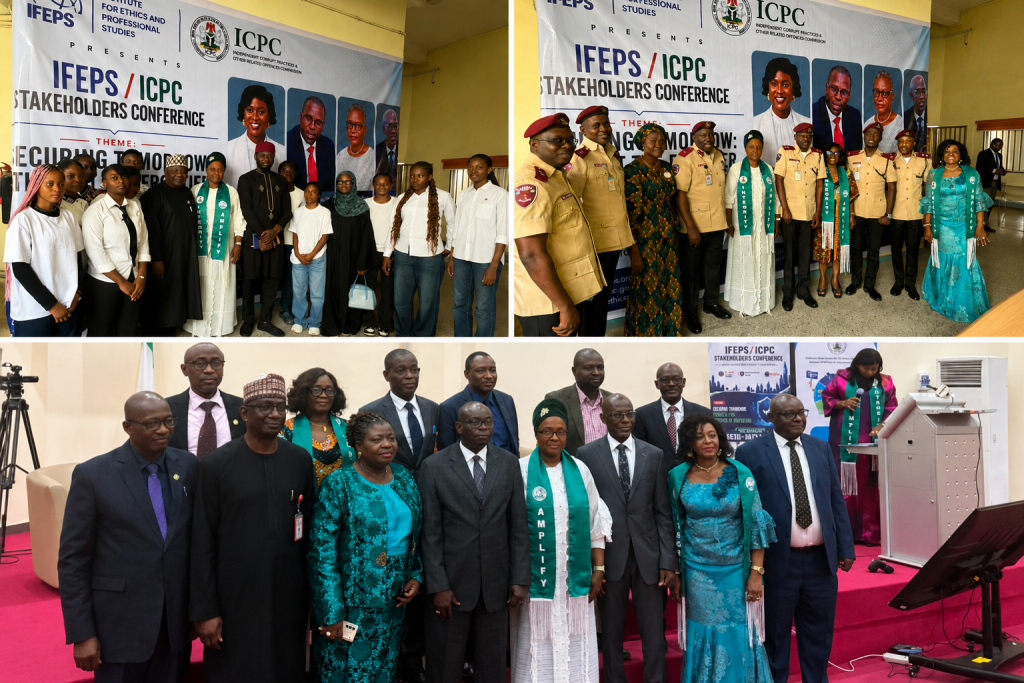
The conference, themed “Securing Tomorrow: Ethics at the Frontier of Innovation,” challenged Nigerians to ensure that the rapid rise of artificial intelligence, digital platforms and emerging technologies is guided by integrity, accountability and strong moral values.
Delivering the welcome address, Executive Director of the Institute for Ethics and Professional Studies (IFEPS), Dr. Uyim Akpabio, warned that while technology continues to evolve at an unprecedented pace, ethical standards must not be left behind. He stressed that innovation alone cannot guarantee national progress unless it is anchored on honesty, transparency and responsible leadership.

According to him, Nigeria’s future depends on embedding ethics into governance, education, public institutions and digital ecosystems, describing integrity as “the code that must be written into every system, policy, classroom and community.”
Dr. Akpabio highlighted two landmark national frameworks championed by the ICPC—the National Values Curriculum and the National Ethics and Integrity Policy—as critical instruments for shaping a new generation of responsible citizens while strengthening ethical conduct across public and private institutions.
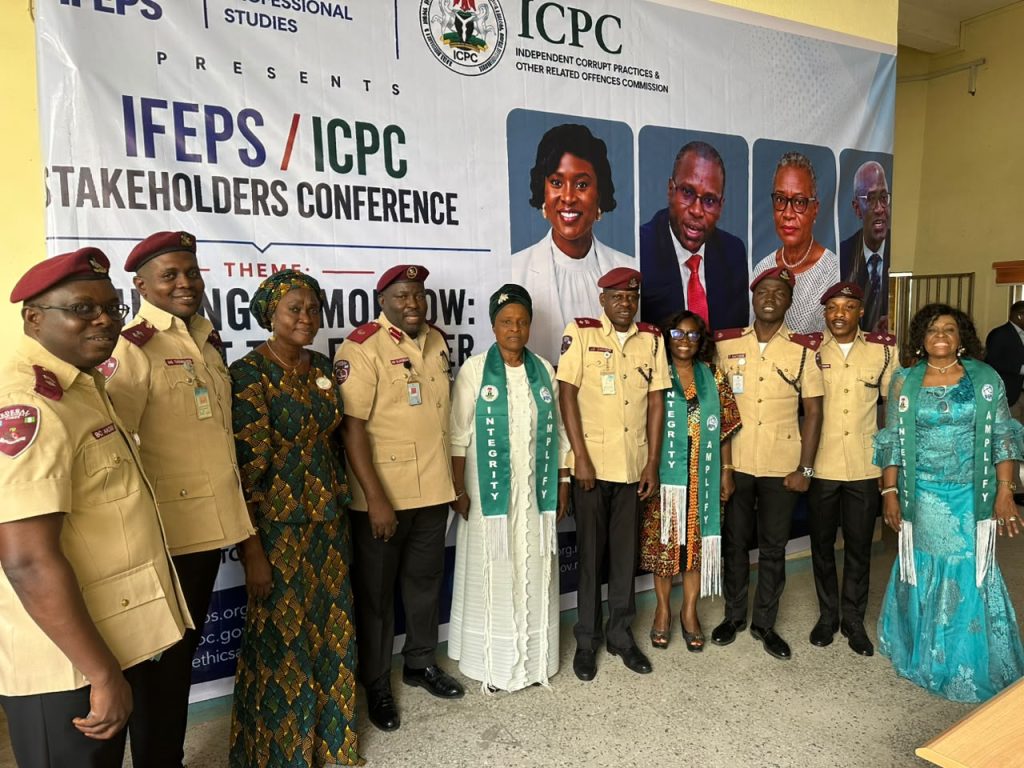
He noted that the conference seeks to unite all sectors of society around a common vision, move beyond discussions to practical implementation, and activate partnerships that will make ethical values a living reality in schools, Ministries, Departments and Agencies (MDAs), businesses and communities nationwide.
Addressing young participants, Dr. Akpabio described children and youths as “today’s ethics ambassadors,” urging them to become champions of responsible digital citizenship and integrity both online and offline.
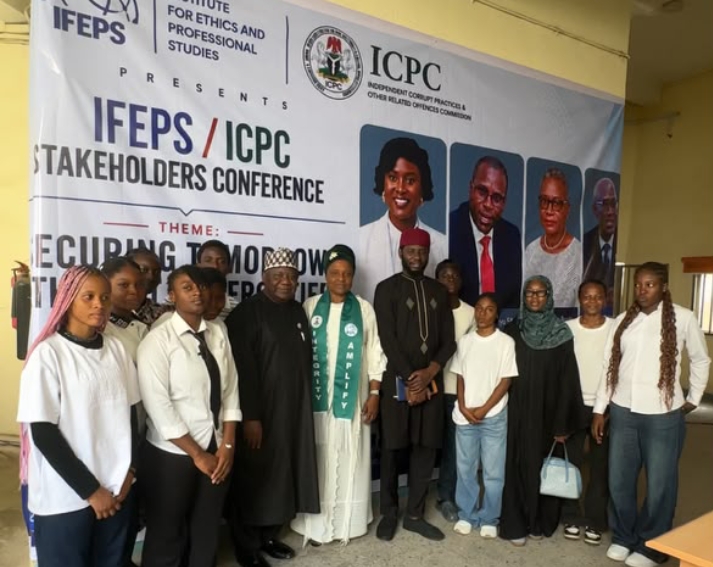
In her opening remarks, Chairperson of the IFEPS Advisory Board, Prof. Ekanem Braide, described the conference as a defining moment for Nigeria’s future, announcing three strategic initiatives designed to institutionalise ethics across the country.
The initiatives include the Ethics Endowment Fund (EEF)—described as Nigeria’s first dedicated funding platform for integrity programmes—the C-H-I-L-D-R-E-N Values Initiative, aimed at instilling character and moral values in children between the ages of six and twelve, and the Citizens Digital Responsibility Initiative (CDRI), which seeks to equip young Nigerians with the skills to combat misinformation, cybercrime and other digital threats through responsible online behaviour.
Prof. Braide called on corporate organisations, development partners, foundations and well-meaning Nigerians to invest in the Ethics Endowment Fund, noting that supporting ethical education is an investment in a nation where integrity is rewarded, corruption is discouraged and institutions function effectively.
She explained that while the Ethics Endowment Fund would provide sustainable financing, the CHILDREN Values Initiative would build strong moral foundations, and the Citizens Digital Responsibility Initiative would prepare young Nigerians to navigate the digital age with responsibility and integrity.
Participants agreed that as Nigeria embraces digital transformation and artificial intelligence, ethical leadership, responsible citizenship and value-based education must remain the pillars upon which innovation and national development are built.
The two-day conference continues with policy dialogues, stakeholder engagements, recognition of Digital Ethics Ambassadors and Champions of Ethics and Service, as well as commitments aimed at deepening integrity, accountability and ethical governance across Nigeria.