
By Remi Johnson
Graduands of the maiden Athena-Anchoria Junior Fellowship have expressed confidence in their preparedness to contribute to strategic leadership, public policy reforms and institutional development in Nigeria, following intensive training in leadership, governance, policy analysis and financial decision-making.
The graduands made this known in Bon Hotel Abuja, during the graduation ceremony of the six-month fellowship programme organised by the Athena Centre for Policy and Leadership in partnership with Anchoria Capital Group.

Speaking on behalf of his colleagues, the overall best graduating fellow, Ezekiel Adebisi, who delivered the valedictory speech titled “Beyond the Classroom: A Responsibility to Reform,” said the programme had equipped them with better questions, sharper analytical tools and a deeper understanding of their responsibilities towards society.
According to him, the fellows had learnt that democratic stability depends on strong institutions capable of enforcing accountability, protecting constitutional principles and sustaining public trust.

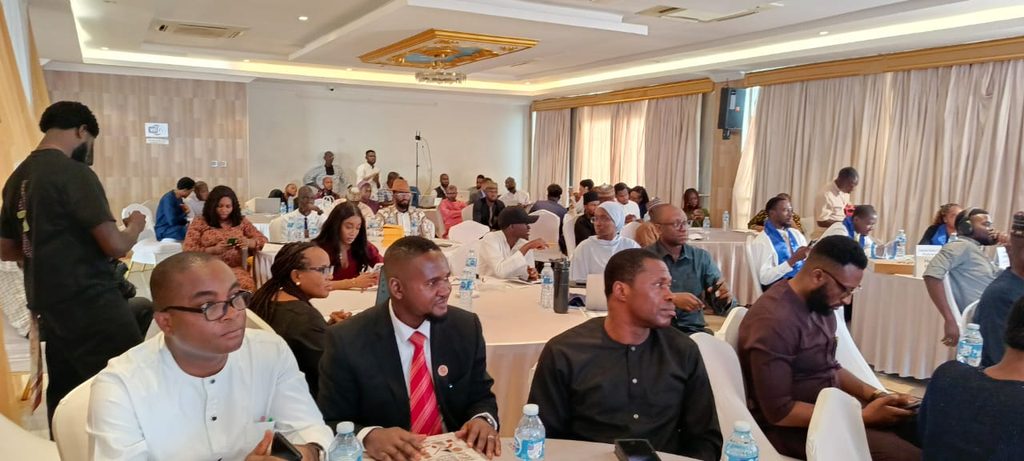
The overall best graduating fellow also called on his colleagues to demonstrate courage, discipline and integrity as they enter public agencies and other sectors of the economy, adding that graduation should mark the beginning of their practical responsibility to society.
In their various capstone presentations, the fellows identified critical gaps in Nigeria’s governance, healthcare, education, nutrition financing, digital literacy, food safety and community development, while proposing practical reforms to address them.

Augustina Abakpa, in her presentation on the growing circulation of fake and potentially harmful food products in Nigeria, called on the National Agency for Food and Drug Administration and Control (NAFDAC) to strengthen its monitoring and enforcement mechanisms to protect consumers.
Using reports of allegedly fake yoghurt, palm oil, apples, bread and other food products as case studies, she raised concerns about delays in investigating public complaints, citing an alleged five-week interval between a viral report concerning Bon Bread in April 2026 and NAFDAC’s subsequent public statement.
Abakpa recommended that NAFDAC prioritise complaints according to their urgency and location, strengthen product monitoring and publish quarterly reports showing how public complaints are investigated and resolved.
Similarly, Miss Ekwueme drew attention to the emotional and mental health challenges confronting students in Nigerian senior secondary schools, calling for mental health literacy to be incorporated into the national curriculum.
Ekwueme advocated stronger collaboration between the Federal Ministries of Health and Education, establishment of mental health referral systems in secondary schools and training of teachers to identify early signs of emotional distress and provide appropriate support.
On nutrition financing, Rashida Abubakar called on the Nigerian government to move beyond tracking budgetary allocations and financial commitments to monitoring actual expenditure, implementation and service delivery.
She argued that the country’s nutrition financing gap was not caused by resource scarcity alone but also by fragmented funding arrangements and weak implementation.
In another presentation, Kosisochukwu Bosah, examined the importance of digital skills acquisition in the 21st century, urging the National Universities Commission (NUC) and the National Information Technology Development Agency (NITDA) to make digital competence a measurable outcome of university education.
She argued that merely offering digital courses in universities was insufficient without practical evidence of students’ competence, and proposed a common national digital competence standard for university graduates.
Bosah said such a framework would improve graduate employability, strengthen employers’ confidence in university qualifications and prepare Nigerian graduates for the demands of the digital economy.
Shadrach Owen, in his presentation on Nigeria’s out-of-school children crisis, argued that the problem was not simply a shortage of funding but also inadequate tracking of money allocated to education and the implementation of educational programmes.
He emphasised the need for stronger financial accountability and monitoring mechanisms to ensure that resources allocated to schools at different levels of education translate into improved access to quality education.
Eunice Olasunkanmi, who presented a paper titled “Nigeria Has a Prevention Problem, Not a Prevention Policy Problem,” argued that Nigeria already had policies and institutional structures for preventive healthcare but was struggling with ineffective implementation.
She maintained that healthcare performance indicators should go beyond counting activities carried out within health facilities to include actual community coverage, continuity of care and equitable access to services.
Olasunkanmi recommended a review of existing healthcare performance indicators, community feedback mechanisms and the disaggregation of health data by local government areas to identify underserved populations.
She also urged government to strengthen preventive healthcare rather than concentrate resources on treating diseases that could have been avoided through early intervention.
Mohammed Baba-Kale, on his part, examined the relationship between integration and rehabilitation, arguing that integration does not automatically translate into successful rehabilitation.
He stressed that the success of rehabilitation initiatives also depends on community perception, acceptance and participation, noting that policies must take into consideration how affected communities understand and respond to interventions.
The graduating fellows expressed profound appreciation to the Chancellor of the Athena Centre, Chief Osita Chidoka, the leadership of the Athena Centre for Policy and Leadership and Anchoria Capital Group for providing the platform and resources for the six-month fellowship.
They particularly acknowledged the organisers for combining practical knowledge of governance, public policy and institutional reforms with financial literacy, investment and financial decision-making, describing the experience as instrumental to their intellectual and professional development.
Other members of the 2026 Cohort includes Muhammad Afodun, Angelica Enegbuma, Yahaya Abubakar, Daniel Nnamani, and Adaobi Ayogu.
The maiden graduation marked the completion of the programme by its pioneer cohort of 13 fellows, who pledged to apply their knowledge in addressing Nigeria’s institutional and developmental challenges.