
By Destiny Jemiriayegbe
When the final list of countries qualified for the FIFA World Cup 2026 was released, many Nigerians expressed disappointment that the Super Eagles would not be participating in the world’s biggest football tournament.
But a closer look at the competition tells a different story.
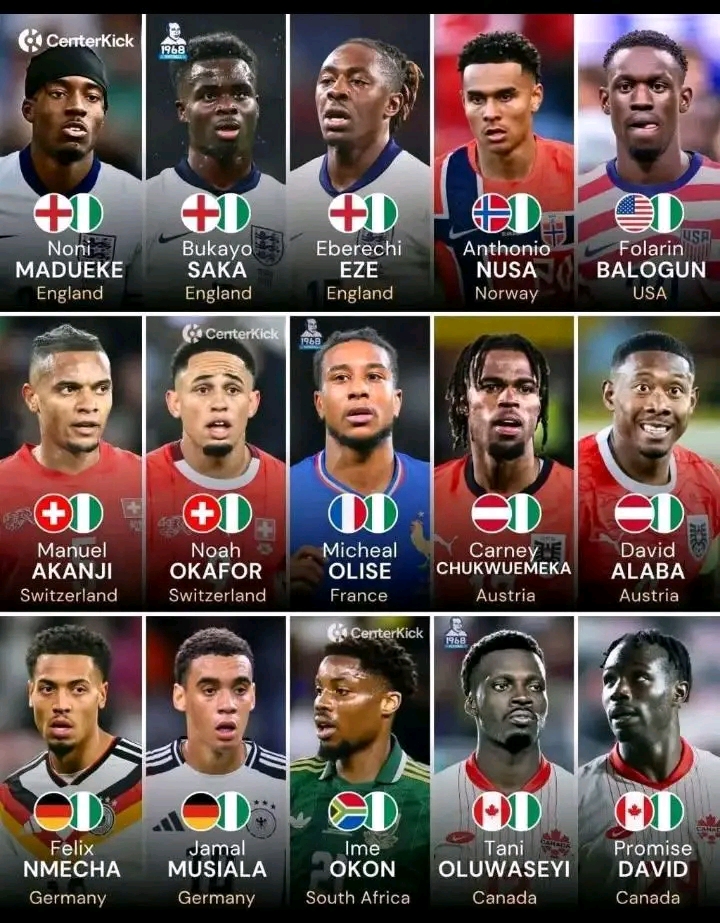
Who says Nigeria did not make it to the World Cup?
Nigeria may not have qualified as a team, but the country’s presence is being felt across the tournament in remarkable ways. The Countries with Players from Nigeria includes; Austria, Carney Chukwuemeka, David Alaba. Canada, Tani Oluwaseyi, Promise David. England, Noni Madueke, Bukayo Saka. France, Michael Olise. Germany, Felix Nmecha, Jamal Musiala.
From the glittering opening ceremony to the football pitch itself, Nigeria’s influence is impossible to ignore.
The opening ceremony became a celebration of Nigerian music and culture as global Afrobeats superstars, Burna Boy, Davido and Rema captivated audiences from around the world. Their performances once again demonstrated the global reach of Nigerian entertainment and reinforced the country’s status as a cultural powerhouse.
Beyond the music, Nigeria’s footprint extends deep into the tournament itself.
Several players of Nigerian heritage are representing different countries at the World Cup, showcasing the immense talent that has emerged from Nigerian roots and communities across the globe.
Reports indicate that no fewer than 15 players of Nigerian descent are participating for nine different countries at the tournament. From Europe to North America and Africa, these players continue to make significant contributions to their respective national teams.
Their presence is a reminder of the rich football heritage Nigeria possesses and the global impact of its people.
While many Nigerians would have preferred to see the green and white colours of the Super Eagles on the field, there is still reason for pride. The country’s culture, music, talent and influence remain visible on one of the world’s biggest sporting stages.
The World Cup is not only about the teams that qualify; it is also about the stories, cultures and people that shape the tournament. In that regard, Nigeria remains very much present.
As the competition progresses, Nigerians around the world will continue to cheer not only for their favourite teams but also for the many sons of Nigerian heritage flying the flag in different colours.
Indeed, Nigeria’s absence from the qualification list has not erased its presence from the World Cup.
If anything, FIFA World Cup 2026 is proving once again that Nigeria’s influence extends far beyond its borders.
Nigeria may not be on the fixture list, but Nigeria is certainly at the World Cup.