
By Cynthia Talatu Batuta
As political activities gradually gather momentum ahead of the 2026 Osun State governorship election, early assessments suggest that the contest is shaping up to be a keenly fought battle between the ruling Peoples Democratic Party (PDP) and the opposition All Progressives Congress (APC).
Although no election outcome can be predicted with absolute certainty, current political dynamics indicate that incumbent Governor Ademola Adeleke may enter the race with a slight advantage, while the APC is expected to present a formidable challenge in its bid to reclaim the state.
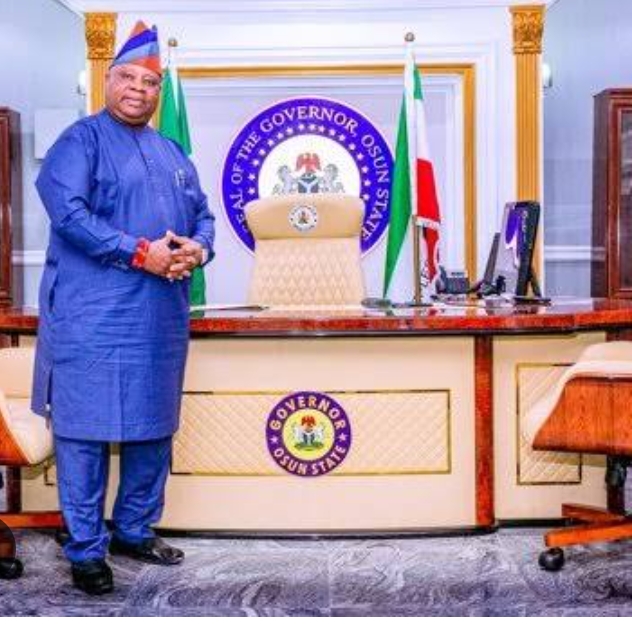
Governor Adeleke’s possible advantage is largely linked to the power of incumbency, his strong grassroots connection, and the visibility that comes with occupying the seat of government. Since assuming office, the governor has continued to promote his administration’s programmes and projects, with supporters arguing that his government deserves more time to consolidate its achievements.
The governor also benefits from a strong political family background, with the Adeleke name remaining a major force in Osun politics. His supporters believe his popularity among many voters, particularly at the grassroots level, could play a significant role during the election.
However, the APC is not expected to be an easy opponent. The party, which previously controlled Osun State, has a well-established political structure and a strong network across the state. With its candidate, Bola Oyebamiji, the party is expected to campaign heavily on issues such as economic challenges, job creation, infrastructure, security and the need for a change in leadership.
Political observers believe the election could become a referendum on the performance of the incumbent government, with voters expected to judge the administration based on development projects, economic opportunities, workers’ welfare and general living conditions.
Beyond party loyalty, analysts say factors such as internal party unity, campaign strategies, voter mobilisation, youth participation and the ability of candidates to connect with ordinary citizens will determine the final outcome.
The Osun governorship race is expected to attract national attention because of the state’s history of competitive elections and its strategic importance in the politics of the South-West.
While Governor Adeleke currently appears to have a narrow lead based on visibility and incumbency, the APC remains capable of turning the contest around if it effectively mobilises voters and presents a convincing message for change.
As political activities intensify, the people of Osun State will ultimately have the final say on whether they want continuity under Adeleke or a return to APC leadership.
The 2026 Osun governorship election is therefore expected to be a closely watched contest where every vote, every local government and every political alliance could prove decisive.