
By Joy Omagha Idam | Weekenders Magazine
It started as a simple radio greeting. Ni Hao! — hello in Mandarin.
Four hundred and fifty-six days later, that greeting has become something bigger: a cultural bridge, a classroom without walls, and a new pillar in the 55-year friendship between Nigeria and China.
On Thursday in Abuja, top media leaders, diplomats and journalists gathered at the China Cultural Centre in Nigeria to mark the milestone of the “Ni Hao! China” radio programme — a joint production of the Federal Radio Corporation of Nigeria (FRCN), the Chinese Embassy and the China Cultural Centre.
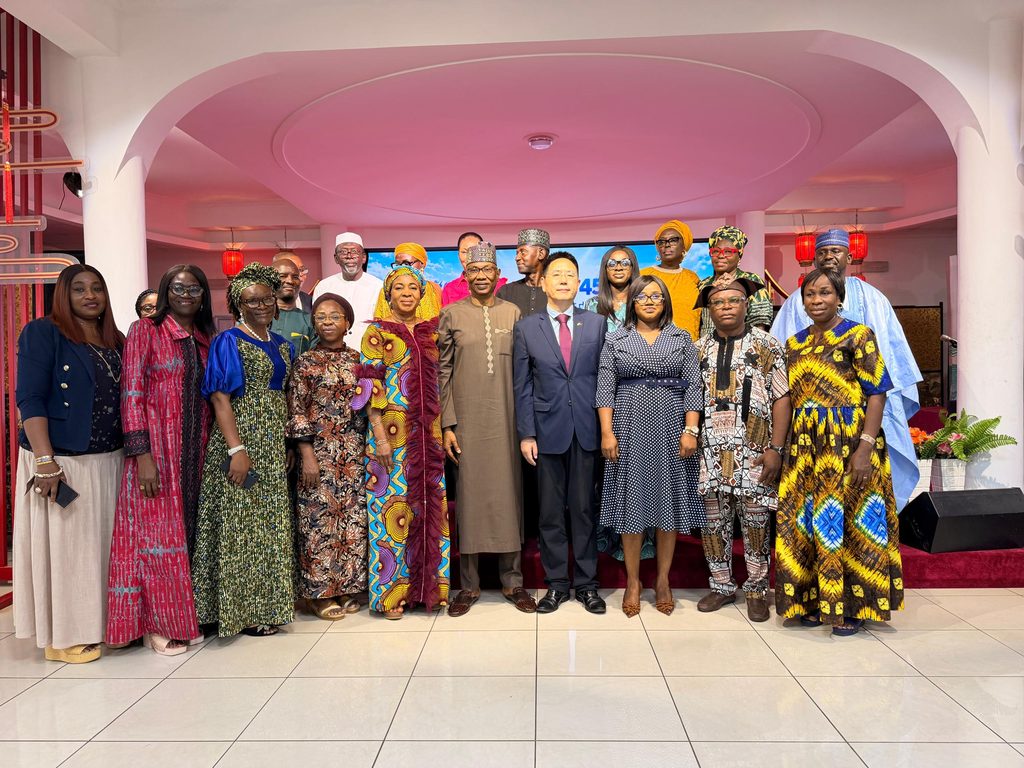
For the Director-General of FRCN, Dr. Mohammed Bulama, the programme has outgrown its original script.
“This programme has grown from a broadcasting initiative into a thriving platform for cultural exchange, language learning and people-to-people diplomacy,” Bulama said.
According to him, “Ni Hao! China” has done what official communiqués cannot do — introduce Nigerian listeners to the sound of Mandarin, to the stories behind Chinese festivals, to the rhythm of everyday life in China, and to new opportunities for education, business and professional growth.
He insisted that Nigeria-China relations should not be measured only in kilometres of rail, trade volumes or diplomatic handshakes.
“Cultural engagement and people-to-people contact are equally important,” he said, describing the programme as “a new pillar of bilateral relations because it brings Nigerians and Chinese closer through shared stories, language and cultural understanding.”
Bulama also announced plans to transform the FRCN network studio into a full audiovisual facility, a move that will boost the corporation’s digital broadcasting capacity.
“We are expanding into social media clips, online content, audience quizzes and other digital tools,” he said, noting that the “Ni Hao! China” programme would be a major beneficiary of the upgrade.
FROM CLASSROOM TO CULTURAL DIPLOMACY
For the Chinese side, the numbers tell a story of quiet impact.
The Cultural Counsellor of the Chinese Embassy in Nigeria and Director of the China Cultural Centre in Nigeria, Mr. Yang Jianxing, described the 456-day run as proof that the programme is connecting.
Since its launch in July 2025, he said, it has given Nigerians an accessible, friendly avenue to learn Mandarin and understand Chinese culture beyond stereotypes.
But Yang wants more.
He urged the organisers to expand the content beyond language lessons to include Chinese tourism, education, business and cultural life, while also flipping the lens.
“Teach listeners how to present Nigerian traditions and everyday life in Chinese,” he said.
He also called for a deliberate fusion of radio with short videos, social media and physical cultural activities to attract more young Nigerians.
According to Yang, the timing is symbolic. Nigeria and China are marking 55 years of diplomatic relations, and 2026 has been declared the China-Africa Year of People-to-People Exchanges. In that context, he said, “Ni Hao! China” is no longer just a programme — it is a people-to-people project.
456 DAYS, NOT JUST 456 BROADCASTS
Delivering a goodwill message, Chairman of the Nigeria Union of Journalists (NUJ), FCT Council, Comrade Grace Ike, captured the essence of the celebration in one line: broadcasting can build bridges where politics cannot.
She said the programme had demonstrated the power of radio to connect people, correct misconceptions and promote peaceful coexistence.
She commended the Chinese Embassy, FRCN and the China Cultural Centre “for using language, culture and shared voices to build a meaningful bridge between the peoples of both countries.”
For her, the milestone is not about duration.
“This 456-day milestone represents more than the duration of the broadcast,” Ike said. “It is 456 days of communication, cultural exchange, mutual learning and people-to-people diplomacy.”
She urged the organisers to continue expanding through radio, digital platforms and social media, particularly to draw in more young Nigerians who live much of their lives online.
Ike reaffirmed the NUJ FCT Council’s support for media initiatives that promote cultural diplomacy, responsible public communication, youth participation and stronger relations between Nigeria and its international partners.
BEYOND THE STUDIO
The event drew senior government officials, diplomats, media executives, journalists, students, Mandarin learners, cultural stakeholders and loyal listeners of the programme — a mixed audience that itself reflected the programme’s reach.
In the hall were young Nigerians who now greet each other with “Ni Hao” and can count in Mandarin, alongside older listeners who say the programme has helped them understand the Chinese colleagues they do business with.
That, perhaps, is the real success of “Ni Hao! China.”
In a world where international relations are often discussed in terms of loans, contracts and communiqués, a 30-minute radio programme is reminding both countries that friendship also speaks a language — and sometimes, it starts with a simple hello.