
Imo Governor warns AI-generated fake news threatens democracy, urges ethical reporting and stronger protection for journalists
By Joy Omagha Idam
Imo State Governor, Senator Hope Uzodinma, has proposed a three-way pact involving government, media practitioners and citizens to safeguard journalism, combat misinformation and strengthen democracy amid the growing threat of artificial intelligence-driven fake news.
Uzodinma made the proposal while delivering an address at the 3rd Raymond Dokpesi Annual Diamond Lecture, organised by DAAR Communications in collaboration with the Nigerian Institute of Public Relations (NIPR) on October 25, 2026, at the NAF Conference Centre, Abuja.
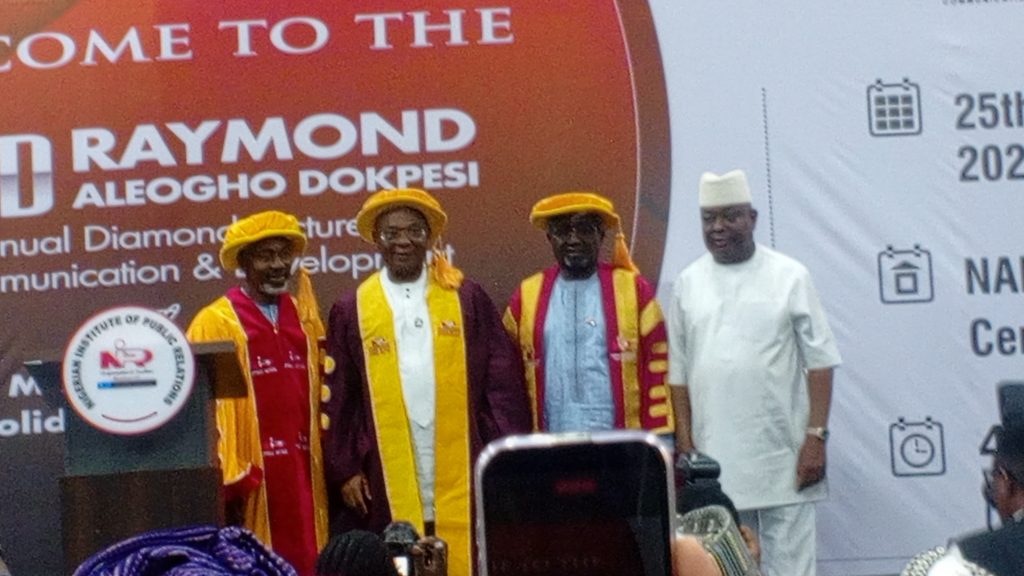
The governor called for a new relationship in which government embraces the media as a partner in national development, journalists uphold professional ethics above political and commercial interests, and citizens take responsibility for verifying information before sharing it.
He warned that artificial intelligence had made misinformation increasingly difficult to detect, with fabricated voices, faces, newspaper designs and broadcast identities capable of appearing authentic.
According to him, although the digital revolution has expanded access to information and weakened traditional media gatekeeping, it has also made responsible journalism and independent verification more critical to democratic governance.
Reflecting on the legacy of the late media entrepreneur Raymond Dokpesi, Uzodinma noted that the struggle to break government’s monopoly over broadcasting had transformed Nigeria’s media landscape. However, he said the industry now faced a different challenge: ensuring that the information reaching the public was accurate, reliable and responsibly presented.
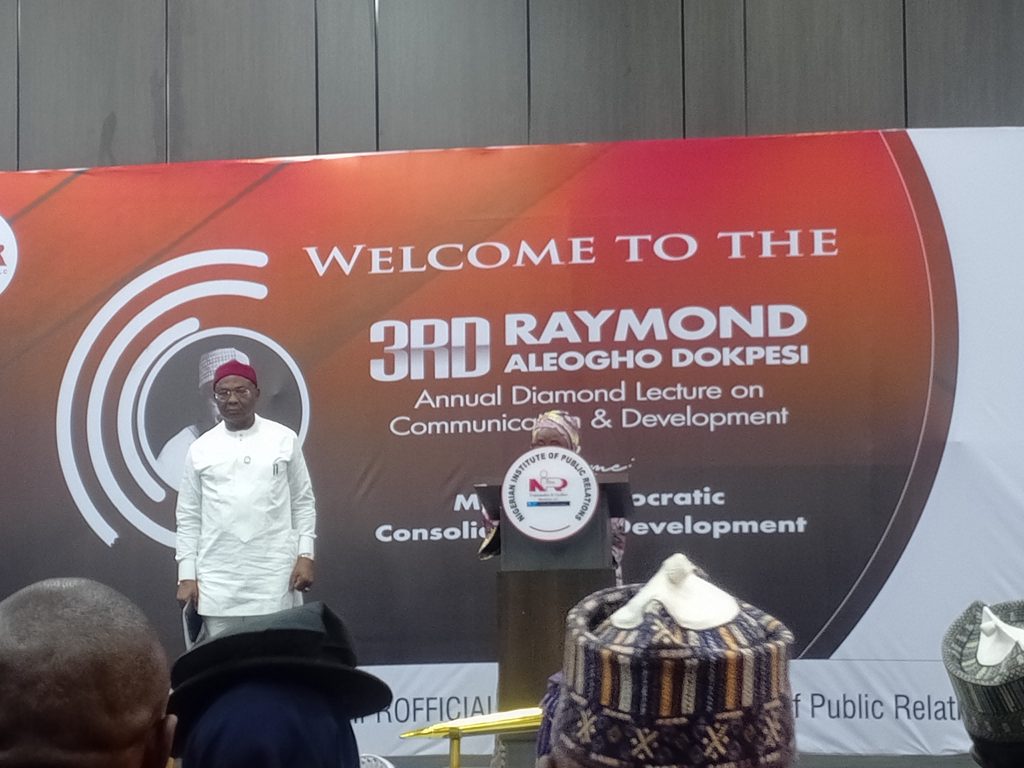
He stressed that professional journalism could only fulfil this responsibility when news organisations demonstrated fairness and resisted partisan influences, particularly during elections.
A three-way pact for democratic growth
Outlining his proposed framework, Uzodinma assigned distinct responsibilities to government, media practitioners and citizens.
For government, he urged leaders at all levels to abandon the perception of journalists as adversaries and instead recognise the media as partners in development. He also called for greater transparency, warning that withholding essential information without reasonable justification creates openings for rumours and speculation.
He cautioned that public institutions that routinely deny obvious errors risk undermining confidence in their own communications, making it harder for citizens to distinguish credible official information from misinformation.
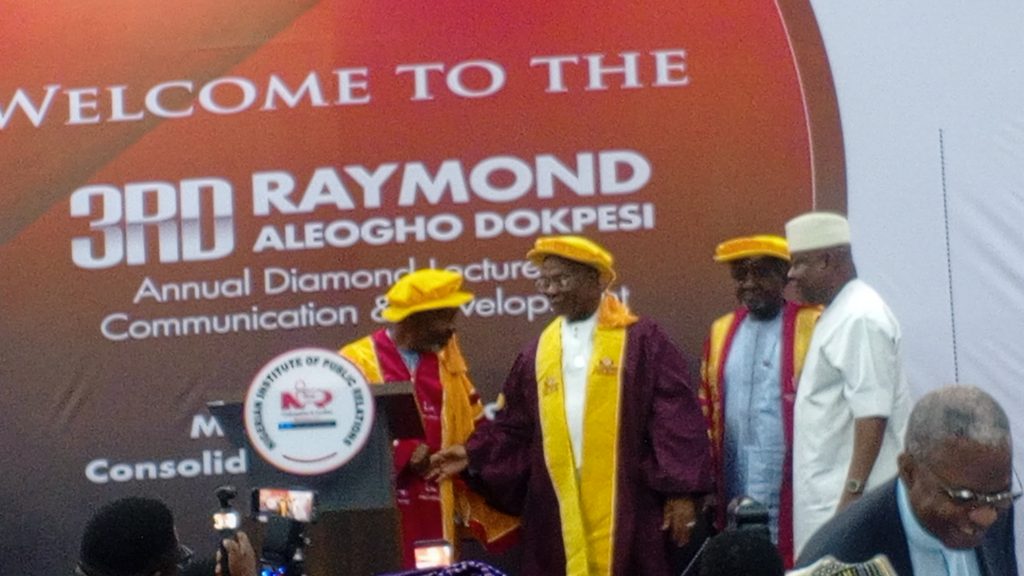
For media owners and practitioners, the governor called for an uncompromising commitment to professional ethics, investigative reporting, continuous training and responsible journalism.
He warned that political and commercial interference by media proprietors could undermine editorial independence, while partisan reporting could weaken the authority of news organisations to challenge falsehoods.
For citizens, Uzodinma advocated more responsible news consumption, urging Nigerians to verify information before circulating it and reject divisive narratives, including ethnic and tribal baiting.
He maintained that protecting the information space was a shared responsibility that required cooperation among institutions, journalists and the public.
Poor welfare, insecurity threaten journalism
The governor also highlighted the difficult conditions under which many Nigerian journalists operate, identifying poor remuneration, delayed salaries, inadequate welfare and threats to personal safety as major obstacles to effective reporting.
He expressed concern over harassment, arbitrary arrests, victimisation and other forms of pressure faced by journalists covering sensitive assignments, calling for a safer environment in which they could perform their constitutional duties without intimidation.
Uzodinma argued that calls for ethical and independent journalism must be matched with practical support for those working in the industry.
He noted that investigative reporting, fact-checking and the maintenance of competent newsrooms require substantial investment, even as the migration of advertising revenue to digital platforms continues to weaken traditional media funding.
He therefore called for sustainable funding models that would enable news organisations to remain financially viable without sacrificing editorial independence.
Government, media proprietors, advertisers, technology companies and citizens, he said, all have a stake in finding workable solutions.
Dokpesi’s legacy and the new media challenge
Uzodinma observed that the expansion of broadcasting had created opportunities for wider participation in public affairs, but also placed greater demands on journalists to uphold accuracy, fairness and accountability.
He emphasised that fact-checking alone would not be sufficient where news organisations had already lost public confidence through perceived political bias. Trust, he suggested, must be built through consistent professional conduct.
The governor’s address linked the future of Nigerian journalism to the strength of democratic institutions, arguing that technological advances must be accompanied by stronger ethical standards, government transparency and responsible citizenship.
The proposed government-media-citizen pact, therefore, offers a framework for confronting misinformation while addressing the economic, professional and security challenges that threaten journalism.
As Nigeria’s media landscape continues to evolve, Uzodinma’s message was clear: protecting democracy in the digital age requires more than freedom to publish; it demands a collective commitment to truth, accountability and public interest.