
A Call to Africa’s Leaders: From Geographic Recognition to Economic Sovereignty and Inclusive Sustainable Development
To the Heads of State and Government of Africa, the leadership of the African Union, policymakers, business leaders and all those entrusted with the destiny of our continent:
There are moments in the history of nations when the way the world sees a continent must be matched by the way that continent transforms itself.
This is such a moment for Africa.
The renewed global conversation about the true geographical scale of Africa should not be viewed simply as a correction of a map. It should be understood as an invitation to correct something far more consequential: the gap between Africa’s enormous potential and the economic, social and institutional reality experienced by its people.
Africa is vast in geography, rich in natural resources, young in population and immense in human potential.
Yet our ambition must now be equally vast.
The new map must become a new development agenda.
It must translate into sustainable economic growth, food security, inclusive prosperity, industrialisation, technological advancement and greater African ownership of our development.
For Africa’s leaders, the question before us is no longer simply:
How large is Africa?
It is:
How do we transform the scale of Africa into a better quality of life for more than a billion people — particularly our young people, our women and the communities whose natural resources underpin the global economy?
FOOD SECURITY MUST BE A FOUNDATION OF AFRICAN SOVEREIGNTY
No nation or continent can achieve lasting prosperity while remaining excessively vulnerable to external food supplies.
Africa possesses enormous agricultural potential.
Our task is to transform that potential into resilient food systems through investment in farmers, irrigation, storage, transport, technology, research, financing and regional markets.
Food security must no longer be treated solely as an agricultural issue. It is a matter of national security, economic stability and human dignity.
Africa should aspire not merely to feed itself, but to become one of the world’s leading food-producing and agro-industrial regions.
ECONOMIC GROWTH MUST CREATE VALUE IN AFRICA
Africa cannot build sustainable prosperity by remaining predominantly an exporter of raw materials and an importer of finished products.
Our minerals, energy resources, agricultural commodities and other natural assets must increasingly become the foundations of African industries, African businesses, African jobs and African technological capabilities.
We must move from extraction to value creation.
From commodities to manufacturing.
From consumption to production.
From dependency to productive partnership.
This does not mean closing Africa to international investment. It means creating partnerships that deliver local value addition, technology transfer, skills, employment, environmental protection and long-term economic benefits for African societies.
Africa should welcome the world — but increasingly on the basis of mutual value and mutual respect.
SUSTAINABLE DEVELOPMENT MUST BE AT THE CENTRE
Africa’s development cannot simply replicate models that exhausted natural resources and degraded the environment elsewhere.
Our growth must be sustainable.
We must invest in renewable energy, climate-resilient agriculture, sustainable cities, responsible mining, clean technology and infrastructure capable of supporting future generations.
Development must improve lives today without compromising the rights and opportunities of tomorrow’s Africans.
YOUTH MUST BE PARTICIPANTS — NOT SPECTATORS
Africa’s greatest strategic asset is not only beneath its soil.
It is in its people.
Our young population represents an extraordinary opportunity if we provide access to quality education, digital skills, entrepreneurship, decent employment, finance and meaningful participation in economic and political life.
Young Africans should not be viewed primarily as beneficiaries of development.
They must be recognised as co-creators of Africa’s future.
The Africa of tomorrow will be built by young scientists, engineers, farmers, entrepreneurs, technology innovators, artists, professionals and public servants who are empowered to solve African problems and compete globally.
WOMEN MUST BE AT THE HEART OF AFRICA’S GROWTH
No African development strategy can be complete if half of Africa’s human capital remains underutilised.
Women are central to agriculture, families, communities, entrepreneurship and national economies.
Inclusive growth requires greater access for women to capital, land, education, technology, markets, leadership opportunities and decision-making.
An Africa that fully unleashes the economic potential of its women will be a stronger and more prosperous Africa.
LET US ENSURE THAT AFRICA’S RESOURCES DO NOT BECOME THE SOURCE OF A NEW DEPENDENCY
Africa does not seek isolation from the global economy.
We seek a fairer place within it.
Our natural resources should become instruments of transformation — not permanent channels through which African wealth is exported while African communities remain excluded from the greatest value created from that wealth.
We must therefore guard against any form of economic relationship that resembles re-colonisation through resources, dependency or unequal value chains.
The answer is not hostility.
The answer is African capacity.
Capacity to negotiate.
Capacity to govern.
Capacity to process.
Capacity to manufacture.
Capacity to innovate.
Capacity to finance our development.
And capacity to ensure that the wealth beneath African soil creates prosperity above it.
THE NEW MAP SHOULD INSPIRE A NEW AFRICAN COMPACT
African leaders now have an historic responsibility.
Let the recognition of Africa’s true geographical scale become the beginning of a broader recognition of Africa’s true economic, human and strategic potential.
Let us build economies that create value.
Let us build food systems that protect our people.
Let us build industries that employ our youth.
Let us build opportunities that empower women.
Let us build institutions that command trust.
Let us build technology that serves our development.
Let us protect the environment upon which future generations depend.
And let us build partnerships with the international community based on equality, transparency, shared value and mutual respect.
Africa does not need to ask the world to make Africa great.
Africa must build the capacity to make its own potential real.
So, yes, let us correct the map.
But let us go much further.
Let geographic scale become economic scale.
Let natural wealth become human wealth.
Let agricultural potential become food security.
Let our youth become engines of innovation.
Let women become full partners in economic transformation.
Let sustainable development become the foundation of growth.
And let African resources become the foundation of African prosperity.
The true measure of Africa’s size will ultimately not be found on a map.
It will be measured by the prosperity of its people, the strength of its institutions, the opportunities available to its youth and women, the food security of its communities, the sustainability of its development and Africa’s ability to determine the value and destiny of its own resources.
Africa’s map may be changing.
Now, Africa’s reality must change with it.
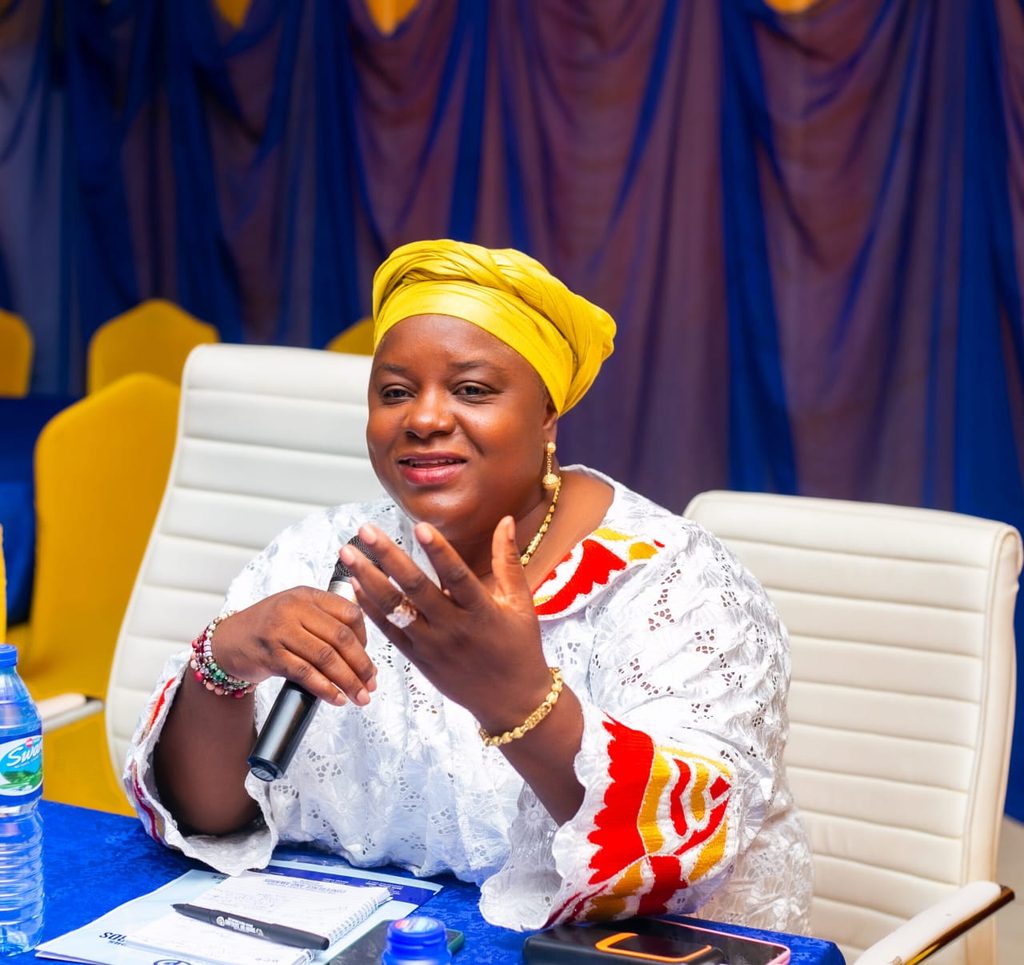
AMB. ZAINAB MOHAMMED
SOCIAL CHANGE ADVOCATE