
By Joy Omagha Idam
The Russian Federation has mounted a strong defence of its military actions in Ukraine, insisting that the roots of the conflict stretch back to 2014 rather than February 2022, as commonly presented by Western nations.
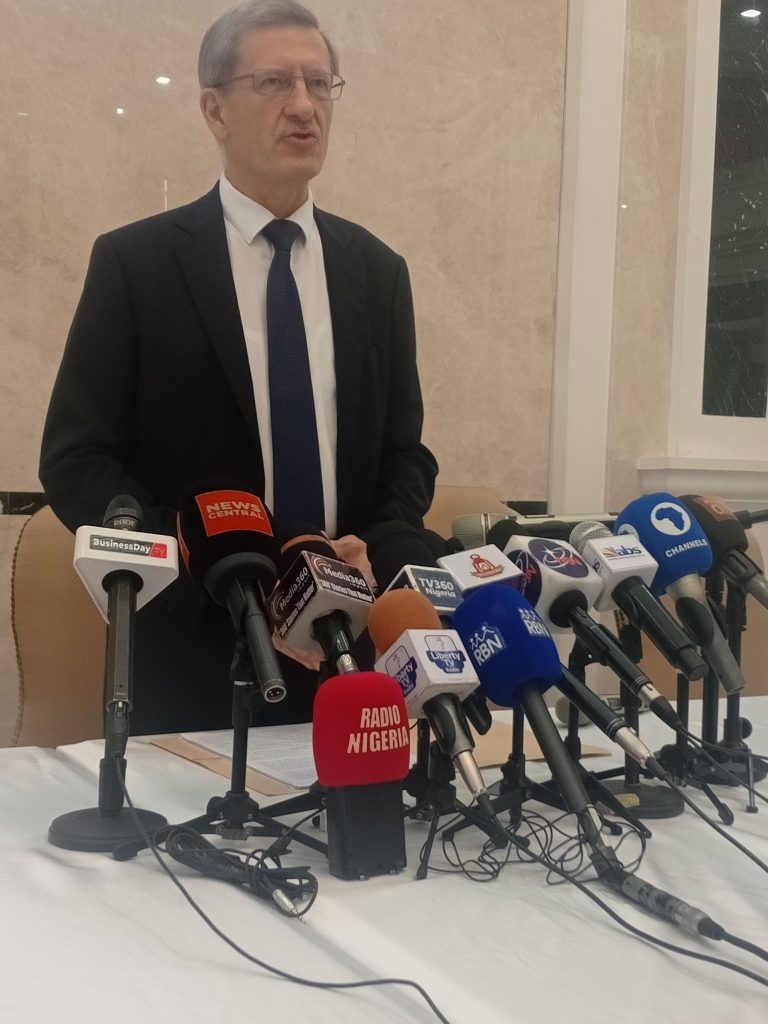
Addressing journalists in Abuja, Russian Ambassador to Nigeria, Andrey Podelyshev, rejected claims that Moscow launched an unprovoked invasion. Instead, he described the operation as a reaction to years of political turmoil, alleged rights violations, and what he termed mounting security concerns along Russia’s borders.
According to the envoy, the crisis traces its origins to the 2013–2014 protests in Kyiv, which he characterised as a Western-backed “coup d’état” that led to the ousting of then-President Viktor Yanukovych. The aftermath, he argued, created a fragile political landscape and deepened internal divisions within Ukraine.
Podelyshev further alleged that policies introduced by the new leadership sidelined Russian-speaking communities, citing restrictions in language use across education, media, and public institutions. He linked these developments to unrest in regions such as Crimea and the Donbass.
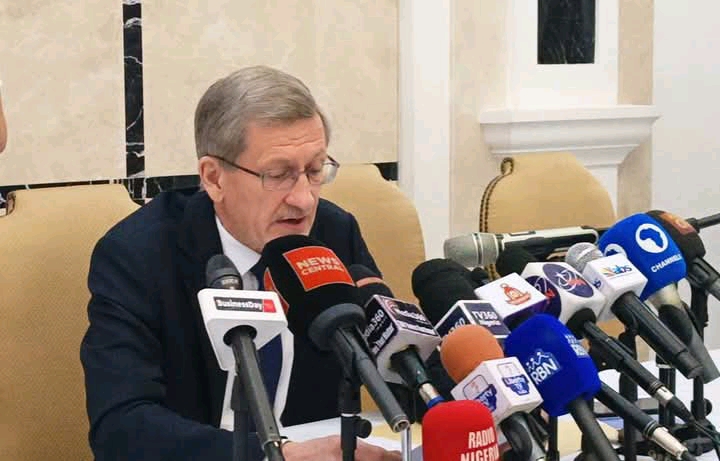
He noted that the situation deteriorated into prolonged armed confrontation between Ukrainian forces and separatist groups in the east, a phase he claimed drew limited global scrutiny despite its humanitarian toll.
At the centre of Russia’s position, the ambassador said, is the collapse of the Minsk Agreements—internationally brokered deals intended to de-escalate the conflict and grant special status to the disputed regions. He maintained that Ukraine, with backing from Western allies, failed to uphold its commitments under the accords.
“Russia consistently advocated a diplomatic path through the Minsk process,” he stated, adding that military intervention came only after what he described as the exhaustion of peaceful options.
The envoy also defended Moscow’s recognition of the self-declared republics of Donetsk and Luhansk, arguing that their calls for protection necessitated Russia’s response under mutual defence considerations.
He accused Western governments of applying international law selectively, stressing what he sees as a contradiction between their defence of territorial integrity and their stance on self-determination.
Podelyshev maintained that Russia’s actions are driven by the need to protect civilians and prevent further escalation, urging that the conflict be viewed within a wider historical and geopolitical perspective.