
Frank Chike Okoli, a public affairs analyst, faults in its entirety a recent call attributed to Senator Orji Uzor Kalu for President Bola Tinubu to grant amnesty to individuals alleged to have looted up to $60 billion from Nigeria has triggered nationwide concern. The proposal touches the very core of justice, accountability, and governance, writes Ekunkonye Junior on Monday.
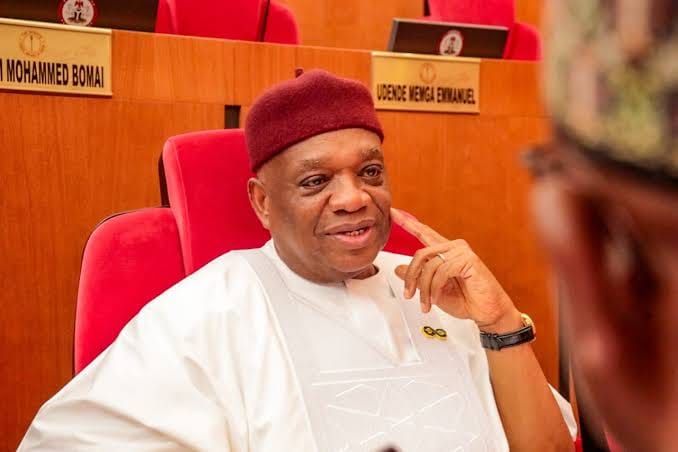
This is not a routine political suggestion. The scale of money involved and the timing of the call make it a matter of national consequence that could redefine how Nigeria treats grand corruption.
Corruption remains one of the biggest obstacles to Nigeria’s development. For decades, funds meant for schools, hospitals, roads, and security have disappeared from public coffers, with effects felt in every community.
To propose amnesty for those accused of looting such staggering sums sends a dangerous signal. It suggests that crime can pay, and that the bigger the theft, the greater the possibility of negotiating away consequences.
Such a position undermines years of work by anti-corruption agencies like the EFCC and ICPC, as well as the judiciary and civil society groups that have demanded accountability.
It also weakens public trust in government. The question on the lips of many Nigerians is simple: why should an ordinary citizen obey the law if those who stole billions are to be pardoned?
Amnesty, by definition, wipes away punishment. If applied to grand corruption, it risks turning looting into a political bargaining chip rather than a criminal act.
The danger is immediate. More people may be tempted to steal public funds because they believe they can later be “absolved” through political deals.
Investors will also take note. Both local and foreign investors lose confidence in economies where financial crimes carry no real consequences.
Citizens, on their part, may conclude that the system is deliberately designed to protect the powerful while punishing the weak.
That is how nations slide backward, not forward. History shows that countries that normalize impunity struggle to build strong institutions.
What Nigeria needs instead is not amnesty for looters, but justice delivered with fairness and consistency.
This requires strengthening institutions to investigate and prosecute cases without fear or favor, regardless of political affiliation or status.
It also means recovering stolen assets and channeling them into public goods, while ensuring due process protects the innocent and punishes the guilty.
The fight against corruption is difficult and slow. But there is no shortcut that does not destroy the moral foundation of the nation.
Leaders, especially in the National Assembly, have a duty to shape public discourse responsibly. Even well-intentioned calls that appear to reward criminality can do lasting damage.
Nigeria cannot afford to normalize grand corruption. Amnesty for those accused of looting billions will not bring peace. It will entrench more impunity.
The path forward must be justice, recovery, and prevention. Because a nation that excuses stealing from the public treasury is telling its children that crime is a career path.