
By Nkechinyere Ewa
Nigeria is losing more than 600,000 lives annually to challenges associated with the administration of medical oxygen, the Nigerian and Ebonyi State Lead/Principal Investigator of the EQUI-RESP Africa Research Project, Professor Jesse Uneke, has disclosed.
Uneke made the disclosure in Abakaliki, Ebonyi State, during the First Stakeholders Engagement Event and Co-Creation Workshop on Medical Oxygen Economy, hosted by the David Umahi Federal University of Health Sciences (DUFUHS).
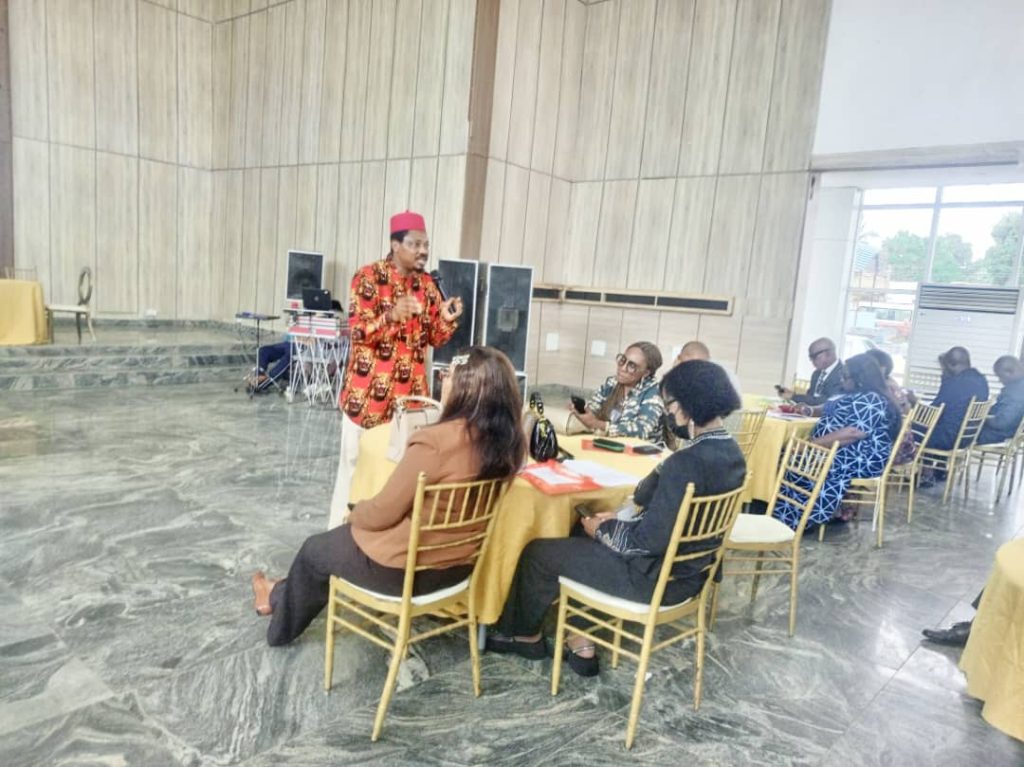
The workshop was organised by the EQUI-RESP Africa Research Project in conjunction with the University of Edinburgh, United Kingdom, with support from the National Institute for Health and Research (NIHR), UK.
Uneke, who is also the Vice Chancellor of DUFUHS, said the over 600,000 deaths recorded annually in Nigeria from issues relating to medical oxygen administration were largely preventable.
He said the challenge had persisted partly because there was no adequate platform for stakeholders in the medical oxygen sector to regularly engage on the relationship between research, policy and healthcare practice.
“That is why, in this phase of this project, we have decided to start with this kind of stakeholders’ engagement. I am excited that we have every key stakeholder in the medical oxygen space represented here,” Uneke said.
He explained that the first phase of the EQUI-RESP project focused on respiratory health interventions in three industrial areas of Ebonyi State — the quarry industrial site in Onueke, the rice mill in Abakaliki and the timber market.
According to him, the project treated between 300 and 400 people free of charge during the intervention, while beneficiaries also received inhalers, free diagnoses and guidance on measures to protect their respiratory health.
“This project has to do with respiratory health, and the idea is to come up with strategies that will lead to interventions that will improve health outcomes as far as respiratory health is concerned,” he said.
Uneke said the project had now entered its second phase, moving from community-based intervention to hospital-based research, with particular attention to medical oxygen and the oxygen economy.
“We have moved from the community-based project to the hospital-based phase. In this hospital-based phase, we are focusing on medical oxygen and the medical oxygen economy.
“From what we have seen, this is one of the areas that is not well emphasised as far as the health sector is concerned. Nigeria is said to be losing over 600,000 people yearly due to issues related to the administration of medical oxygen. The problem is that these deaths are very, very preventable,” he said.
The Principal Investigator said Nigeria was selected as one of five African countries participating in the EQUI-RESP project, alongside Côte d’Ivoire, Kenya, South Africa and Cameroon.
He disclosed that the project has two research centres in Nigeria, one in Ebonyi State and the other in Lagos.
Uneke attributed Ebonyi’s selection to the enabling environment created by the state government for research, healthcare partnerships and interventions.
He commended Governor Francis Nwifuru for what he described as an environment conducive to research collaboration, noting that the state has institutions such as DUFUHS and two teaching hospitals that support the implementation of health projects.
Also speaking, the Chief Medical Director of Alex Ekwueme Federal University Teaching Hospital, Abakaliki (AE-FUTHA), Professor Robinson Onoh, described EQUI-RESP Africa as a multi-country and multi-centre research project involving Nigeria and other African countries.
Onoh commended Governor Nwifuru for creating an enabling environment for the establishment of medical oxygen production centres in Ebonyi State.
He said Ebonyi had no oxygen production facility before the present administration came into office, but had since recorded significant improvement in the availability of locally produced medical oxygen.
“I want to commend the Executive Governor of Ebonyi State because before he came in as governor, there was no place oxygen is being produced in Ebonyi State. But by the time he came up and created an enabling environment, we now have areas in Ebonyi State where oxygen is being produced.
“And today, we can boast of multiple centres in Ebonyi State where medical oxygen is being produced,” Onoh said.
The AE-FUTHA CMD recalled that the COVID-19 pandemic exposed the critical importance of medical oxygen in Nigeria’s healthcare system, particularly when hospitals were confronted with large numbers of patients requiring oxygen simultaneously.
He said the experience demonstrated the need for sustainable oxygen production and distribution systems across the country.
Onoh disclosed that one of the medical oxygen production centres in Ebonyi State is located at AE-FUTHA, and commended the governor for supporting the development.
The stakeholders’ engagement is expected to strengthen collaboration among researchers, policymakers, healthcare institutions and other actors in the medical oxygen sector, with the aim of translating research evidence into policies and practical interventions capable of improving health outcomes in Nigeria.