
By Remi Johnson
Government and policymakers in the health sector have been called upon to urgently integrate autism care into Nigeria’s National Health Insurance framework.
The Founder of the Ferdinand Efah Music Heritage Foundation, Mr. Stanley Effah, made the appeal during a music concert to commemorate World Autism Day in Abuja.
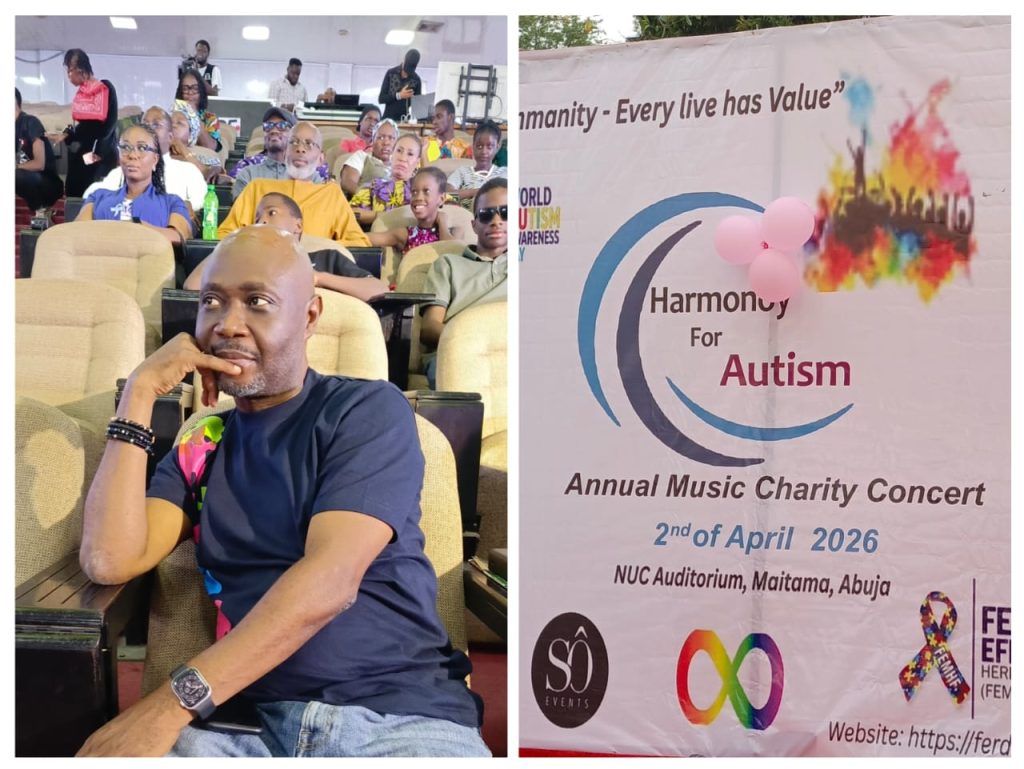
He noted that the continued neglect of persons living with autism is placing immense emotional and financial strain on affected families.
He emphasized the need for a holistic and inclusive health policy that recognizes autism as a condition deserving structured support, just like other serious health challenges already covered under national insurance.
Mr. Effah decried the absence of comprehensive coverage for autism under the National Health Insurance Scheme (NHIS), noting that while diseases such as cancer receive attention and funding, autism remains largely excluded despite its growing prevalence and impact.
According to him, this gap has contributed significantly to the stigma surrounding autism, as many families feel abandoned and unsupported.
He observed that societal rejection and lack of institutional backing often force parents into silence, leading to isolation and, in some cases, severe psychological distress.
“Autism is not accommodated within the health system in Nigeria,” he said, stressing that the consequences go beyond healthcare to affect the dignity and well-being of individuals and their families.
Drawing from his experience within the health insurance system, Mr. Efah pointed out that existing structures such as the Basic Healthcare Provision Fund (BHCPF) and the Vulnerable Group Fund already provide a policy window through which autism care can be supported.
He however lamented that these provisions have not been effectively implemented to address the needs of persons living with autism.
He called on government authorities to move beyond policy frameworks and take decisive action toward implementation, noting that inclusion must be intentional and practical.
“The government has a responsibility to ensure that every citizen is taken care of. Inclusion must be reflected in every policy decision,” he said.
Mr. Effah also highlighted the contrast between Nigeria and developed countries such as the United Kingdom and the United States, where autism care is integrated into public health systems, providing relief and support to families.
He further expressed concern that advocacy efforts often attract the same limited audience, with minimal participation from key decision-makers who have the power to drive change.
This, he said, underscores the need for more innovative platforms to amplify awareness and influence policy.
Despite the challenges, he acknowledged growing support from the entertainment industry, describing it as a promising avenue for expanding public engagement and breaking the silence around autism.
Also, Founder Royal School of Educational Therapy Foundation, Dr Badewa Adejigbe Williams represented by Dr Kingsley Udegbunam, said the advocacy call becomes necessary in view of the increasing burden faced by families of persons with autism, many of whom struggle with the high costs of therapy, limited access to specialized care, and widespread social stigma.
Stakeholders believe that integrating autism into the Basic Healthcare Provision Fund would significantly ease these burdens by ensuring access to early diagnosis, therapy, and long-term care, critical components for improving outcomes for individuals on the autism spectrum.
As the conversation gains momentum, advocates insist that the time has come for the government to translate commitments into action, ensuring that no group is left behind in Nigeria’s pursuit of universal health coverage.