
By Nkechinyere Ewa-Okpara
Senator Victor Umeh, a member of the Senate Committee on the Review of the 1999 Constitution, has described Nigeria’s current constitutional framework as inherently unjust to the Southeast geopolitical zone, blaming military-era decisions for structural imbalances that continue to marginalise the region.
Speaking on the need for constitutional amendments during an engagement in Ebonyi State, Umeh said:
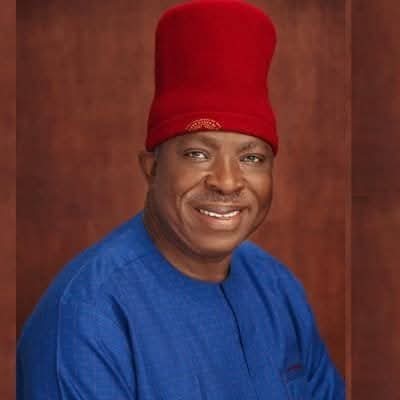
“The first problem is that the constitution we operate today was not produced through a democratic, civilian process. It was a military constitution, crafted by a military government that imposed a structure of governance which has consistently disadvantaged the Southeast.”
According to the senator, the Southeast remains the most underrepresented zone in Nigeria with only five states and 95 local government areas (LGAs) out of a national total of 774. He highlighted a glaring disparity:
“The Southwest has 137 LGAs, South-South has over 100, and the Northwest—the most favoured—has states like Kano with 44 LGAs and Jigawa with 38. These structural imbalances have lasting consequences on federal appointments, resource allocation, and representation.”
Umeh, senator representing Anambra Central senator zone, explained that the number of states and local governments is a key determinant in federal resource distribution, civil service recruitment, and ministerial appointments.
“Ministers are appointed from states. We have only five ministers from the Southeast, while other zones with more states have more representation. The current administration has up to eight ministers from some regions, and we have just five.”
He lamented the difficulty in amending the constitution to correct these imbalances, describing the process as “herculean,” but expressed hope that the rest of the country would support a fair solution.
“At the 2014 National Conference, which had 492 eminent Nigerian leaders, it was agreed that one additional state should be created in the Southeast as a first step toward equality. That is the state we are now pursuing. Even if no other new state is created across the country, Nigeria should, in the name of equity, create at least one more state in the Southeast.”
Senator Umeh also stressed that the imbalance affects political processes at all levels.
“During national conventions of political parties, delegates come from LGAs. With the fewest LGAs, we consistently have the least voice. It’s a systemic suppression that cuts across political representation, economic development, and national relevance.”
He further advocated for the decentralisation of the Nigerian Police Force, reiterating his support for creating state police as a practical response to the worsening insecurity across the country.
“The centralised command structure for policing has failed. We need to devolve powers and allow state policing to combat insecurity more effectively. Even the Governors’ Forum is beginning to shift its position on this.”
Despite scepticism over the effectiveness of piecemeal amendments, Umeh maintained that efforts must continue to push for constitutional justice.
“Some of us have called for a completely new constitution, but if that’s not feasible now, we must improve what we have while we wait for the right thing to be done. Eventually, the pressure of injustice will force a reckoning.”
Umeh went further calling for national reflection and empathy:
“This is not a battle of strength. It’s about doing what is right. Injustice is an open wound; only the truth can heal it. Let us be guided by conscience and fairness, so that Nigeria can become a truly united nation.”//