
By Joy Omagha Idam
The Female Parliamentarians’ Association of the Economic Community of West African States (ECOFEPA) has called on women entrepreneurs across West Africa to move beyond local markets and position their businesses for regional and international trade.
The call came during an Executive Masterclass organised around the theme, “Advancing Women’s Participation in Global Trade for Political Readiness and Export Opportunities in ECOWAS Region.”
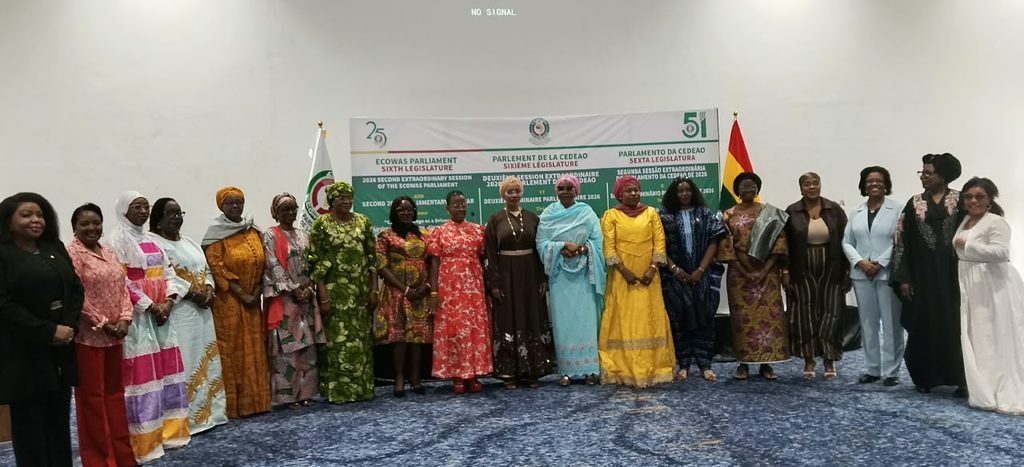
The programme brought together female parliamentarians, entrepreneurs, exporters and other stakeholders to examine practical ways of expanding women’s participation in trade while strengthening their capacity for leadership, decision-making and economic influence.
At the centre of the discussions was the need to give women access to the knowledge, finance, technology, networks and markets required to transform businesses from small-scale ventures into competitive enterprises capable of participating in regional and global commerce.
From Economic Participants to Trade Drivers
Delivering the welcome address on behalf of the President of ECOFEPA, the association’s First Vice-President, Honourable Zainab Gimba, said the focus should shift from merely encouraging women to participate in economic activities to creating conditions that would enable them to become significant drivers of trade, investment and innovation.
She said women needed practical opportunities to acquire the knowledge and networks required to compete beyond their immediate markets.
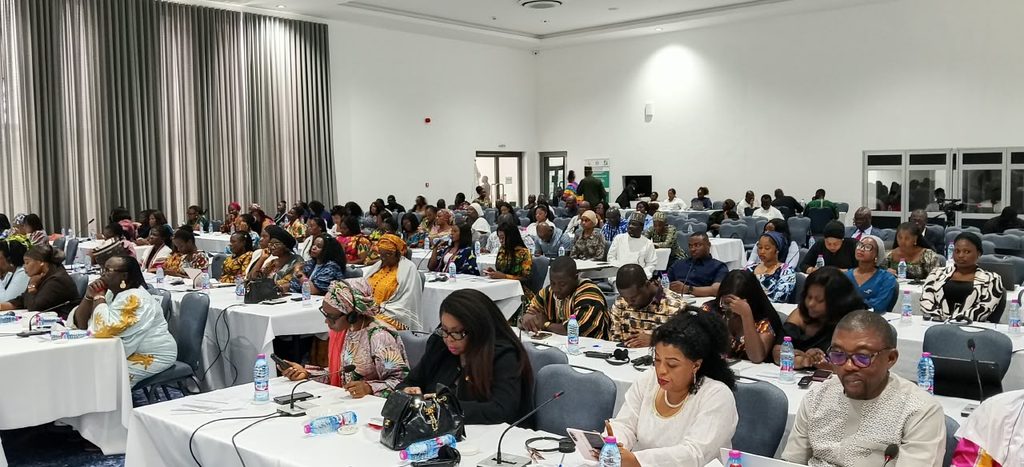
“We must move beyond conversations about empowering women to creating the knowledge systems, networks and opportunities that enable women to compete successfully in local, regional and international markets,” Gimba said.
According to her, the objective should be to prepare women not only to participate in commerce but also to lead economic activities in ways that could strengthen their influence in both business and public decision-making.
Gimba identified limited access to finance, market information, technology and business networks, alongside inadequate representation in decision-making spaces, among the challenges confronting women entrepreneurs.
She noted that these obstacles could become particularly significant for women seeking to transform informal or small-scale businesses into structured enterprises capable of meeting the demands of export markets.
Business Growth and Leadership
Gimba also drew a connection between economic independence and women’s participation in leadership.
She argued that successful businesses could provide women with confidence, professional networks and practical leadership experience, strengthening their ability to participate in decision-making processes.
“We need women who are not only prepared to enter the marketplace but also prepared to sit at the tables, where decisions about trade, investment, finance, industry and regional integration are made,” she said.
She consequently called on governments, financial institutions, development partners and businesses to create more accessible financing opportunities and improve the infrastructure and support systems available to women entrepreneurs.
She also identified reliable market information, mentorship and stronger business networks as important components of an environment in which women-owned enterprises can expand.
What Women Need to Become Export-Ready
Gimba stressed that access to finance alone would not be sufficient to prepare women-owned businesses for international markets.
According to her, entrepreneurs seeking to expand across borders need practical knowledge of product standards, certification, packaging, branding and logistics, as well as an understanding of digital commerce, customs procedures and the expectations of international buyers.
She therefore urged female parliamentarians to translate policy discussions into practical support mechanisms for women entrepreneurs in their respective jurisdictions.
Ghana Highlights Women’s Economic Contribution
Representing Ghana’s Minister for Gender, Children and Social Protection, the Ministry’s Legal Adviser, Ms Nnali Bennis-Wallace, acknowledged the significant contribution already being made by women to the economies of West African countries.
She noted that women were active across several sectors, including agriculture, processing, manufacturing, trading, services, exporting and entrepreneurship.
Through these activities, she said, women contribute to employment creation, household incomes, food security and wider economic growth.
However, Bennis-Wallace observed that many women-owned enterprises remain concentrated within the informal economy, with entrepreneurs facing challenges relating to finance, technology, market information, business networks and access to larger markets.
She said there was therefore a need to reposition women within economic development frameworks.
“Therefore, we must move beyond seeing women primarily as beneficiaries of economic programmes to deliberately position them as producers, exporters, investors, innovators and decision-makers,” she said.
Regional Trade as an Opportunity
Bennis-Wallace pointed to regional and continental trade arrangements as potential avenues through which women-owned enterprises can expand their customer base and participate more actively in intra-African and global commerce.
She described initiatives such as the masterclass as useful platforms for equipping women with the practical knowledge and tools required to move from predominantly local trading activities towards larger markets.
The Ghanaian Government, she said, recognises women’s economic empowerment as an important component of national development.
She cited Ghana’s National Gender Policy 2025–2034 as a framework intended to support gender-responsive development, women’s economic empowerment and participation in decision-making.
Bennis-Wallace called for stronger collaboration among government agencies, trade and economic institutions, parliaments, financial institutions, development partners, civil society organisations, private-sector players and women’s business associations.
Data, Digital Platforms and Sustainable Markets
The Ghanaian official also highlighted the importance of reliable data in understanding women’s actual participation in trade and developing policies capable of addressing the barriers confronting women-owned businesses.
She advocated measures aimed at strengthening the export readiness of women-owned enterprises, widening access to finance and technology, improving access to market information and digital platforms, and creating stronger and more sustainable markets.
The discussions at the masterclass consequently placed emphasis on a broader approach to women’s economic participation—one that combines skills development with access to capital, technology, information, markets and decision-making spaces.
For women entrepreneurs across the ECOWAS region, the emerging message was that expanding beyond local markets requires more than producing goods or services. It also requires understanding the rules of trade, building competitive brands, embracing technology and developing the networks necessary to connect local enterprise with regional and global opportunities.