
By Ikenwa Charity O.
There are kings who inherit a crown, wear its splendour and preserve the traditions that came before them. There are also kings who look at the same crown and see a responsibility stretching beyond their own lifetime. They understand that a throne is not merely a seat from which a ruler speaks to his people; it can become a platform from which a people are prepared for the world that awaits them.
That, perhaps, is the more compelling story emerging from Asaba under His Royal Majesty, Prof. Epiphany Chigbogu Azinge, SAN, OON, FNIALS, FICMIC, LLD (HC), KSJI, KSG, the 14th Asagba of Asaba.
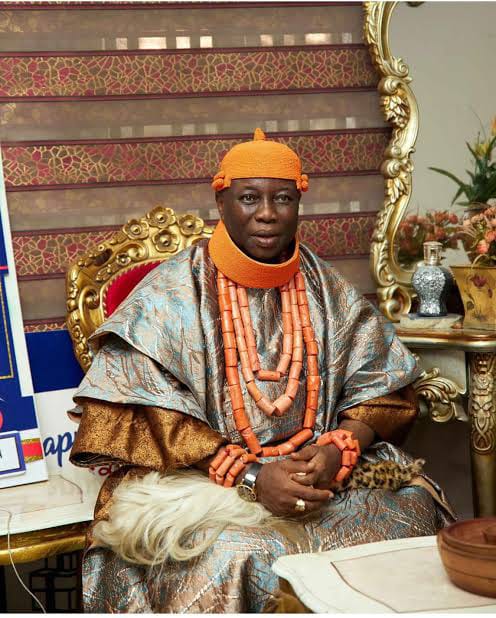
Nearly two years into his reign, the picture that is beginning to emerge is not simply that of a traditional ruler performing the familiar duties of royalty. It is the picture of an intellectual stepping into an ancient institution and asking an unusually modern question: what must Asaba become if its children are to thrive in the decades ahead?
The answer cannot be found in one project, one ceremony or one speech. It is scattered across education, healthcare, youth development, hospitality, peacebuilding, culture, enterprise, tourism, technology, community relations and the gradual transformation of the palace itself into a more enduring institution.
Taken individually, these interventions may appear unrelated. Taken together, they reveal a philosophy.
It is a philosophy of preparing people rather than merely celebrating them; building capacity rather than waiting for rescue; preserving identity while embracing modernity; and using traditional authority as a force for development without diminishing the cultural foundation from which that authority derives its legitimacy.
This is why the story of Azinge’s Asaba is worth examining beyond the familiar language of kingship. It is the story of an ancient crown confronting a future kingdom.
Asagba Azinge ìs that King who came with a diferent intellectual baggage
Plato, in The Republic, imagined the Philosopher-King as a ruler whose pursuit of knowledge, wisdom and the common good would distinguish leadership from the ordinary struggle for power. It was an ancient philosophical argument, not a template for contemporary traditional institutions, but its central question remains remarkably relevant: what happens when the person entrusted with authority sees leadership as a duty to prepare society for something greater than himself?
That question provides an interesting lens through which to consider Asagba Azinge.
Before the crown, he was already a scholar, constitutional lawyer, Senior Advocate of Nigeria, administrator, author and teacher. He had spent years studying institutions, law, governance and the complicated relationship between authority and society. He had occupied positions in which ideas were debated, laws interpreted and institutions administered.
Then came the throne.
And the fascinating part is that the scholar did not disappear beneath the royal robes.
The professor came with him.
The lawyer came with him.
The institution-builder came with him.
The teacher came with him.
The result is a traditional leadership style that increasingly appears interested not only in preserving what Asaba inherited, but in determining what Asaba should hand over to the next generation. That distinction matters.
The problems confronting a modern city are no longer confined to the questions that occupied traditional rulers generations ago. Young people need employable skills. Families need economic stability. Businesses need competent workers. Investors require confidence. Communities need peace. Children need education. Patients need healthcare. Culture needs preservation without stagnation. And an increasingly connected world demands that cities understand tourism, technology, enterprise and human capital.
The traditional institution cannot solve all these problems. Neither should it attempt to replace government. But it can influence the environment in which solutions emerge. That is where Azinge’s reign becomes particularly interesting.
Asaba has seen a remarkable breadth of activity around the palace within roughly two years. Indeed Asagba Azinge has being defining kingship.
There have been interventions in education and healthcare, youth empowerment initiatives, efforts to strengthen peace among communities, engagements with investors and corporate institutions, support for cultural traditions, conversations around tourism and sports, rehabilitation initiatives, and projects designed to give the palace a more permanent institutional character.
The temptation is to turn all of these into a catalogue of achievements.I would rather see them as pieces of one larger idea.
A kingdom is not sustained by its palace alone. It is sustained by the quality of its people, the strength of its institutions, the security of its communities, the health of its citizens, the education of its children and the opportunities available to its young.
That appears to be the direction in which the Asagba is pushing the conversation.
It is a subtle but important shift from traditional rulership to developmental traditional governance.
The distinction is not about replacing elected government. It is about recognising that leadership exists at many levels of society and that each institution can contribute within the limits of its influence.
A king cannot legislate a state budget. He cannot build every road. He cannot employ every graduate. He cannot run every hospital.
But he can convene.
He can inspire.
He can mediate.
He can open doors.
He can mobilise his people.
He can draw attention to neglected opportunities.
He can bring people who would otherwise remain apart around the same table.And sometimes, that is where development begins.
Nothing perhaps illustrates the futuristic dimension of this reign more vividly than the Asaba Hospitality Academy.
On September 5, 2026, more than 200 young men and women became pioneer students of the academy at Ogwa Ukwu Ahaba. They came for matriculation, training and the beginning of a journey into hospitality and entrepreneurship.
The ceremony was significant, but the idea behind it is even more significant.
A city can complain about unemployment, or it can begin preparing its people for available economic opportunities.
Asaba’s hospitality industry is expanding. Hotels require chefs, receptionists, administrators, housekeepers and managers. Restaurants require trained cooks and service personnel. Events require planners, decorators, caterers and coordinators. Tourism requires guides. Fashion, entertainment, photography, beauty services and other creative enterprises feed into the same commercial ecosystem.
Hospitality, therefore, is not one occupation.
It is an economy within an economy.
The academy recognises this and attempts to place Asaba’s young people inside that economic chain instead of leaving them as spectators while opportunities are filled by people from elsewhere.
Its curriculum, covering areas such as culinary arts, local and continental cuisine, small chops, event management, housekeeping, cosmetology, household management, tourism, hygiene and safety, entertainment, tour guiding and fashion designing, is significant for another reason: it recognises that young people do not all possess the same gifts or aspirations.
One student may become a chef.
Another may establish a catering business.
Another may enter hotel management.
Another may become an event professional.
Another may build a fashion enterprise.
Another may develop a tourism business around Asaba’s cultural heritage.
And another may eventually employ people who are not yet thinking about their own businesses.That is the multiplier effect of human capital.
A road can connect two places. A building can accommodate an institution. A machine can increase production. But a skilled person can create value repeatedly, teach another person, establish an enterprise and generate employment.
That is why the 200 pioneer students are much more than a first intake. They are 200 possibilities.
There is another dimension to this initiative that deserves greater attention. When Skills become a security strategy
Security is usually discussed through the language of policing, surveillance, arrests and enforcement. Those instruments remain necessary, but a stable society is also built through opportunity.
A young person who has acquired a useful skill possesses an economic asset. A young person who begins earning has greater independence. Someone building a legitimate enterprise has a future that can be jeopardised by destructive choices.
None of this means unemployment automatically produces criminality. It does not. Nor should young people experiencing economic hardship be stereotyped as security threats.
But prolonged idleness and economic vulnerability can create conditions that criminal networks exploit. Fraud rings need recruits. Drug networks need vulnerable customers. Violent groups need young people who can be manipulated or paid. Political violence, too, has historically depended on people willing to exchange their frustration for money or influence.
Skills development cannot eliminate these problems. But it can help close some of the spaces in which hopelessness becomes exploitable.
That makes the hospitality academy part of a much broader conversation about social stability.
It is not a police station.
It is not a military formation.
It is not a crime-control agency.
It is something quieter.
It is an attempt to give young people something legitimate to build.
And sometimes the most effective answer to despair is not a speech about hope but an opportunity to practise it.
There is something else the academy gets right, the economic hidden inside a hotel.
Hospitality is often underestimated because people see the finished service rather than the network supporting it.
A hotel purchases food. Farmers produce that food. Transporters move it. Chefs prepare it. Cleaners maintain the rooms. Laundry services operate behind the scenes. Event planners bring clients. Photographers document occasions. Designers create visual identities. Entertainers perform. Fashion designers dress guests. Tour operators move visitors. Artisans produce souvenirs.
One hotel can therefore create economic activity far beyond its walls.
That is why a skilled hospitality workforce can have consequences for the wider Asaba economy.
The question is not merely whether Asaba has hotels.
The deeper question is whether Asaba’s people possess the skills to capture the opportunities those hotels and the wider hospitality industry generate.
That is precisely where the academy becomes strategic.
It is an investment in the ability of local people to participate in their own city’s growth.
One of the most intelligent elements of the academy is the inclusion of Asaba cuisine.
Economic modernisation should never require cultural amnesia.
A city does not become global by becoming indistinguishable from everywhere else. Sometimes its strongest competitive advantage is precisely what makes it different.
Asaba’s cuisine, traditions, stories and cultural practices can become part of its tourism identity if they are presented professionally and respectfully.
Imagine a visitor arriving in Asaba and finding more than hotels and restaurants. Imagine being introduced to local cuisine by a professionally trained young person who understands the history behind the food, the traditions behind the ceremonies and the meaning behind the community’s customs.
At that point, hospitality becomes storytelling.
And storytelling becomes cultural diplomacy.
The young people trained today may therefore become more than workers in hotels and restaurants. They may become ambassadors of Asaba.
That is how culture survives in a changing world, not by being locked away from modernity, but by finding meaningful ways to live within it.
The same philosophy appears in Azinge’s approach to education.
When the Universal Basic Education Commission held its 30th quarterly meeting with State Universal Basic Education Boards in Asaba in August 2026, the discussions focused on repositioning basic education to improve investment and impact.
For a ruler whose own identity is deeply rooted in scholarship and teaching, the subject carries particular resonance.
The future of a kingdom is ultimately decided in classrooms long before it reaches the palace.
A child sitting behind a school desk today may become tomorrow’s doctor, entrepreneur, engineer, lawyer, teacher, farmer, civil servant, artist or community leader.
That is why the quality of teachers matters.
That is why school facilities matter.
That is why digital access matters.
That is why children from disadvantaged backgrounds must not be forgotten.
The Asagba’s emphasis on education, scholarships, bursaries, teaching and learning support, and the broader question of character formation fits into this larger understanding.
Knowledge without character can become dangerous.
Character without knowledge can become limited.
A future-ready society needs both.
This is perhaps the clearest expression of the Teacher-King in Azinge: a ruler who understands that the most important citizens of tomorrow are currently children who have never entered his palace.
He believes that a Kingdom cannot be healthy if its people are not, this same long-range thinking can be seen in healthcare.
The reported investment in dialysis equipment, support for healthcare delivery, primary healthcare initiatives, ambulance services and the establishment of a drug rehabilitation centre may appear to belong to a different chapter of the story. They do not.
A sick population cannot sustain a productive economy.
A family devastated by medical costs can quickly lose whatever economic progress it has made.
A young person trapped in substance abuse can lose years of productive life.
Healthcare is therefore not simply a welfare matter.
It is part of human capital.
The rehabilitation centre is particularly important in this regard. Rehabilitation recognises that people can fall, but they can also return.
A recovered young person can work.
A recovered young person can establish a business.
A recovered young person can rebuild a family.
A recovered young person can become an example to another person.That is development in its most human form.
Then there is peace;The peace that makes prosperity possible
No serious economic vision can survive in an atmosphere of persistent communal tension.
In recent weeks, the Asagba has personally intervened in community matters ranging from the lingering land boundary issue involving Achalla Ibusa and Umuaji to disagreements within the Aboh community resident in Asaba. He has also engaged with other ethnic and community leadership structures, including the Arewa community.
These interventions matter because traditional authority has one advantage that formal institutions sometimes lack: proximity.
The traditional ruler can call people into a room before a disagreement becomes a court case, before a quarrel becomes a confrontation and before a community dispute becomes a security crisis.
That does not mean every disagreement can be solved by traditional intervention.
It means there is value in having leadership willing to listen before conflict hardens.
Asaba’s growth makes this increasingly important.
A city that attracts people from different ethnic, religious and professional backgrounds must learn to turn diversity into social capital rather than tension.
The Asagba’s description of Delta as a “mini Nigeria” captures the reality of a culturally diverse environment.
The challenge is to make that diversity a bridge.
Because investment requires confidence.
Tourism requires peace.
Businesses require stability.
Families require security.
And young people need to believe that the place they call home has a future worth building.
There is yet another side of the story that cannot be ignored. A King who still goes before God.
The palace has continued the tradition of hosting church services, and on September 20, 2026, the Asagba joined the Holy Church in celebrating the 25th Sunday in Ordinary Time at the Palace Chapel.
Following the successful Iwaji Festival, the monarch took part in a thanksgiving procession to the altar.
It is a simple image, but a profound one.
The man wearing the crown still bows.
The traditional ruler still gives thanks.
The palace still makes room for worship.
For a king, that posture is a reminder that authority is not absolute and that leadership carries a spiritual as well as social responsibility.
It also reveals something about the character of the reign: the willingness to hold tradition, modernity and faith within the same broad understanding of community life.
Only days before the church thanksgiving, Asagba Azinge performed the 2026 Iwaji Festival, declaring the new yam ready for Ndi Ahaba and residents.
The ceremony was colourful, communal and deeply traditional. Yet its meaning goes beyond the ritual tasting of yam. Iwaji is a reminder that every future begins with a past.
The yam represents harvest, labour, gratitude and community. The festival brings people together and renews the cultural bond between generations.
For a city developing rapidly, such traditions are not obstacles to progress. They are anchors.
A city can build hotels and hospitals, train young people in modern skills and engage investors from around the world without becoming culturally rootless.
Indeed, a strong cultural identity can become part of the city’s economic advantage.
The Palace Museum being envisaged within the wider palace development, the preservation of traditional ceremonies and the promotion of cultural tourism all point towards a similar understanding: Asaba must modernise without forgetting its name.
Asagba Azinge beyond a palace is building institutions, perhaps the most significant test of this vision lies in the permanent palace projects including: Asagba Palace Event Center, Palace Auditorium ,Palace Administrative blocks amongst other.
Buildings are easy to admire.
Institutions are harder to build.
A palace that exists merely as a residence belongs largely to the reign of the person occupying it.
A palace that becomes a cultural, administrative and institutional centre can serve generations.
That is why the broader vision surrounding the permanent palace project deserves to be understood beyond bricks, architecture and ceremony.
The real question is what the institution will continue to do when the current occupant is no longer there.
Will it preserve history?
Will it educate?
Will it host cultural activities?
Will it strengthen community engagement?
Will it provide a meeting point for development conversations?
Will it help connect Asaba’s diaspora to the homeland?
If the answer to those questions is yes, then the project becomes much more than construction.
It becomes legacy infrastructure.
And this is where Azinge’s vision appears to depart from the short horizon that often dominates public life.
The short horizon asks: What can be achieved now?
The long horizon asks: What will still be useful when I am gone?
The second question is the harder one.
It is also the question of legacy.
For decades, communities across Nigeria have watched governments come and go, promises made and forgotten, projects announced and abandoned, and development plans rewritten with every new administration.
Traditional institutions cannot take responsibility for every failure of government, and it would be unfair to suggest otherwise.
But there is something instructive about what happens when a community’s traditional institution refuses to sit completely outside the development conversation.
In roughly two years, the Azinge palace has pursued initiatives that many communities would ordinarily expect to emerge from broader governmental, private-sector or philanthropic partnerships.
While that does not make the traditional institution a government, It demonstrates something else: leadership does not always have to wait for somebody else before beginning what lies within its reach.
A king can convene a conversation.
A king can challenge his people.
A king can open a door.
A king can call attention to an opportunity.
A king can mediate a conflict.
A king can mobilise resources.
A king can inspire the wealthy to remember the vulnerable.
A king can remind the educated that knowledge carries responsibility.
That is the value of influence when it is deliberately directed toward public purpose.
The Asagba defines kingship beyond many generations. According to him, the true measurement of success are truly people as praise must meet expectations.
The Asaba Hospitality Academy must succeed beyond its inauguration. Its students must acquire real competence. They must find opportunities. Businesses must emerge. Graduates should become employers as well as employees.
Education programmes must ultimately be reflected in children whose lives have changed.
Healthcare interventions must continue to serve patients.
Peace initiatives must mature into lasting relationships.
Cultural projects must preserve authenticity while creating new opportunities.
The palace project must become an institution capable of serving generations.
These are the standards by which history eventually measures leadership.
Not the applause at an inauguration.
Not the number of photographs taken.
Not the grandeur of ceremonies.
But what remains after the excitement has passed.
That is the difficult part of building a future.
From Ancient Crown To Future Kingdom
Every king eventually becomes history.
The crown passes.
The palace receives another occupant.
The ceremonies become memories.
The photographs become archives.
But the people remain.
They remember whether their children had opportunities. They remember whether their communities were peaceful. They remember whether their culture survived. They remember whether the palace was distant from their everyday struggles or close enough to understand them.
And they remember whether the person who occupied the throne understood that leadership was ultimately about people.
That is why the story of Asagba Azinge deserves to be viewed through a wider lens.
The most interesting thing is not simply that a professor became a traditional ruler.
It is that the professor appears to have brought the discipline of the classroom, the reasoning of the law, the patience of scholarship and the imagination of an institution-builder into an ancient royal office.
He inherited a crown from the past.
But he appears determined to use it to prepare for the future.
The more than 200 young people who entered the Hospitality Academy are part of that future. So are the children whose education is being prioritised, the patients whose health matters, the communities being brought to the table, the traditions being protected, the young people being encouraged to develop skills and the citizens being reminded that development is not somebody else’s responsibility.
Perhaps that is the greatest lesson of this reign so far.
A king cannot personally build the future.
But he can create the conditions in which a people begin to build it themselves.
And that is where the ancient crown becomes something more than an emblem of history.
It becomes a tool for tomorrow.
For Asaba, this may ultimately be the most enduring dimension of the Azinge years: the attempt to move traditional leadership from the preservation of yesterday into the preparation of tomorrow.
He has not abandoned the ancestors.
He has not turned his back on tradition.
He has not discarded the rituals, festivals and institutions that define Ndi Ahaba.
Rather, he appears to be placing those inherited treasures beside the questions of a new age and asking how both can coexist.
That is no small assignment.
It requires intellect without arrogance, authority without distance, tradition without rigidity and vision without impatience.
It requires a king who understands that the crown is temporary but the consequences of leadership can endure for generations.
And perhaps this is where I would eulogise the Asagba most sincerely.
Prof. Epiphany Azinge came to the throne carrying the credentials of a scholar, but his greatest test was never going to be proving that he was educated. It was proving that knowledge could become service.
In the unfolding story of his reign, one sees an attempt to do precisely that.
He has taken the classroom to the palace, the language of development into traditional leadership, the welfare of young people into the conversation about kingship, peace into the vocabulary of prosperity and culture into the architecture of the future.
He has shown that an ancient institution does not have to become irrelevant simply because the world has changed.
Indeed, perhaps the greatest strength of tradition is its ability to survive change without losing its soul.
And so, as Asaba looks towards the years ahead, the most important question may not be what the Asagba will build with his hands.
It is what he will help Asaba become.
A kingdom where young people possess skills.
A city where enterprise can flourish.
A people who can preserve their identity without fearing modernity.
A community where differences are managed with wisdom.
A palace that serves as an institution rather than merely a monument.
A generation prepared not simply to inherit Asaba, but to improve it.
That is a vision larger than a crown.
And if history is kind to the reign of Asagba Azinge, perhaps it will remember him not merely as the 14th man to sit on the ancient throne of Asaba, but as the king who understood that the greatest responsibility of inheriting the past is preparing the future.
The crown came from the ancestors.
The blueprint belongs to tomorrow.
End.