
By Barinada Dokubo, Port Harcourt
Rivers State has always been a land of promise and paradox. Rich in natural resources, blessed with a dynamic population, and home to vibrant cultures, it should be one of Nigeria’s shining examples of development and unity. Yet in recent years, Rivers has found itself torn by bitter political infighting, erosion of public trust, and rising socio economic uncertainty.
The declaration of a state of emergency earlier this year was not just a political event; it was a moment of reckoning. It laid bare the deep divisions that had simmered beneath the surface for too long.
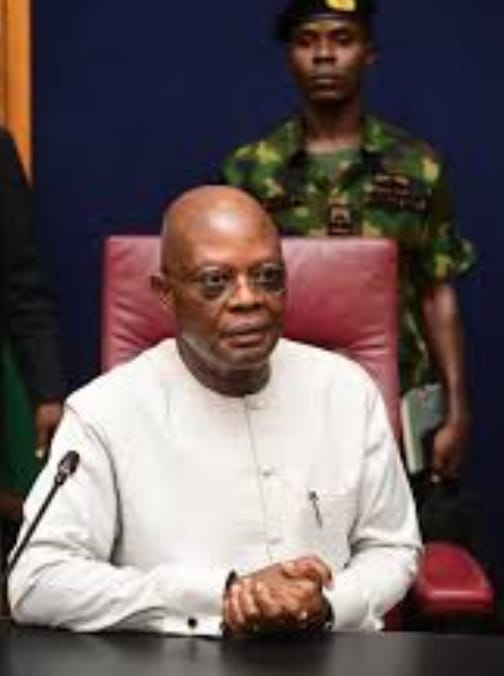
Now, with governance entrusted to Sole Administrator Ibok Ette Ibas under an emergency mandate, a new opportunity has emerged — an opportunity not only to stabilise the present, but to begin the healing process. Building a unified Rivers in this time of transition is both a challenge and a calling. It requires leadership that prioritises inclusion, empathy, and results over rhetoric, and that is exactly what the current administration is aiming to deliver.
From the outset, Ibas has taken a posture that contrasts sharply with the turbulent politics that led to the breakdown of governance. He has refrained from engaging in blame games or revisiting the controversies that fractured the political landscape. Instead, he has chosen to govern with quiet confidence and visible service delivery. This is not accidental. It is part of a broader strategy to defuse tension and begin to knit the broken fabric of the state’s communal life.
Central to this healing process is the idea of restoring trust between the government and the governed. One of the most debilitating legacies of the previous political crises was the widening gap between ordinary citizens and those in power. Public institutions were seen as remote and unresponsive. Projects were announced but not delivered.
Promises were made but never fulfilled. In response, Ibas has emphasised transparency, quick wins in service delivery, and clear communication with the people.
From paying long overdue pensions worth over 2.8 billion naira to initiating emergency repairs of public infrastructure, the current administration is demonstrating that governance is not about political survival but public service.
The pension payments, in particular, struck a powerful chord. For years, retirees had languished under a dysfunctional system, queuing endlessly under the sun without certainty or dignity. By changing the payment process and ensuring funds were transferred directly into accounts, Ibas not only solved a problem but made a bold statement — the era of abandonment is over.
Healing the rift in Rivers State also requires bridging the gap between communities, political constituencies, and economic classes. That is why the administration has initiated stakeholder engagements across the three Senatorial Districts — Rivers East, Rivers West, and Rivers South East. These town hall meetings are not mere symbolic events. They are spaces where people can voice their concerns, ask questions, and offer suggestions. They are a return to the basic principles of participatory governance.
In a state as diverse and densely populated as Rivers, listening becomes a form of leadership. And Ibas is listening. He is visiting communities, engaging with traditional rulers, meeting youth and women leaders, and consulting with professional bodies. This grassroots approach ensures that no group feels excluded or unheard. It also creates a more informed administration that can better respond to the unique challenges of each locality.
One cannot ignore the symbolism of an emergency administrator choosing dialogue over force, unity over division, and service over self preservation. In many ways, the office of the Sole Administrator is functioning as a temporary bridge — one that connects the past with the future and prepares the state for its return to constitutional order.
A critical part of this bridge building is narrative. The public perception of governance often matters as much as the substance. This is where strategic communication plays a vital role. Rather than allow the loudest voices of cynicism or misinformation to shape the public space, the administration is investing in structured communication. Through Op Ed articles, media briefings, community radio and social media messaging, it is making the case for calm, for unity, and for hope.
This strategy is already yielding results. Public discourse in Rivers has begun to shift from accusation to evaluation. Citizens are asking not just who is in charge, but what is being done. That shift is important because it encourages a culture of accountability and constructive engagement.
For women and youth in particular, the current transition period is opening new doors. Women are being appointed into committees, youth are being given a seat at the table, and skills based initiatives are being prioritised. The administration is not only healing political wounds but also investing in social capital that will endure beyond its tenure.
However, none of this should suggest that the road is easy or that opposition has vanished. The state remains a deeply politicised space, and attempts to sabotage progress still exist. But by focusing on governance and not political drama, the Sole Administrator has reduced the noise and expanded the space for constructive development.
It is also important to note that unity is not the same as uniformity.
Healing the rift in Rivers will require acknowledging differences, respecting dissent, and creating institutions that are resilient enough to accommodate diverse views. That is why the ongoing efforts to reform procurement processes, digitise public records, and strengthen local governance are so important. They signal a deeper commitment to institutional healing, not just cosmetic repair.
Rivers State stands today at a delicate crossroads. The pain of the past is real, but so too is the promise of the present. With just a few months left in the emergency administration, there is still work to be done — projects to be completed, systems to be improved, and minds to be won over. But the foundation is being laid.
In future years, when people look back at this period in the state’s history, they will not just ask what laws were made or what buildings were erected. They will ask whether this was the time when Rivers began to heal. Whether this was when leaders chose dialogue over division, action over argument, and unity over fragmentation.
The answer to those questions will depend on how the next few months are managed, but already there is reason for hope. The emergency government led by Ibok Ette Ibas is proving that even in a constrained environment, leadership can still be visionary. That even without the full trappings of political consensus, one can still lead with moral clarity and a focus on the public good.
Healing is never easy, and unity is never automatic. But with patience, commitment, and the courage to serve rather than control, Rivers State can emerge stronger. Not just from its political crisis, but from the deeper fractures that have held it back.
And if that happens, it will not only be a victory for one administration. It will be a triumph for the people of Rivers State — the ultimate custodians of p