
By Nkechinyere Ewa, Abakaliki
For years, gender-based violence (GBV) in Ebonyi State remained largely hidden. Survivors suffered in silence, cases went unreported, and the absence of reliable data made it difficult for government agencies and development partners to understand the true magnitude of the problem.
Today, the story is gradually changing.
Behind the transformation is a combination of committed individuals, strong institutional collaboration, improved data collection and sustained advocacy that stakeholders say has made Ebonyi a model for GBV response in Nigeria’s South-East.
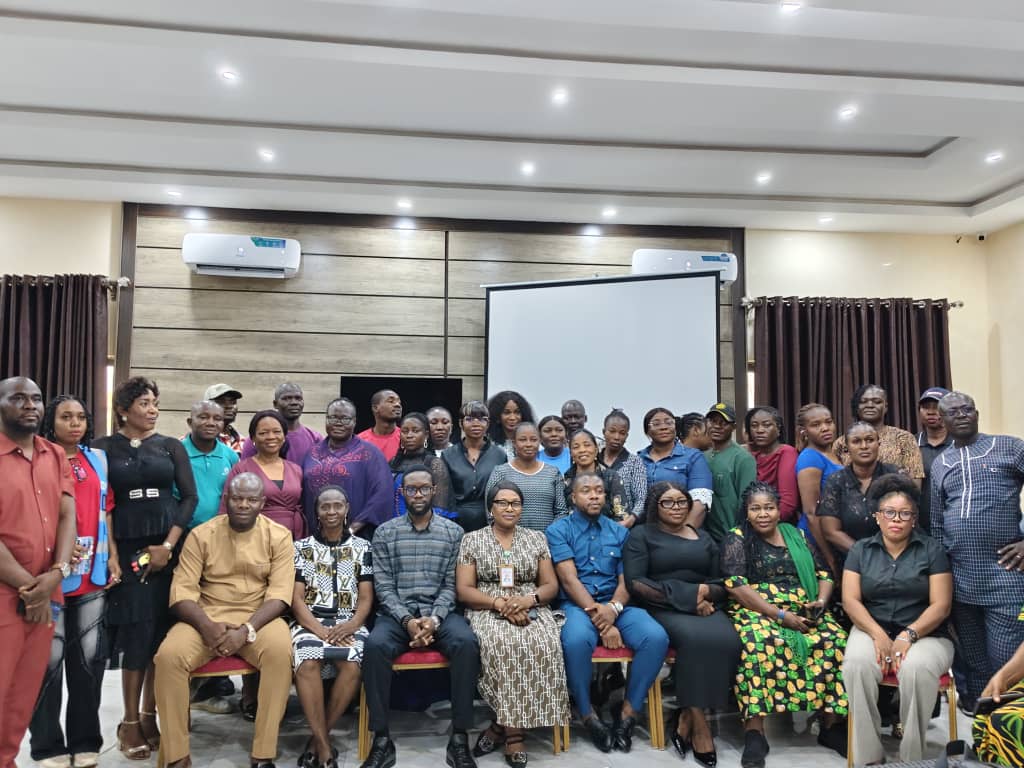
At a recent quarterly coordination meeting of the Ebonyi State Gender-Based Violence Task Force, stakeholders reflected on how the state has moved from having little or no coordinated response to becoming an example that neighbouring states are beginning to emulate.
From Silence to Structured Response
Ibina Maccillina, Former Director of Women Affairs in Ebonyi State ministry of women affairs and retired Gender-Based Violence Desk Officer, believes one of the greatest achievements of the task force is its ability to sustain momentum years after it was established.
She expressed satisfaction that the task force has remained active despite changes in leadership within government institutions.
According to her, one of the bi)ggest obstacles in the past was the absence of credible data.
“Before now, we were working without data,” she recalled. “Without data, you cannot effectively address GBV because you need evidence and a baseline to measure progress.”
She noted that the task force now produces data showing the prevalence of different forms of violence, including sexual assault and female genital mutilation (FGM), making planning and intervention more evidence-based.
For her, the progress is the product of collaboration among the Ministry of Women Affairs, civil society organisations and development partners working with a shared vision such as Jhpiego.
“We never had it so good,” she said. “The progress may be gradual, but it is real. Everybody is moving forward in the fight against gender-based violence.”
The Spotlight Initiative That Sparked Change
Ikechukwu Nwogu, Executive Director of the Economic and Social Empowerment of Rural Communities (ESAC), , traced the state’s progress to the implementation of the European Union-United Nations Spotlight Initiative between 2019 and 2023.
According to him, ESAC played a key role in officially launching the Ebonyi State GBV Task Force in 2021 after it had been established under the Integrated Health Programme (IHP).
That launch, he explained, gave the task force visibility and strengthened coordinated GBV response across the state.
Before then, he said, many incidents of violence were never reported because survivors lacked confidence in the system.
“GBV response in Ebonyi State was nothing to write home about,” he said. “There were many cases, but people hardly reported them.”
The extensive awareness campaigns carried out during the Spotlight Initiative changed the narrative by encouraging survivors and community members to report cases with the assurance that action would be taken.
Today, he said, both survivors and perpetrators understand that gender-based violence is no longer treated as a private matter.
“When cases are reported now, there is a response,” Nwogu explained. “Perpetrators know that it is no longer business as usual because the law can catch up with them.”
Beyond Donor Funding
While acknowledging the contribution of international partners and donor agencies, Nwogu insisted that financial support alone cannot sustain a social movement.
According to him, what has kept the Ebonyi GBV Task Force alive years after donor-funded projects ended is the commitment of individuals who continue to volunteer their time and energy.
“A donor may provide funding, organise meetings and trainings, but after that people can simply go home,” he said.
“What has made the difference in Ebonyi is that we have people who are passionate about ending gender-based violence. They are willing to make sacrifices to ensure that the work continues.”
He also credited effective leadership for keeping stakeholders united around a common objective.
Ebonyi Model Inspires Other States
The success recorded in Ebonyi is now extending beyond the state’s borders.
According to Nwogu, the Ebonyi GBV Task Force has inspired the establishment of a similar task force in Enugu State, using what stakeholders now describe as the “Ebonyi Model.”
Plans are also underway to replicate the initiative in Imo, Anambra and Abia states before expanding to other geopolitical zones.
“The model already exists,” he said. “Other states are beginning to see that coordinated partnership, data management and community engagement can produce measurable results.”
Why Data Matters
For Faith-Vin Nwanchor, the State Coordinator of the Ebonyi GBV Task Force and Head of the Sexual and Gender-Based Violence Response Department at the Ministry of Justice, data has become the backbone of effective intervention.
She explained that the quarterly coordination meetings provide stakeholders with opportunities to assess their achievements, identify challenges and improve implementation of the Violence Against Persons (Prohibition) Law, the state’s strategic action plan and referral pathways.
According to her, the state previously struggled with fragmented reporting systems, especially after the national GBV dashboard became unavailable.
“Before now, we had serious challenges with proper data gathering,” she said.
However, with support from development partner Jhpiego, Ebonyi has significantly improved its reporting system.
She disclosed that the state currently records about 70 per cent compliance in data reporting among partner organisations, although more work remains to achieve full compliance.
She emphasised that quality data helps government make informed decisions, guides programme planning and provides evidence for future interventions.
“Whatever is not reported is considered not done,” she said. “Data helps government understand the trend of gender-based violence and make informed decisions on how to respond.”
A Fight That Requires Everyone
Across the interviews, one message remained consistent: ending gender-based violence cannot be left to government alone.
Civil society organisations, ministries, development partners, religious leaders, community members and volunteers all have critical roles to play.
Stakeholders agree that while Ebonyi has not eliminated gender-based violence, the state has built a coordinated system that encourages reporting, supports survivors, strengthens prosecution and relies on evidence rather than assumptions.
The journey, they insist, is far from over.
Yet, for many who witnessed the early years when survivors suffered in silence and cases disappeared without documentation, the progress already made offers hope that sustained partnerships, committed leadership and passionate individuals can continue to change the narrative.
As Ebonyi’s model begins to attract attention from neighbouring states, stakeholders believe the lessons learnt could serve as a roadmap for strengthening GBV prevention and response across Nigeria.