
By Joy Omagha Idam
India has clarified that there is currently no proposal within BRICS to create a common BRICS currency, while discussions on settling trade in local currencies have been underway for more than a decade.
Briefing the media on the outcome of the BRICS 2026 Summit, Secretary (Economic Relations) Shri Sudhakar Dalela said local currency settlement is viewed as a practical mechanism to reduce transaction costs in bilateral trade and complement existing global payment and settlement systems.
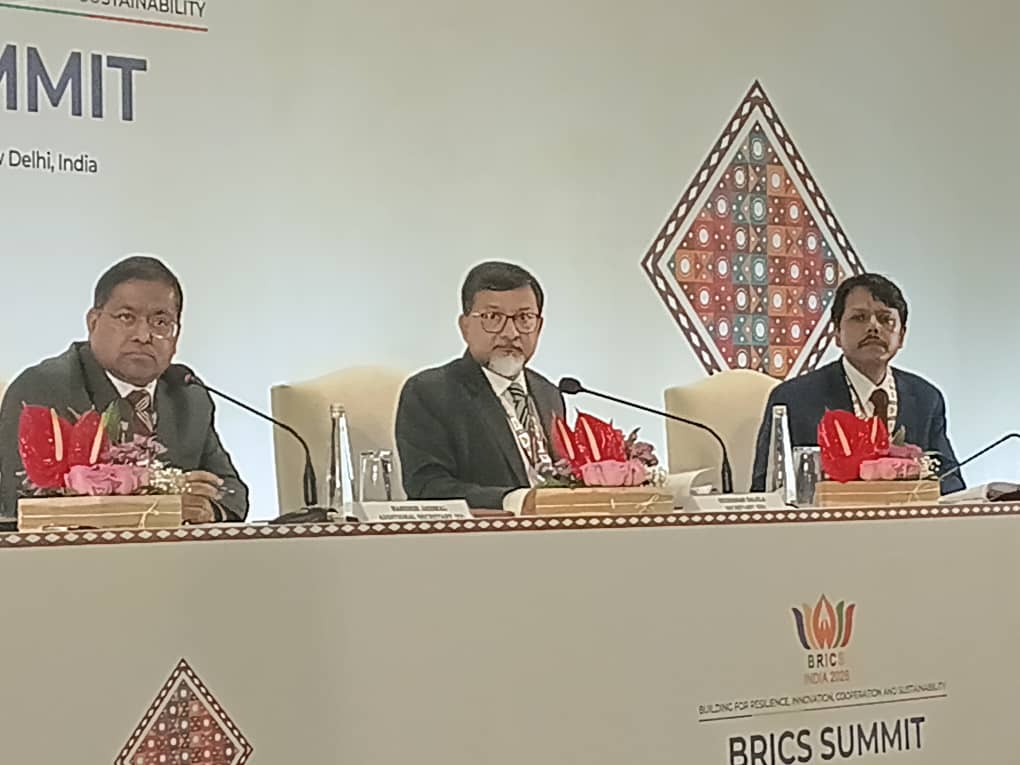
“Discussion on trade settlement in local currency has been underway for some time. It is not a new subject,” Dalela said, adding that such arrangements could improve trade efficiency and facilitate greater economic engagement among BRICS members.
He stressed that the focus of ongoing discussions on local-currency trade and payment systems is to increase intra-BRICS trade, deepen engagement with the global business community and lower transaction costs.
Dalela said these initiatives are being explored both bilaterally and within the BRICS framework. He noted that the matter falls under the purview of the Finance Ministers and Central Bank Governors track, which is responsible for advancing discussions on such financial mechanisms.
Consensus Through Sustained Engagement
Describing BRICS as a major grouping of emerging markets and developing economies, Dalela said consensus on issues of global importance is achieved through extensive consultations at multiple levels, including among Sherpas, foreign ministers and leaders.
According to him, sustained engagement throughout the year enabled member countries to arrive at a broad consensus reflected in the New Delhi Declaration.
BRICS at 20.
Dalela recalled that the first BRICS meeting was held on the sidelines of the UN General Assembly in New York in 2006. To mark the grouping’s 20-year journey, India has issued a commemorative postal stamp.
While declining to predict the future direction of BRICS, he said each chairmanship seeks to build on the work of previous presidencies while introducing new priorities. India’s chairship focused on “Resilience, Innovation, Cooperation and Sustainability” with a strong people-centric approach.
He urged observers to examine the New Delhi Declaration and an accompanying fact sheet to understand the outcomes and future direction of the grouping.
Opposition to Unilateral Trade Measures
On unilateral tariffs and coercive measures, Dalela said BRICS has maintained a consistent position that trade-related actions should be in accordance with international law and World Trade Organization rules.
He pointed to provisions in the New Delhi Declaration that outline the grouping’s opposition to unilateral measures that are inconsistent with international obligations.
People-Centric Development Agenda
Dalela said India’s chairship was guided by Prime Minister Narendra Modi’s vision of delivering outcomes that resonate with ordinary citizens.
The focus, he said, was on people-centric and development-oriented initiatives under the broader framework of resilience, innovation, cooperation and sustainability. Strong political guidance from the Prime Minister and External Affairs Minister helped secure a comprehensive declaration covering a wide range of issues significant to BRICS members.
Energy Security and Supply Chains
Addressing concerns about energy supplies amid geopolitical tensions, particularly in West Asia, Dalela said BRICS members had discussed the economic consequences of global conflicts throughout the year.
He said member countries support maintaining smooth global trade flows, resilient supply chains and reliable energy supplies in accordance with international law.
Innovation and Collaboration
Innovation was a central pillar of India’s BRICS presidency, Dalela said, highlighting initiatives such as the BRICS Incubator Network and a proposed BRICS Startup Innovation Fund.
India is keen to deepen innovation-related cooperation with China and other BRICS countries, he added.
Support for Seafarers
Dalela also highlighted India’s proposal for a mechanism to assist seafarers in distress. He expressed confidence that the initiative would receive broad support from BRICS members and other countries.
Strong Stand Against Terrorism
On terrorism, Dalela said BRICS leaders had adopted a clear and unequivocal position condemning terrorism in all its forms, including cross-border terrorism. He said the New Delhi Declaration contains a strong articulation of the grouping’s collective commitment to combating the threat.
Key Takeaway: India said BRICS is focused on practical measures to facilitate trade, lower transaction costs and strengthen cooperation among developing economies. While local-currency trade settlement remains under discussion, there is currently no proposal before the grouping for a common BRICS currency.