
The National Council of Women Societies (NCWS) Nigeria, alongside thousands of other women stakeholders, on 23rd of September 2025, spoke with one voice at the Women Development Centre, Abuja, calling on the National Assembly to pass the Reserved Seats Bill as a pathway to inclusive governance.
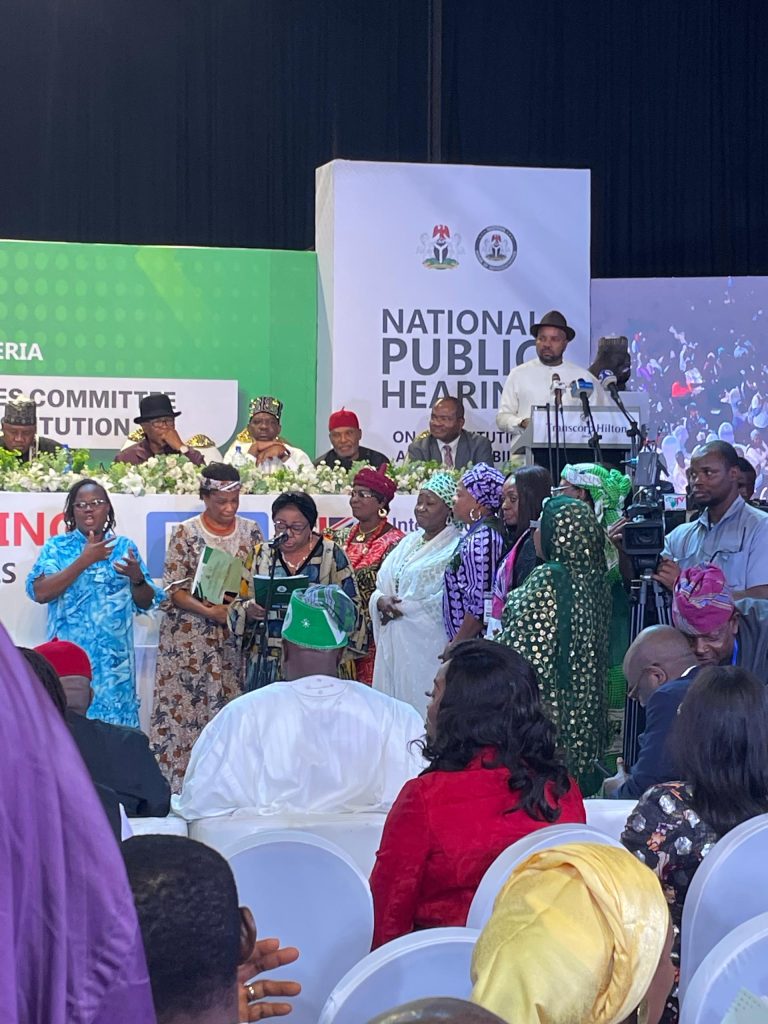
The gathering, which later moved to the public hearing at Transcorp Hilton Hotel, saw women’s groups submit memoranda and share their perspectives on the urgent need to increase women’s political representation.
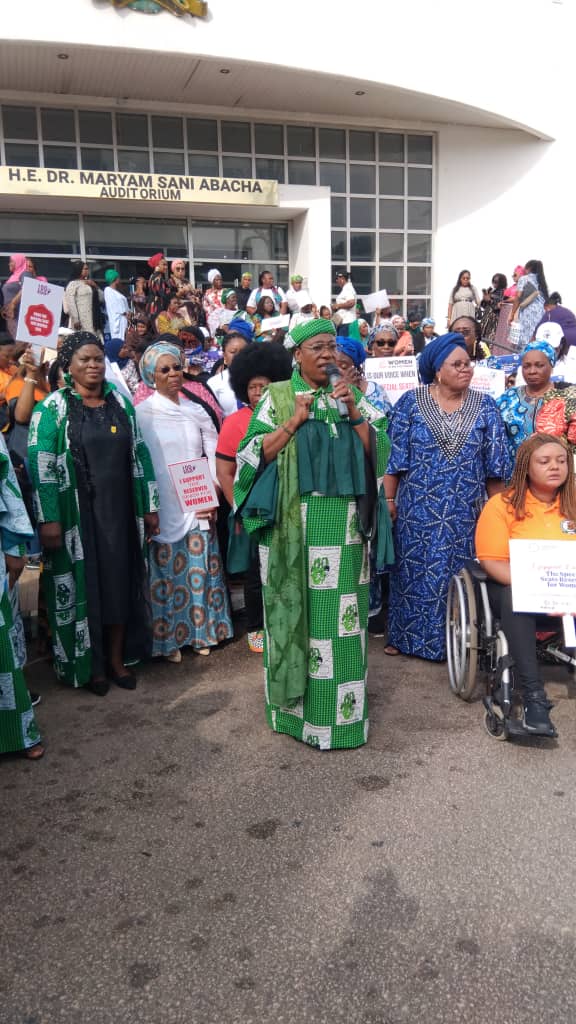
Currently, women occupy only 21 out of 469 seats (4.2%) in the National Assembly — a figure that ranks Nigeria among the lowest globally, compared to an African average of 20–25%.
Speaking at the hearing, NCWS National President, Princess Edna D.D. Azura, commended the Deputy Speaker for sponsoring the bill and urged lawmakers to seize the moment by passing it into law.
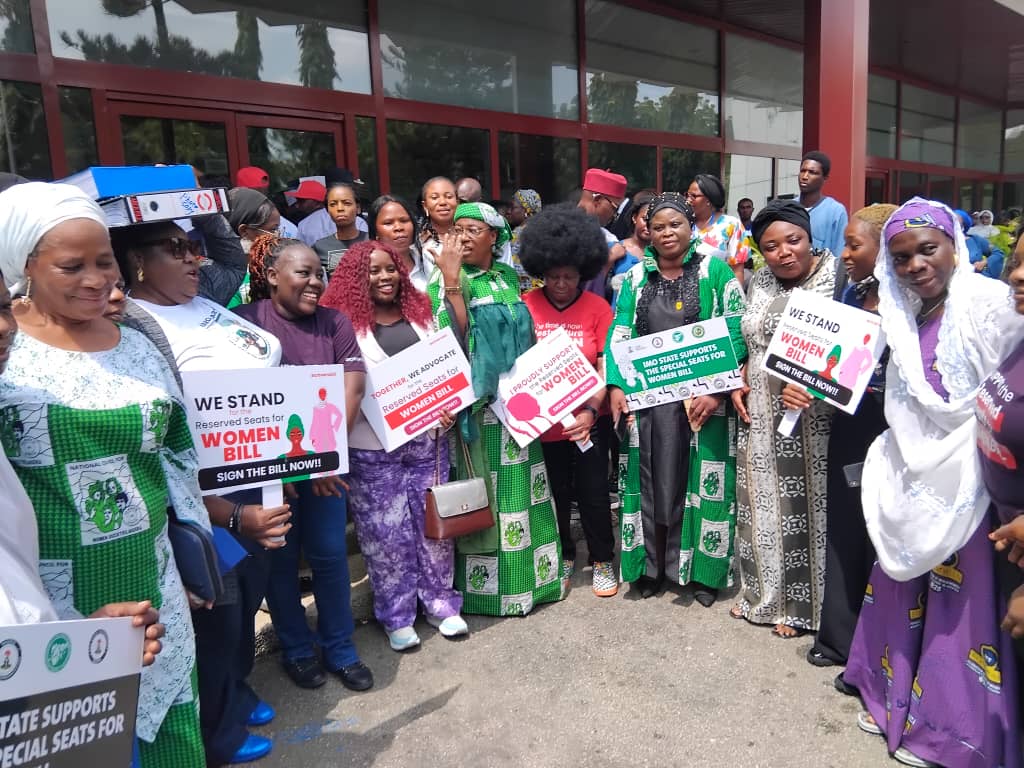
She emphasised that the bill is a temporary corrective measure to address systemic exclusion, create more space for women in governance, and align Nigeria with its constitutional obligations and international commitments.
“Every time a woman is denied a voice in governance, Nigeria loses valuable perspectives that could strengthen democracy and improve lives,” Princess Azura said.
Key Recommendations from NCWS’s Memorandum:
Immediate Passage: The National Assembly should pass the Reserved Seats Bill without delay and provide adequate funding for its implementation.
Implementation Framework: Establish transparent criteria for allocation of reserved seats, create monitoring and evaluation mechanisms, and put support systems in place for women legislators.
Complementary Measures: Strengthen anti-discrimination provisions in electoral laws, enhance security for women candidates, and adopt gender-sensitive legislative procedures.
Long-Term Benefits: Reserved seats will promote stronger policy outcomes, reduce corruption, provide role models for young girls, and normalise women’s political leadership.
The NCWS stressed that the bill is not about displacing existing lawmakers but about broadening representation through additional seats, with a review mechanism after 16 years to assess progress.
Women leaders and stakeholders at the event echoed this call, noting that greater women’s representation would not only fulfil Nigeria’s democratic ideals but also accelerate national development.
NCWS Nigeria,
Media Unit