
By Ebiye Olomu
When the Minister of Regional Development stepped onto the long abandoned Kaa–Ataba Bridge project site this week, flanked by engineers, journalists, and senior officials of the Niger Delta Development Commission (NDDC), the moment felt almost cinematic.
For years, this bridge has stood as a testament to stalled promises, frozen budgets, and the perennial disconnect between project conception and delivery in the Niger Delta. Yet the renewed inspection drive, starting in Rivers State, is no accident. It is the direct outcome of a rare alignment between the Federal Government and the Rivers State administration under Vice Admiral Ibok Ete Ibas (rtd.), the Sole Administrator appointed in March 2025.
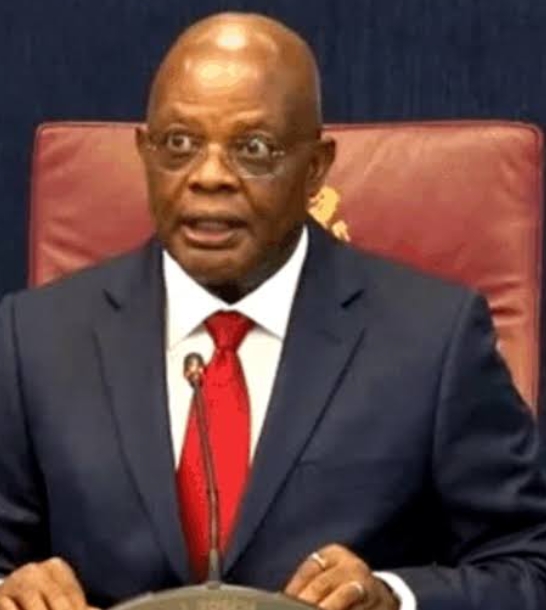
To appreciate the significance of these inspections, one must understand the historical dysfunction between the NDDC and state governments. In the past, political rivalries and turf wars often led to duplication of projects, abandoned construction sites, and the waste of scarce resources. Projects like the Kaa Ataba Bridge, the Okrika Water Scheme, and the Bori Kono Road became collateral damage in the battle for influence.
The result was predictable: decaying infrastructure, frustrated communities, and a region struggling to match its resource wealth with tangible development.
Ibas, in his relatively short time in office, appears to have broken this cycle, at least for now. His approach has been disarmingly simple yet politically sophisticated: remove ego from the equation, place the needs of Rivers people at the centre, and work with federal agencies as partners rather than competitors. This philosophy of cooperative federalism is already yielding visible dividends.
The Minister’s decision to begin the NDDC inspection tour in Rivers State sends a deliberate signal. It acknowledges the improved working relationship between Abuja and Port Harcourt under Ibas’s stewardship. In the context of emergency rule, which has temporarily concentrated executive authority in the hands of the Sole Administrator, such cooperation could easily have been stifled by suspicion or resistance.
Instead, Ibas has embraced it as an opportunity to accelerate stalled projects and leverage federal resources without sacrificing the state’s autonomy.
During the inspection of the Kaa Ataba Bridge, ministry officials openly credited the Rivers administration for fast tracking the pre inspection processes, including providing updated project data, clearing right of way encumbrances, and facilitating secure site access.
This may seem routine, but in the Niger Delta, where contractors often abandon sites due to insecurity, such groundwork can mean the difference between another “white elephant” project and a functioning piece of infrastructure.
Ibas’s insistence on community engagement before mobilising contractors has also proved decisive.
By involving traditional rulers, youth groups, and women’s associations in the dialogue, he has reduced the risk of local resistance, a frequent cause of work stoppages in the region. The administration’s record in other sectors suggests this is not a one off tactic; it is part of a broader governance style that blends discipline with empathy.
For the communities affected, the NDDC inspections have rekindled hope.
In Bodo, where an abandoned shoreline protection project has left residents vulnerable to flooding, the news of federal engineers returning to assess the site has been greeted with cautious optimism. “We have seen people come and take pictures before,” said one elder, “but if the state government is now part of the follow up, maybe this time will be different.”
It is telling that the inspection itinerary covers not just flagship projects but also smaller, less publicised initiatives such as rural electrification schemes, health centres, and fish landing sites. This reflects a shift from the optics driven politics of mega projects to a more comprehensive, needs based development approach.
Under Ibas, the Rivers State government has been quietly mapping these projects, identifying bottlenecks, and preparing intervention plans where state resources can complement federal efforts.
Critics may argue that inspections are meaningless without follow through, and they are not wrong. The Niger Delta is littered with the carcasses of “inspected” projects that never moved beyond the photo op stage. But the difference here lies in the alignment of political will. The Ibas administration has already committed to quarterly progress reviews with the NDDC and the Ministry of Regional Development, a level of accountability that, if sustained, could transform project delivery in the state.
Beyond the immediate benefit of resuming stalled projects, this cooperative approach is reshaping the political culture of Rivers State. In a region where development has often been weaponised for partisan gain, the spectacle of federal and state officials working side by side is quietly subversive.
It challenges the entrenched belief that political rivalry must inevitably translate into development paralysis.
The economic implications are equally significant. Restoring abandoned infrastructure has a multiplier effect on local economies. Completing the Kaa Ataba Bridge, for instance, will not only connect isolated communities but also reduce transportation costs for farmers, expand market access, and stimulate small scale commerce.
Similarly, reviving the Okrika Water Scheme could improve public health outcomes and free up household income currently spent on expensive private water vendors.
Of course, challenges remain. The state’s fiscal space is constrained, and federal budgets are perpetually vulnerable to mid year cuts. The broader Niger Delta also faces environmental degradation, youth unemployment, and security threats that cannot be solved by infrastructure alone.
But as Ibas has repeatedly stressed, governance is about momentum as much as it is about perfection. Every completed project builds trust; every delay erodes it.
One of the more intriguing aspects of this inspection drive is its potential to outlast the current emergency administration. By institutionalising joint monitoring mechanisms and embedding transparency into project execution, the groundwork is being laid for continuity, regardless of who occupies the Rivers State Government House after the emergency period. This would be a fitting legacy for Ibas, whose tenure is by design temporary but whose impact could be enduring.
The symbolism of starting the inspection tour in Rivers should not be underestimated. It positions the state not as a perpetual trouble spot requiring federal rescue but as a willing and capable partner in national development. In a country where the federal–state relationship is often defined by friction, this shift towards pragmatic cooperation could offer a model for other regions grappling with similar challenges.
Ultimately, the true test will come in the months ahead. Will these inspections translate into cranes on site, workers on the payroll, and completed projects handed over to communities? Will political transitions, both in Abuja and Port Harcourt, disrupt the fragile cooperation that has been established? These are open questions, but for now, the signs are encouraging.
As one NDDC official remarked during the tour, “It is easier to work where the state government clears the path for you.” In Rivers today, that path is being cleared not just physically but politically, and that is perhaps the most important infrastructure of all.
Ebiye Olomu writes from Bonny