
Nkechinyere Ewa
A cultural custodian and farmer, Dr. Onuoha Nnachi, has called on governments at all levels to harness Nigeria’s traditional festivals and agricultural resources as platforms for cultural preservation, economic empowerment, job creation and food security.
Nnachi made the call during the New Yam Festival in Ezi Edda, Ebonyi State, where he explained that the festival was more than a cultural celebration, describing it as a significant avenue for promoting unity, strengthening community bonds and creating economic opportunities.
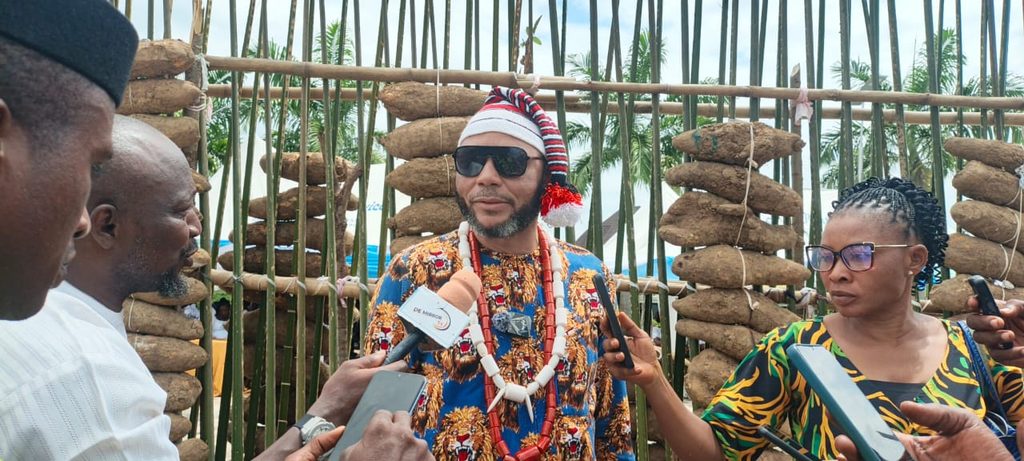
He said the Edda New Yam Festival was traditionally marked by activities including Ipo, a yam porridge prepared and eaten communally by members of each hamlet, and Uri Ayegeya, a traditional dance signalling the end of one farming season and the beginning of another.
According to him, Ipo carries a deep cultural significance because it symbolises peace, unity and mutual protection among members of a hamlet.
“It is more like a bond. When you eat from the same pot with people, there are certain things you cannot do to them. If you have eaten from that compound’s Ipo, you cannot harm anybody from there,” he said.

Nnachi expressed concern that such traditions were gradually disappearing, stressing the need for deliberate efforts to preserve them for future generations.
He said he began organising the annual festival as part of his commitment as a custodian of culture and lover of history to ensure that younger generations understood and sustained the heritage of their ancestors.
Beyond cultural preservation, he said the festival had significant economic benefits, as residents were engaged in food preparation, meat and fish roasting, trading and other services.
He explained that such activities could be structured into sustainable sources of livelihood, rather than being treated merely as temporary activities during celebrations.
Nnachi also highlighted the economic value of traditional markets and gatherings across the Southeast, describing what he termed the “barrier economy”, where periodic markets generate income for traders and create a ripple effect that benefits smaller businesses.
He said governments should concentrate on creating systems that empower people to become entrepreneurs and job creators rather than relying on individuals to provide temporary financial assistance.
“Take the individual out of it, and if the person is gone, the system is dead. Sustainability is very key,” he said.
On agriculture, Nnachi urged the Ebonyi State Government and other stakeholders to move beyond subsistence farming and develop a comprehensive agribusiness value chain covering production, processing, packaging and marketing.
He disclosed that he cultivates about 17,000 hectares of farmland across different parts of Nigeria, with investments in various crops, describing agriculture as one of the most rewarding sectors when properly structured.
According to him, poor processing and marketing remain major challenges facing farmers and are responsible for significant post-harvest losses.
He cited his experience in Benue State, where he said between 60 and 70 per cent of some harvested fruits could go to waste because farmers were unable to find buyers.
Nnachi also expressed concern that some rice produced in Ebonyi was transported outside the state for processing, saying the development of local processing facilities would create jobs, reduce waste and ensure that more economic benefits remained within the state.
He disclosed that he also operates a fish farm in Ebonyi with more than 50,000 fish, stressing that proper processing, drying and packaging could enable farmers to meet international standards and access export markets.
He further urged young Nigerians to embrace productive work, entrepreneurship and agriculture rather than depending on political patronage.
Nnachi, however, commended government efforts in education, particularly opportunities being provided for Nigerians to study abroad, urging beneficiaries to return with knowledge and skills that would contribute to national development.
He stressed that culture, agriculture and education should be deliberately integrated into a sustainable development strategy.
Nnachi said preserving festivals such as the Edda New Yam Festival would not only keep the people’s heritage alive but also strengthen community unity, promote local enterprise and create a platform through which cultural identity could contribute to broader social and economic development.