
From Rashidat Suleiman,Minna
Niger State Government has commenced an eight day capacity building retreat for commissioners, special advisers, permanent secretaries, local government chairmen and vice chairpersons.
The programme, which began today, December 3, 2025, is scheduled to run until December 11, 2025, at the Hauwa Wali Multi-Purpose Hall, Government House, Minna.

Declaring the retreat open on behalf of the Governor, Umaru Bago, the Deputy Governor, Comrade Yakubu Garba, said the training is designed to strengthen the capacity of political office holders to effectively motivate public officers. He described the Executive Council as a key pillar of governance whose efficiency is central to policy formulation, implementation, and monitoring.
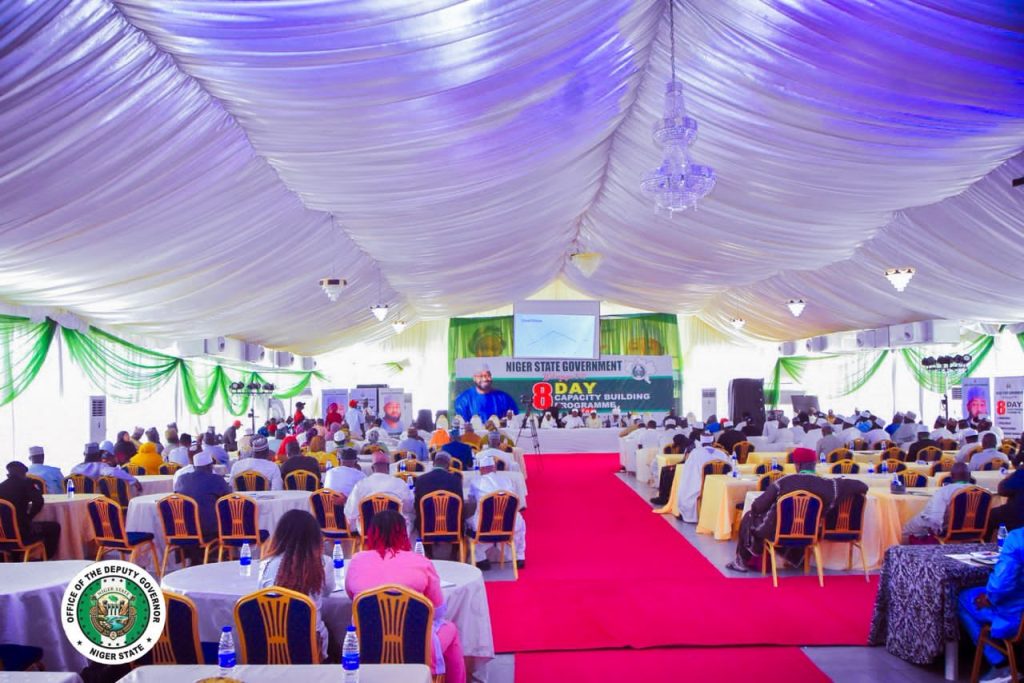
Garba noted that commissioners and other council members require continuous training and exposure to deliver optimally in their respective ministries. He added that the executive retreat is an important event in the government’s calendar, providing a platform for reflection, planning, and aligning strategies with renewed commitment toward achieving the New Niger vision.
The Deputy Governor reiterated that the retreat aims to provide clear leadership direction and foster collaboration geared toward positioning Niger State as a leading agro industrial hub focused on food security.
He said the sessions will emphasise leadership capacity building, strategic planning, fiscal discipline, people-centred service delivery, and performance evaluation.
Delivering a paper at the event, Professor Maiturare stressed that public sector decisions must reflect prudence, inclusivity, equity, and a strong desire for impact.
He highlighted accountability as the foundation of public trust and effective governance, noting that performance should be measured by tangible improvements in citizens’ lives. He added that discipline, transparency, and adherence to the rule of law remain essential for responsible leadership.
Maiturare commended the retreat as an avenue for sharing ideas, strengthening collaboration across ministries and local governments, and advancing the New Niger Agenda, which he described as an agricultural revolution aimed at empowering the aspirations of the people.