
By Nkechinyere Ewa
A frontline founding father of Ebonyi State and National Legal Adviser of Ohanaeze Ndigbo Worldwide, Chief Okeagu Ogadah, has called for the legal backing of the Ebonyi Charter of Equity to preserve peace, equity and sustained development in the state.
Ogadah made the call in an interview with journalists in Abakaliki as part of activities marking the 30th anniversary of the creation of Ebonyi State.
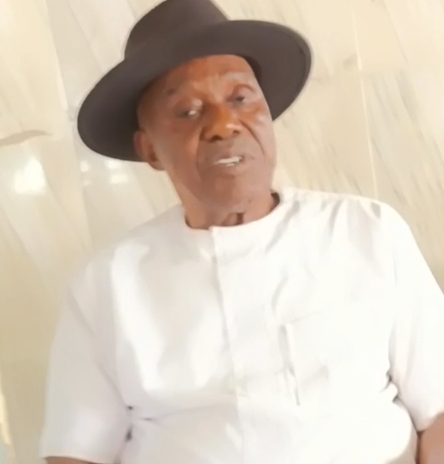
He recalled that before the state was created in 1996, the area, then under the old Enugu and Abia states, suffered years of neglect, characterised by poor roads, inadequate potable water, dilapidated schools and weak healthcare infrastructure.
According to him, the agitation for the creation of Ebonyi State was largely driven by the desire to end the marginalisation and underdevelopment suffered by the people.
He explained that the founding fathers subsequently developed the Charter of Equity in 1994 as a framework for fairness, justice and equitable distribution of political positions and development across the state.
Ogadah said the principles contained in the charter remained relevant to the continued peace and unity of Ebonyi, warning that abandoning them could undermine the sacrifices made by the state’s founding fathers.
He said, “The Charter of Equity should not remain a mere political understanding; it should be backed by a legal framework that guarantees its implementation and protects the principles of fairness, justice and equitable power rotation for generations to come. This is the surest way to preserve the peace, unity and development for which our founding fathers sacrificed to create Ebonyi State.”
He also urged Ebonyians to sustain support for the administration of Governor Francis Nwifuru, saying continuity in governance was important to consolidating the gains recorded in the state.
Meanwhile, the member representing Ezza North/Ishielu Federal Constituency in the House of Representatives, Chief Joseph Nwobashi, congratulated Nigerians and Ebonyians on the 66th anniversary of Nigeria’s independence and Ebonyi’s 30th anniversary.
Nwobashi described the twin celebrations as symbols of resilience and divine grace, noting that Nigeria had progressed from colonial rule and military interregnums to 27 years of uninterrupted democratic governance.
He said Ebonyi had also justified its creation, transforming from a disadvantaged area at inception into a politically stable and nationally relevant state, with notable progress in infrastructure, agriculture and human capital development.
Also speaking, the Commissioner for Special Projects, Dr Ngozi Obichukwu, said Ebonyi had attained political maturity in its 30 years of existence through the promotion of equity, unity and women’s inclusion, particularly through zoning and the Charter of Equity.
Obichukwu said the state’s economic trajectory had also recorded steady progress in project execution and service delivery, attributing the achievements to the successive administrations of Senator Sam Egwu, Chief Martin Elechi, Senator David Umahi and Governor Francis Nwifuru.
She said the incumbent administration was building on the foundations laid by previous leaders and the founding fathers of the state.
[10/1, 2:42 PM] Nkechinyere: Nwifuru: Ebonyi has completed nearly 700km of roads in three years
Nkechinyere Ewa
Ebonyi State Governor, Francis Nwifuru, has said his administration has completed nearly 700 kilometres of roads across the 13 local government areas of the state since assuming office in 2023, describing infrastructure development as central to the state’s economic transformation.
Nwifuru, who stated this in his address to mark Nigeria’s 66th Independence Anniversary and the 30th anniversary of Ebonyi State, said the road projects were designed to connect communities, facilitate the movement of agricultural produce, improve access to markets and strengthen economic activities across the state.
According to him, the administration’s infrastructure programme covers the expansion, rehabilitation, dualisation and construction of roads, with more than seven kilometres of roads within the state capital also being completed. He said the government was determined to ensure that no community remained unnecessarily cut off from the mainstream of economic and social life because of inadequate transport infrastructure.
The governor said his administration had also prioritised education and human capital development, noting that 43 modern secondary schools were being constructed across the state. He added that the government had strengthened the provision of textbooks, reference materials, early-childhood education resources and other instructional facilities, while investing in teachers to improve the quality of education.
Nwifuru said the administration had also expanded infrastructure at the state’s higher institutions, including ongoing construction of law faculty buildings, staff and principal officers’ quarters and student hostels at the Ebonyi State University’s campus. He added that work was also ongoing on a new law faculty complex and other academic infrastructure at the university.
On healthcare, the governor said the administration had embarked on a comprehensive revitalisation of the sector covering primary and secondary healthcare, medical personnel, equipment, medicines, health insurance and emergency response. He disclosed that the Ebonyi State Health Insurance Agency recorded 394,387 encounters and 478,670 services between 2023 and 2026 across accredited healthcare facilities.
The governor also said his administration had sustained the payment of the state’s N19,000 minimum wage, cleared salary arrears dating back to the creation of the state in 1996 and maintained the annual Christmas bonus for workers. He said the measures were part of efforts to improve workers’ welfare and create conditions for effective public service delivery.
Nwifuru further disclosed that the state was pursuing industrialisation as part of efforts to create jobs and strengthen its economy, including the commencement of a cement factory project. He said the 30th anniversary of Ebonyi should not only be a celebration of the state’s achievements but also a reminder of the responsibility to build trust, accountability, institutions and a sustainable future for generations yet unborn.