
By Joy Omagha Idam
Nigeria’s foreign policy is undergoing a significant transformation, with renewed emphasis on strategic communication, national interest, and international cooperation. At the heart of this renewed vision is a call by the Honourable Minister of State for Foreign Affairs, Ambassador Sola Enikanolaiye, for stronger public diplomacy to showcase the work of the Ministry of Foreign Affairs and the Nigerian Technical Aid Corps (NTAC).
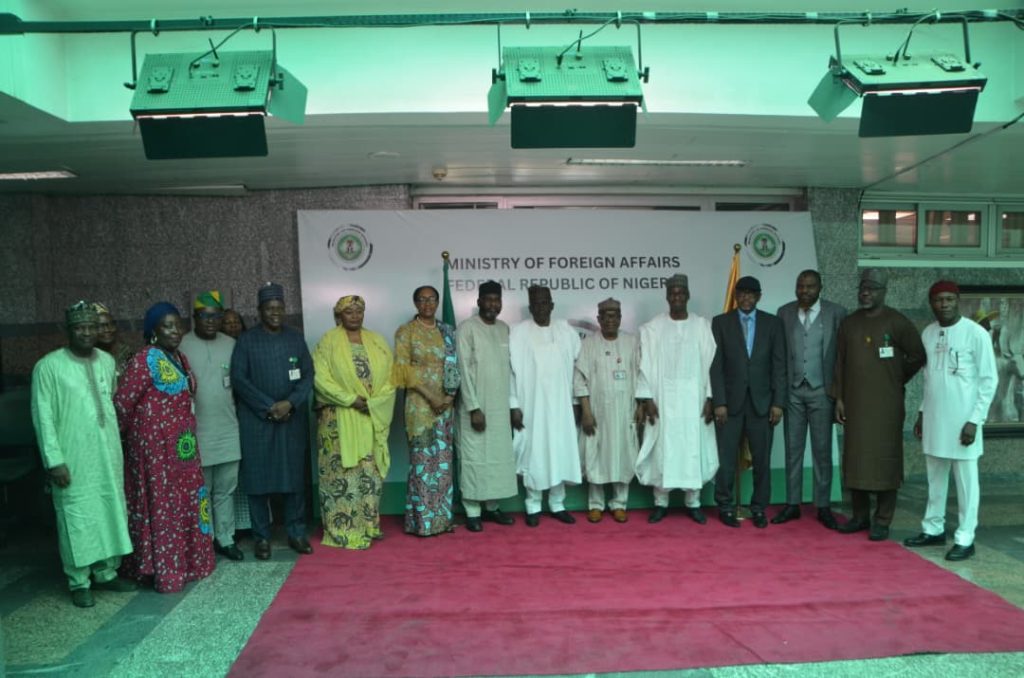
Speaking during a courtesy visit by the Director-General of NTAC, Hon. Yusuf Buba Yakub, in Abuja, the Minister stressed that while Nigeria has made remarkable contributions to international development through technical cooperation, many citizens remain unaware of these achievements. According to him, effective communication has become as essential as policy implementation in advancing Nigeria’s national interest.
Making Foreign Policy Visible
For decades, Nigeria has maintained an active presence in Africa, the Caribbean and the Pacific through technical assistance programmes, peacebuilding efforts and diplomatic engagements. Yet, much of this work has remained outside public consciousness.
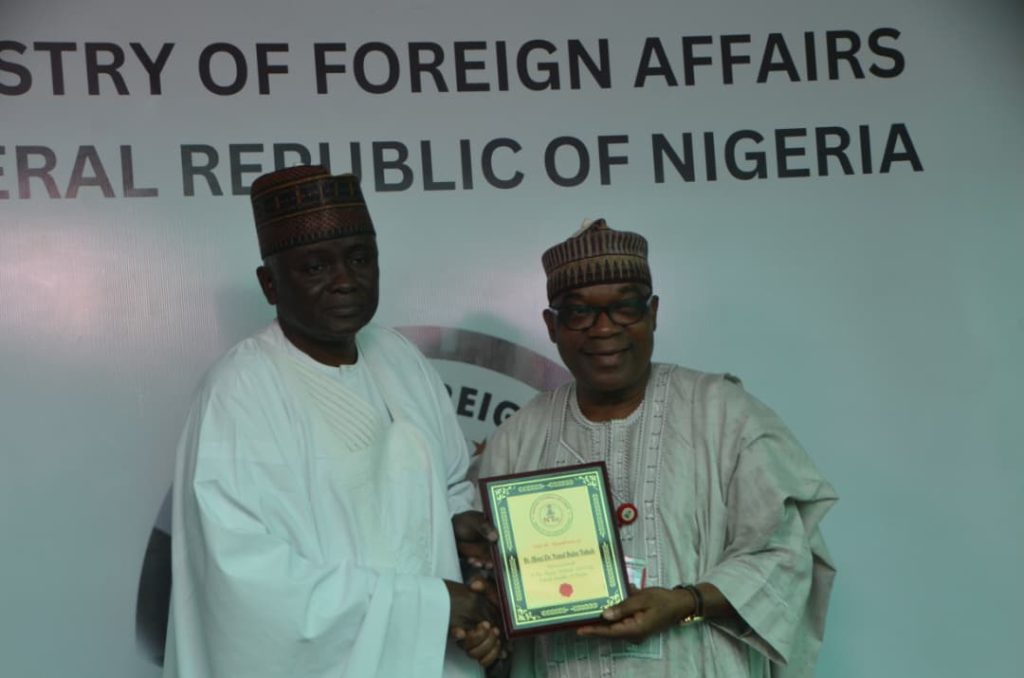
Ambassador Enikanolaiye believes this must change.
He argued that both the Ministry of Foreign Affairs and NTAC must deliberately invest in public communication to ensure Nigerians understand how the country’s foreign engagements directly contribute to national development, regional stability and global influence. While commending the Ministry’s spokesperson for ongoing publicity efforts, he maintained that a more coordinated and adequately funded communication strategy has become indispensable.
The Minister explained that the renewed approach aligns with President Bola Ahmed Tinubu‘s Renewed Hope Agenda and the Federal Government’s 4-D Foreign Policy Doctrine, which prioritises Democracy, Development, Demography and the Diaspora as pillars of Nigeria’s international engagement.
NTAC: Nigeria’s Quiet Diplomatic Asset
Established in 1987, the Nigerian Technical Aid Corps has become one of Nigeria’s most effective instruments of soft power diplomacy.
Unlike traditional aid programmes that focus on financial assistance, NTAC deploys qualified Nigerian professionals—including teachers, lecturers, engineers, doctors, nurses, agricultural experts and ICT specialists—to developing countries to strengthen local institutions and build human capacity.
Operating under the Ministry of Foreign Affairs, the agency deploys volunteers for two-year assignments under bilateral agreements that define the responsibilities of both Nigeria and recipient countries.
The Director-General noted that this model reflects Nigeria’s long-standing commitment to South-South Cooperation, where developing nations collaborate by sharing expertise rather than financial resources.
Over 10,000 Nigerian Professionals Serving the World
Since its establishment nearly four decades ago, NTAC has deployed more than 10,000 Nigerian professionals to over 40 countries across Africa, the Caribbean and the Pacific.
Countries that have benefited include Jamaica, The Gambia, Rwanda, Namibia, Sierra Leone, Grenada, Uganda, Seychelles, Guinea-Bissau, Benin Republic, Equatorial Guinea, Zanzibar (Tanzania), and St. Kitts and Nevis.
According to the agency, many former volunteers have risen to occupy senior academic and administrative positions, including Vice-Chancellors and Deputy Vice-Chancellors in foreign universities. One of the programme’s most celebrated achievements was the appointment of an NTAC volunteer to lead Sierra Leone’s COVID-19 response—an indication of the confidence recipient countries place in Nigerian professionals.
Expanding Nigeria’s Diplomatic Reach
Under the leadership of Hon. Yusuf Buba Yakub, NTAC says it has expanded significantly in line with Nigeria’s evolving foreign policy objectives.
Recent agreements have strengthened Nigeria’s presence in the Caribbean following President Tinubu’s visit to St. Lucia, while countries such as Grenada and St. Kitts and Nevis have joined the agency’s growing list of active partners.
Previously inactive partnerships with Rwanda, Jamaica, Seychelles and Zanzibar have also been revived.
The agency revealed that discussions are at advanced stages with Zambia, Ethiopia, Angola, Trinidad and Tobago, and Barbados, signalling an even broader international footprint in the coming years.
One notable development is Jamaica’s interest in recruiting a substantial number of Nigerian healthcare professionals under a fully funded arrangement, highlighting the growing global demand for Nigerian expertise.
Nigerian Professionals Making Global Impact
Currently, NTAC has 274 volunteers serving in 13 countries, providing services in education, healthcare and public administration.
The Gambia hosts the largest contingent, followed by Zanzibar, Uganda, Rwanda, Liberia and Sierra Leone. Nigerian doctors, nurses, lecturers and teachers continue to strengthen healthcare systems, universities and public institutions across partner nations.
These deployments not only support development in host countries but also reinforce Nigeria’s image as a reliable development partner.
Modernising Technical Diplomacy
The Permanent Secretary of the Ministry of Foreign Affairs, Ambassador Dunoma Umar Ahmed, called for further innovation in the management of the scheme.
He advocated the introduction of digital volunteer management systems, virtual technical assistance, stronger diaspora engagement, results-based monitoring, youth-focused technical diplomacy, collaborative innovation projects with host countries and deeper regional cooperation.
These reforms, he said, would enhance the effectiveness and sustainability of Nigeria’s technical assistance programme while ensuring it remains responsive to emerging global realities.
Soft Power Through Human Capital
The discussions between the Ministry of Foreign Affairs and NTAC underscore a broader reality: Nigeria’s greatest diplomatic asset may not be its natural resources, but its people.
From classrooms in The Gambia to hospitals in Jamaica and universities across Africa and the Caribbean, Nigerian professionals continue to represent the country’s competence, resilience and leadership.
As the Federal Government pursues comprehensive reforms of the foreign service, strengthening public diplomacy may prove just as important as expanding international partnerships. Greater visibility will not only inform Nigerians about the impact of their country’s foreign engagements but also reinforce confidence in Nigeria’s role as a leading voice in South-South cooperation.
Ultimately, the message from the Ministry is clear: Nigeria’s influence abroad is growing, and telling that story effectively is now an essential part of the nation’s diplomatic mission.