
By Joy Omagha Idam
The Director General and Chief Executive Officer of the National Institute for Sports, RT Hon Philip Shaibu, has outlined a bold vision anchored on transparency, discipline, and institutional reform, declaring that Nigeria’s sports sector must break away from a legacy of inefficiency and mismanagement.

Speaking during a courtesy visit by members of the Nigeria Union of Journalists (NUJ), FCT Correspondents’ Chapel led by Felix Ojo, Shaibu emphasized that public officials entrusted with sports administration carry a duty to justify the confidence placed in them by Bola Ahmed Tinubu.
Reflecting on his years in public service, Shaibu noted familiar faces among the visiting journalists and used the opportunity to stress a fundamental shift in approach. According to him, sports administration must be driven by service, not self-interest.
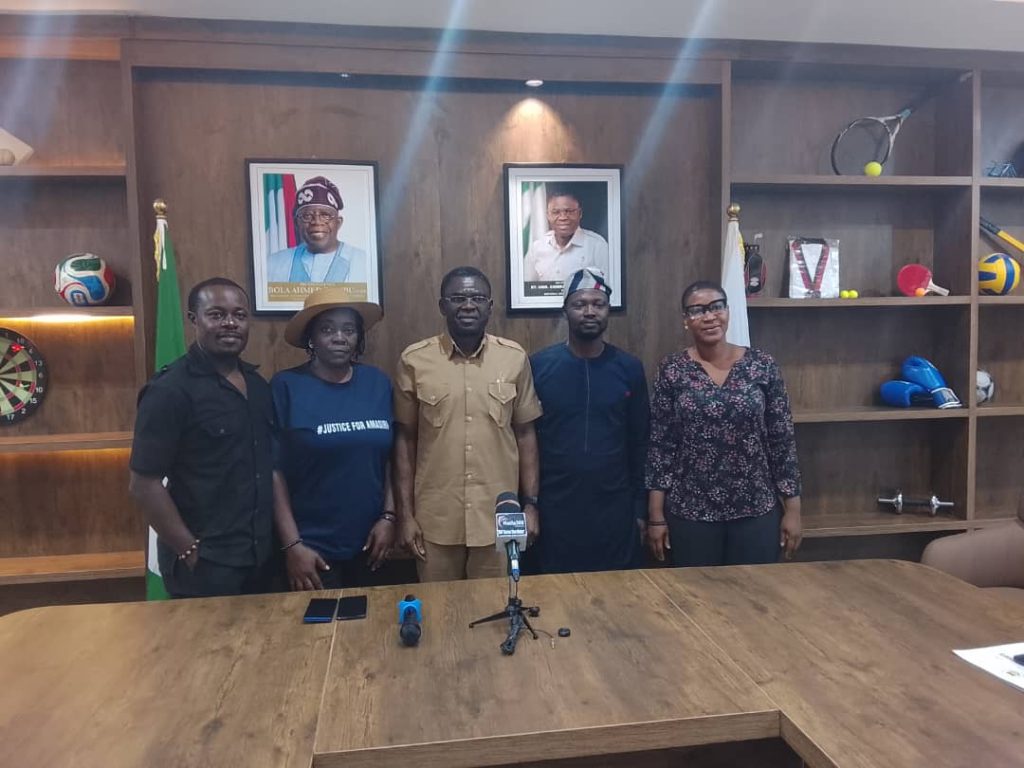
“We are here to rebuild, not to exploit. The era of taking from sports must give way to a culture of giving back,” he stated firmly.
The former Edo State Deputy Governor made it clear that he would not tolerate a continuation of entrenched inefficiencies. He pledged to confront irregularities head-on, vowing to expose and address any form of malpractice within the system.
Shaibu reiterated that the responsibility for success or failure in the sector lies squarely with those appointed to manage it—not the President. He named key stakeholders, including Shehu Dikko and Olapade, alongside himself and federation leaders, as accountable figures.
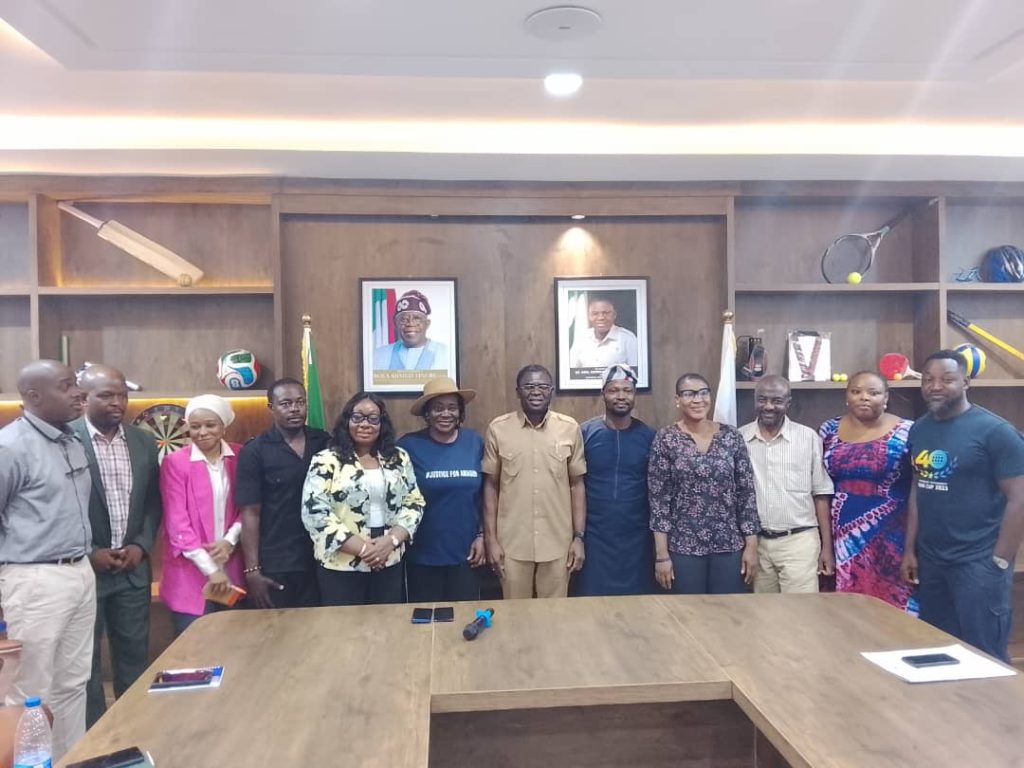
“If the system fails, the blame should come to us,” he said, urging Nigerians to demand results from administrators rather than directing criticism at the presidency.
Highlighting specific examples, he pointed to Ibrahim Gusau of the Nigeria Football Federation and Musa Kida of the basketball federation as key figures responsible for improving team performance in their respective sports.
Shaibu commended both the Presidency and the National Assembly for their support, particularly in funding, but stressed that financial allocations must be matched with accountability. He assured that the National Institute for Sports would lead by example in enforcing financial discipline.
Beyond government funding, he called for a more innovative and sustainable model, encouraging private sector participation. Drawing from his experience in Edo State, he explained that a facility-driven approach—where infrastructure is properly maintained—can attract investment and reduce reliance on public funds.
Since taking office, Shaibu revealed that the institute has begun strengthening collaboration with state governments hosting its zonal centres, noting early signs of progress.
Using a simple analogy, he underscored the importance of synergy: “Just as a phone needs a SIM card to function, the system needs cooperation to succeed.”
Internally, he said the NIS is fostering a culture of inclusiveness, encouraging staff at all levels to contribute ideas toward institutional growth.
On media relations, Shaibu acknowledged the critical role of journalism in sustaining accountability and democracy. He described journalists as essential watchdogs whose work ensures transparency in governance.
“A society without a strong media risks losing its democratic foundation,” he said, reflecting on his own background as a pro-democracy activist.
He assured the NUJ of the institute’s willingness to collaborate in promoting integrity and development within the sports sector.
In a decisive policy stance, Shaibu also reaffirmed his opposition to the use of stadiums for non-sporting activities, insisting that national sports facilities must be preserved strictly for athletic purposes.
“Stadiums are built for sports. Political rallies and religious programmes have no place on those pitches,” he concluded.
In his remarks, Felix Ojo, speaking on behalf of the NUJ FCT Correspondents’ Chapel, commended the NIS Director General for his bold commitment to transparency and reforms, describing it as a timely intervention for a sector in need of renewed direction.
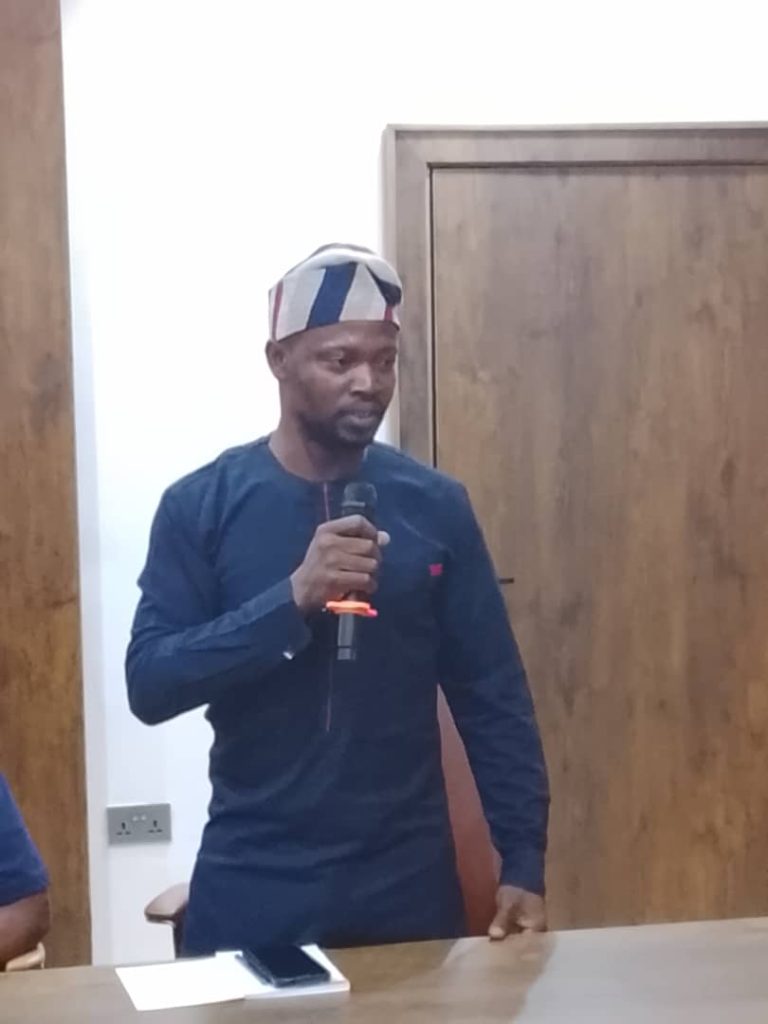
He noted that the emphasis on accountability and responsible leadership reflects the expectations of Nigerians who are eager to see tangible progress in sports development.
Ojo further stressed that the media remains a critical partner in the reform process, with a duty to spotlight both achievements and shortcomings within the system. He assured that journalists would continue to report objectively, amplifying efforts that drive positive change while also holding administrators accountable to the public they serve.
He added that sustained collaboration between the media and sports institutions like the NIS would be essential in rebuilding trust and credibility in the sector. According to him, such partnerships would not only strengthen transparency but also contribute to positioning Nigeria’s sports industry for greater efficiency, growth, and international relevance.