
By Joy Omagha Idam
History remembers leaders not merely for the offices they occupied but for the institutions they strengthened, the values they upheld and the legacy they left behind. Across civilizations, the greatest rulers have been those who understood that true leadership extends beyond the present generation to embrace the hopes and aspirations of those yet unborn.
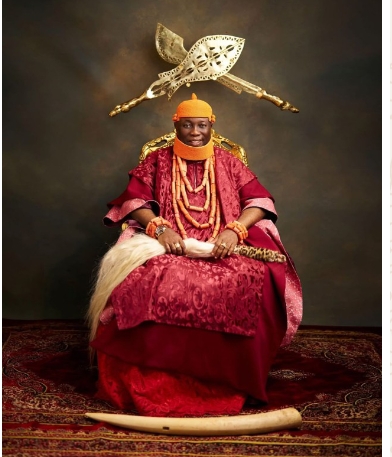
In the ancient world, the Greek philosopher Plato described such a leader as the Philosopher King—a ruler guided not by personal ambition or fleeting popularity, but by wisdom, justice, knowledge, courage and an unwavering commitment to the common good. More than two millennia later, these timeless ideals continue to resonate, finding remarkable expression in the reign of His Royal Majesty, Prof. Epiphany Chigbogu Azinge, SAN, the 14th Asagba of Asaba.
Since ascending the throne, the distinguished scholar, jurist and administrator has demonstrated that traditional leadership can be both culturally rooted and development-driven. His reign reflects an uncommon blend of intellectual depth, strategic vision and compassionate governance, redefining what a modern African monarch can accomplish.
At the heart of this vision lies an understanding that enduring development is built upon strong institutions. This philosophy is perhaps best illustrated by the proposed ₦10 billion Asagba Palace Project, which extends far beyond the construction of a magnificent royal edifice. It represents an enduring investment in Asaba’s identity, history and cultural continuity.
By inviting sons and daughters of Asaba, both at home and across the diaspora, to contribute to the project, the Asagba has transformed the palace into a collective symbol of ownership and shared destiny. It is a powerful reminder that preserving heritage is not the responsibility of one individual or one generation, but a sacred obligation shared by an entire people.
Such foresight reflects the timeless truth that enduring institutions are rarely built by accident. They emerge because visionary leaders choose to think beyond their own lifetime. In championing this project, Prof. Azinge has reaffirmed that while individuals pass on, institutions must remain resilient enough to preserve the identity, dignity and aspirations of the communities they serve.
This capacity to combine immediate development with long-term institution-building has strengthened the growing perception of the Asagba as a true Philosopher King. His administration addresses today’s needs while simultaneously laying foundations for a stronger and more prosperous Asaba in the decades ahead.
Every initiative under his reign forms part of a broader developmental blueprint. Investments in education, healthcare, youth empowerment, tourism, sports, cultural preservation, investment promotion and community development are not isolated achievements competing for recognition. Rather, they are interconnected pillars supporting a single vision of an Asaba that is prosperous, enlightened, culturally confident and globally competitive.
His leadership mirrors Plato’s enduring conviction that the highest calling of any ruler is not simply to govern effectively, but to prepare a richer inheritance for future generations.
Unlike leaders whose achievements are measured solely by physical projects or political popularity, Prof. Azinge’s governance philosophy is firmly anchored in institutional transformation and public service. His distinguished academic background has fostered a style of leadership grounded in research, consultation, strategic planning and informed decision-making.
Equally compelling is the moral foundation upon which his reign rests. Throughout his stewardship, the Asagba has consistently maintained that leadership is a sacred trust.
His widely quoted declaration,
“If I am not all about the development of Asaba, what will that make me as the Asagba?”
captures the essence of his philosophy. It is both a statement of accountability and a reaffirmation that the legitimacy of leadership derives from its capacity to improve the lives of the people.
That philosophy is evident across the kingdom’s people-centred development agenda. The acquisition of dialysis machines, the establishment of a Drug Rehabilitation Centre, improved primary healthcare services, recruitment of healthcare personnel, ambulance services, scholarships, bursaries, educational support, skills acquisition initiatives, empowerment programmes for widows and vulnerable citizens, tourism promotion and cultural renewal collectively demonstrate a holistic understanding of development.
For the Asagba, progress cannot be measured by infrastructure alone. It must also be reflected in healthier families, educated young people, empowered citizens, stronger institutions and a society confident in its future.
Another defining characteristic of enlightened leadership is the ability to inspire collective responsibility. Sustainable development cannot rest solely on government institutions or royal authority. It requires active participation from the people themselves.
Throughout his reign, Prof. Azinge has consistently encouraged Asaba indigenes around the world to become partners in shaping the future of their homeland. The proposed palace project therefore serves not merely as a building initiative, but as a rallying point for preserving the kingdom’s history, identity and cultural heritage for generations yet unborn.
Perhaps one of his greatest achievements has been reaffirming the continuing relevance of Nigeria’s traditional institutions in modern governance. At a time when the role of monarchs is increasingly scrutinised, the Asagba has demonstrated that traditional rulers can remain powerful agents of development while faithfully preserving their cultural responsibilities.
Through strategic partnerships with governments, educational institutions, corporate organisations and development partners, he has transformed the palace into a bridge connecting tradition with innovation, heritage with progress and community aspirations with national development.
Rather than abandoning culture in pursuit of modernity, his reign has demonstrated that authentic development flourishes when culture provides its foundation. Heritage, in his vision, is not an obstacle to progress—it is one of its greatest strengths.
Although history will ultimately deliver the final verdict on the reign of the 14th Asagba of Asaba, the evidence already speaks volumes. Through scholarship, visionary leadership, institutional reforms and an unwavering commitment to public welfare, Prof. Epiphany Chigbogu Azinge has expanded the possibilities of what traditional leadership can achieve in contemporary Nigeria.
His example reaches far beyond the boundaries of Asaba. It offers traditional institutions across Africa a compelling model of governance in which authority is strengthened not by ceremonial grandeur alone, but by wisdom, integrity, accountability and selfless public service.
If Plato were to revisit his timeless concept of the Philosopher King in today’s Africa, he would undoubtedly recognise many of its defining qualities in the reign of the Asagba of Asaba—intellectual excellence, moral purpose, justice, courage and an enduring commitment to the welfare of the people.
Whether posterity ultimately bestows that title remains for history to decide. What is already beyond dispute, however, is that His Royal Majesty, Prof. Epiphany Chigbogu Azinge, SAN, has demonstrated that a traditional throne can transcend symbolism to become a dynamic institution for knowledge-driven governance, people-centred development and transformational leadership.
Should this remarkable trajectory continue, the legacy of the 14th Asagba of Asaba may be remembered not merely as the reign of a successful monarch, but as a defining era in which enlightened traditional leadership found renewed expression in Nigeria—an era where wisdom guided authority, vision inspired progress and service to the people became the truest measure of kingship.